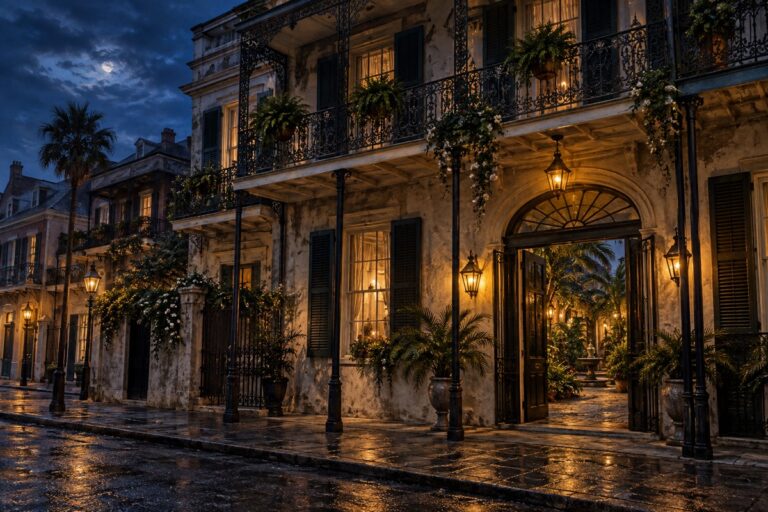
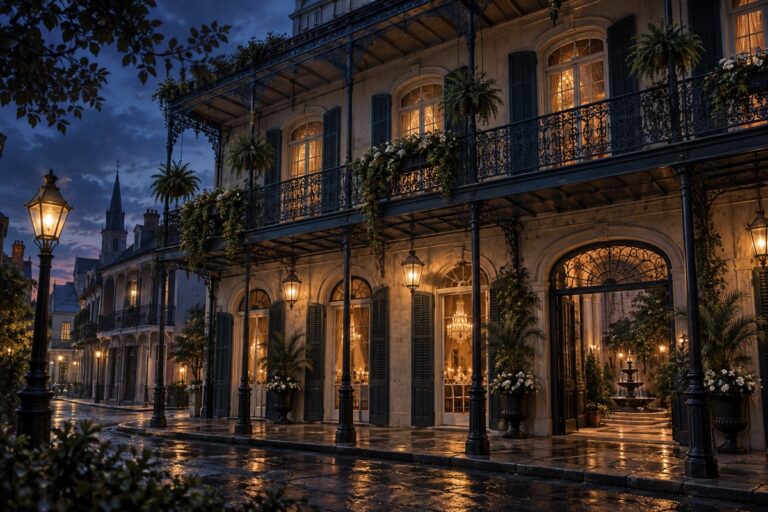
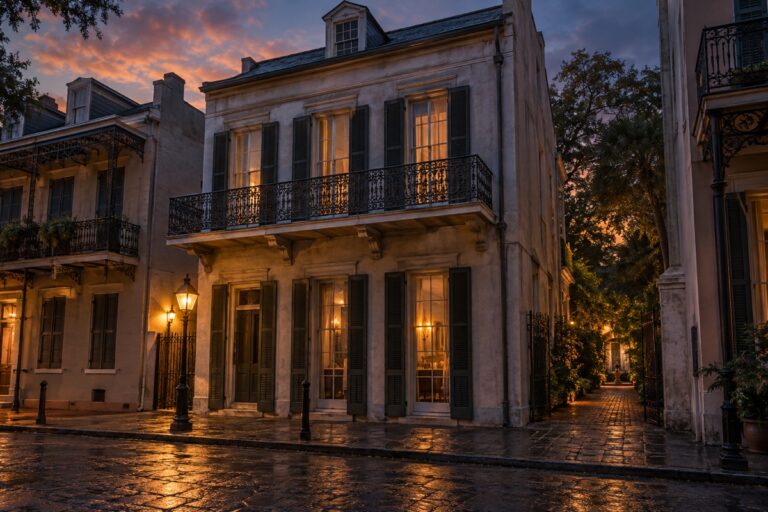
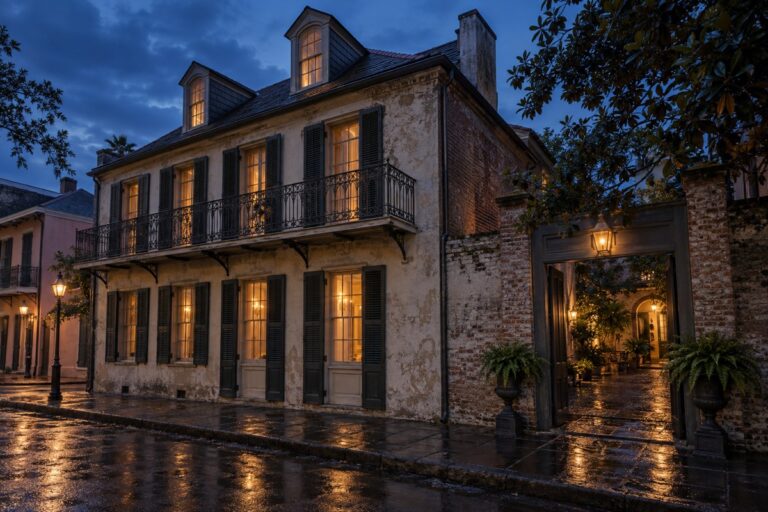
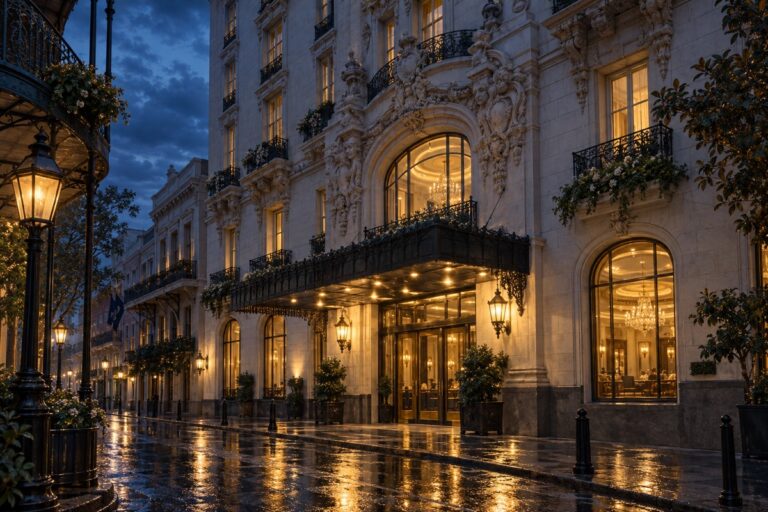
Architect James Gallier Jr. designed the Royal Street townhouse as his family residence in the late 1850s, incorporating fashionable design, climate adaptations, domestic technology, and service spaces.
An 1826 French Quarter house whose architecture, enslaved labor, famous residents, preservation, and ghost stories demand a careful reading of fact and memory.
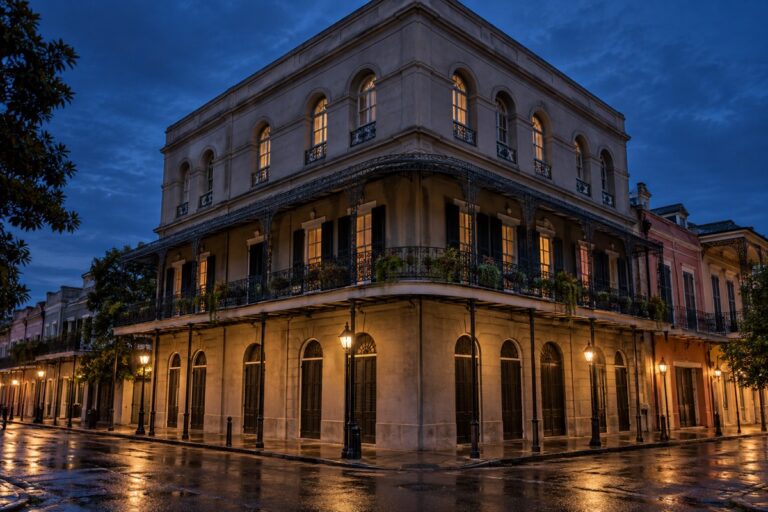
The house at 1140 Royal Street is associated with Delphine LaLaurie, whose abuse of enslaved people was exposed after an 1834 fire. The event is documented, but later retellings added gruesome details that cannot all be verified. The present structure was substantially rebuilt after the fire and later expanded. It is a private residence, not a museum, and its history should be approached as a record of slavery and violence rather than as a horror attraction.
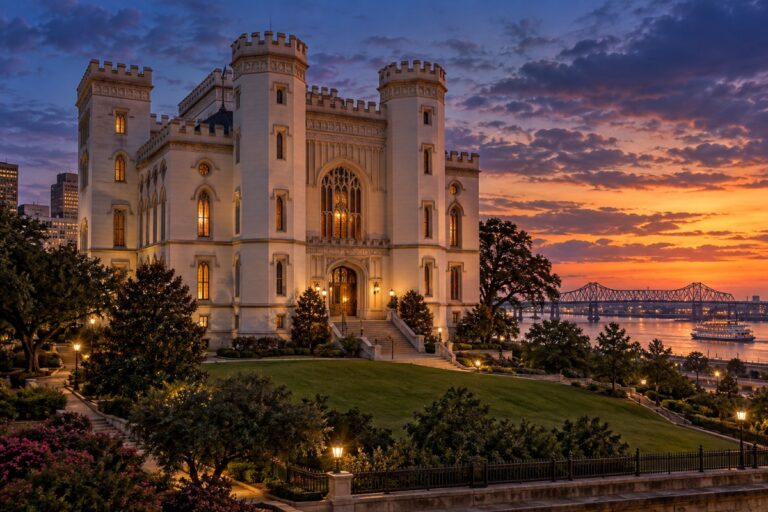
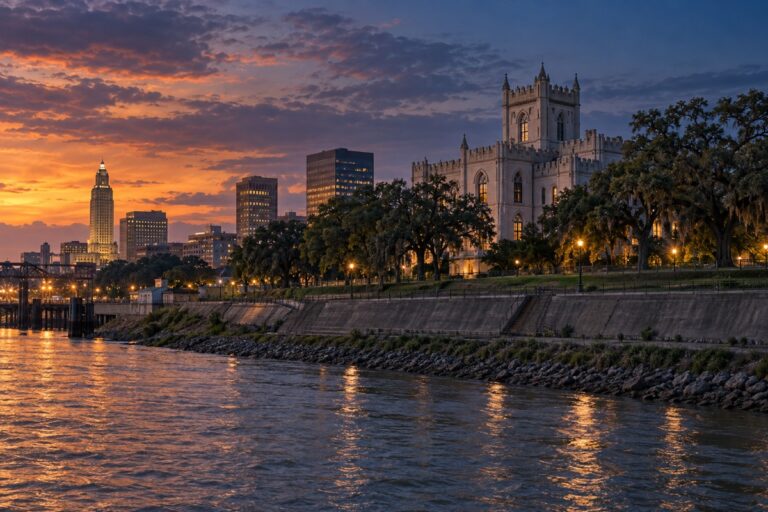
Completed in 1850, James Dakin's Gothic Revival statehouse witnessed secession, Union occupation, a devastating Civil War fire, reconstruction, later political conflict, restoration, and conversion to a political history museum.
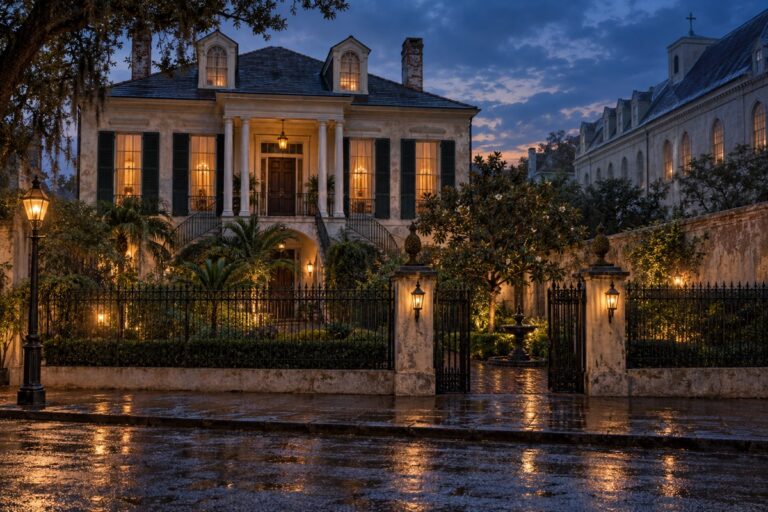
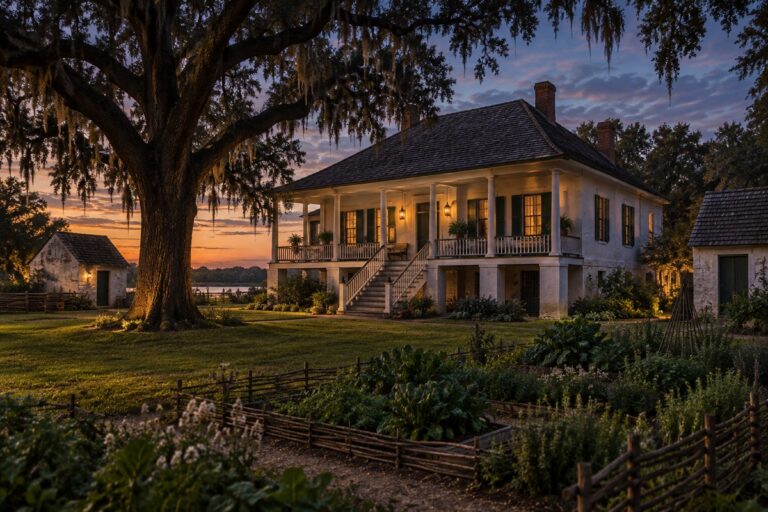
The late-eighteenth-century Creole house and surviving landscape interpret plantation agriculture, French Creole culture, architecture, domestic life, preservation, and the labor and lives of enslaved people.
Baton Rouge developed within Houma, Bayougoula, and broader Indigenous river landscapes through French, British, Spanish, West Florida, and United States rule, slavery, plantation and port economies, war, education, industry, politics, and civil rights activism.