Quick answer: The Andrew Jackson Hotel is a working historic hotel at 919 Royal Street in the New Orleans French Quarter. The present townhouse-style property dates to about 1890. The hotel connects the site with an earlier school, a federal courthouse, and the legal dispute that followed Andrew Jackson’s use of martial law. Its child-ghost stories come from venue tradition and visitor reports, not settled archival proof.
Why the Andrew Jackson Hotel matters
This Royal Street property is a useful lesson in the difference between building history and site history. Buildings burn, are demolished, or are replaced. Stories often remain attached to the parcel. Later visitors may assume that every reported event occurred inside the walls they see today, even when the current structure belongs to a much later period.
That distinction matters across the French Quarter, where fire, rebuilding, changing governments, and tourism repeatedly altered the physical city. A careful guide separates the present hotel from earlier uses of the land. It also distinguishes a documented court episode from stories developed for modern haunted-hotel tourism.
The documented history of the site
The hotel states that a boarding school and orphanage operated on the site during the Spanish colonial period. Its own published account links that institution with a destructive fire in the 1790s, although different passages on the hotel website give conflicting dates. That conflict is important. Claims about children dying in the fire should not be repeated as established fact until contemporary records confirm the date, institution, and casualties.
The venue’s history then places a federal courthouse on the property. The Andrew Jackson connection belongs to legal and political history rather than to a hotel stay. After the Battle of New Orleans, Jackson continued martial law. His conflict with civilians and the courts led a federal judge to hold him in contempt and impose a $1,000 fine. The story later became part of the public memory surrounding Jackson, the battle, and the city.
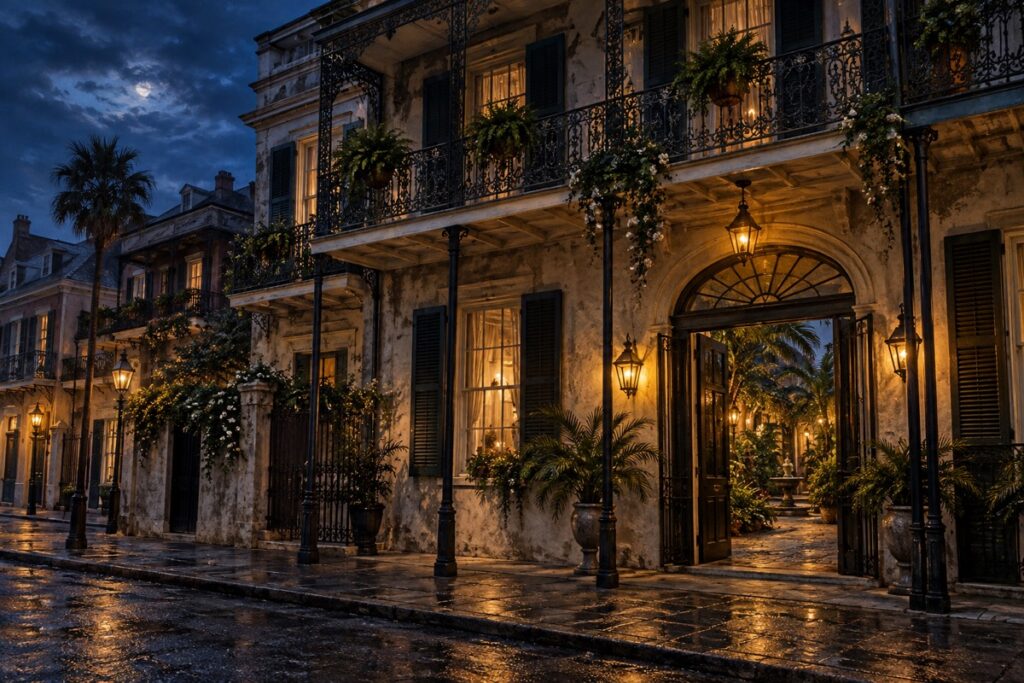
The courthouse was eventually removed, and the hotel says the present building was erected in 1890. Today the property is known for its wrought-iron balconies, compact scale, guest rooms, and interior courtyard. Those features belong to the later hotel. They should not be presented as surviving rooms from the earlier school or courthouse.
How the haunted reputation developed
The hotel’s own account describes a child called Armand, the sounds of laughter, moved bedding, a caretaker figure, and an apparition identified with Andrew Jackson. These are attributed stories. They are part of the property’s current identity, but they do not prove a paranormal cause or verify the historical events used to explain them.
The conflicting fire dates make the distinction especially important. A dramatic tragedy can become more precise each time it is retold, even when the underlying record remains uncertain. Names, numbers, and room locations may enter the story long after the alleged event. Responsible haunted history keeps the venue’s narrative intact while labeling it honestly.
Ordinary features of a small old hotel can also shape an experience. Courtyards carry voices. Wooden floors and doors move with humidity. Street noise travels between buildings, and guests arrive with strong expectations. These facts do not cancel a personal experience. They help readers judge it within the physical setting.
What to notice on Royal Street
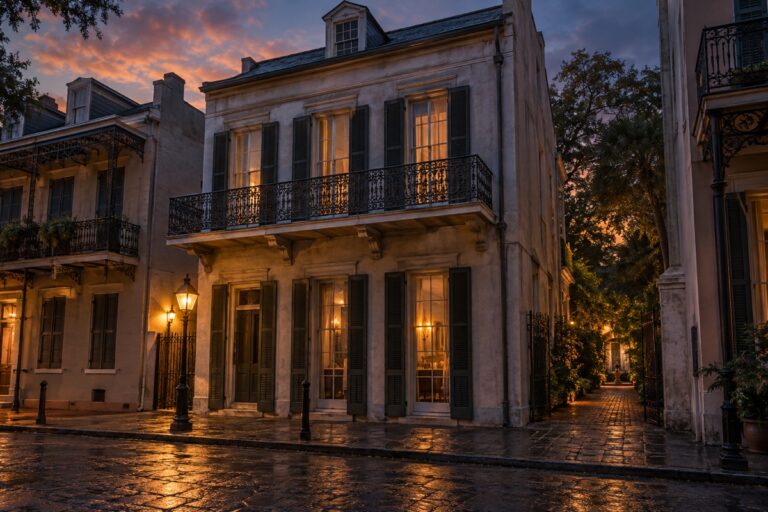
Study the hotel from the public sidewalk. Notice the scale of the facade, the ironwork, shutters, and relationship between the entrance and surrounding nineteenth-century buildings. The courtyard creates a sudden transition from a busy street to a more enclosed space. That contrast contributes much of the property’s atmosphere.
Remember that this is private lodging, not an open museum. Do not enter guest corridors, the courtyard, or rooms without permission. A respectful exterior visit can be combined with nearby sites that provide formal interpretation, including the New Orleans Pharmacy Museum and Historic BK House.
Planning a stay or visit
- Address: 919 Royal Street, New Orleans, Louisiana 70116.
- Phone: 504-561-5881.
- Official information: Andrew Jackson Hotel website.
- Access: The property is a working hotel. Book a room or use only spaces the hotel expressly opens to the public.
- Check-in: The hotel currently lists check-in at 4 p.m. Confirm current policies before arrival.
- Accessibility: Historic construction may affect routes and room layouts. Contact the front desk about specific needs before booking.
For a comparison of larger French Quarter hotels, continue to the Hotel Monteleone guide and the Bourbon Orleans Hotel guide. Each property has a different documented history and a different way of presenting its ghost stories.
Frequently asked questions
Is the Andrew Jackson Hotel really haunted?
The hotel promotes a haunted reputation, and guests have reported unusual experiences. Those accounts are folklore and venue tradition, not verified proof of paranormal activity.
Did children die in a fire on the site?
The hotel tells that story, but its own published material gives conflicting dates. HauntsUSA treats the claim as unverified until contemporary records establish the institution, fire date, and casualties.
Did Andrew Jackson stay at the hotel?
The documented connection concerns an earlier courthouse and Jackson’s contempt case after the Battle of New Orleans. The present hotel building dates from decades later.
Can non-guests enter the courtyard?
Do not assume access. The hotel is private lodging, and guest privacy takes priority. Ask the front desk before entering any interior or courtyard space.
Where should I confirm booking and policies?
Use the official hotel website or call 504-561-5881. Rates, check-in rules, accessibility arrangements, and public access can change.
Sources and editorial note
- Andrew Jackson Hotel: official history and haunted narrative
- Andrew Jackson Hotel: official guest FAQ
HauntsUSA separates documented history from reported folklore and venue marketing. Visitor details were last reviewed on September 26, 2026. Hotel policies can change without notice.