Quick answer: Historic BK House & Gardens is an 1826 French Quarter residence in New Orleans, Louisiana. Its documented history includes architecture, commerce, slavery, military memory, preservation, and nearly two centuries of residents. Stories of gunfire, conflict, and spectral figures belong to local folklore and tour tradition. They are not established paranormal fact.
Why Historic BK House matters
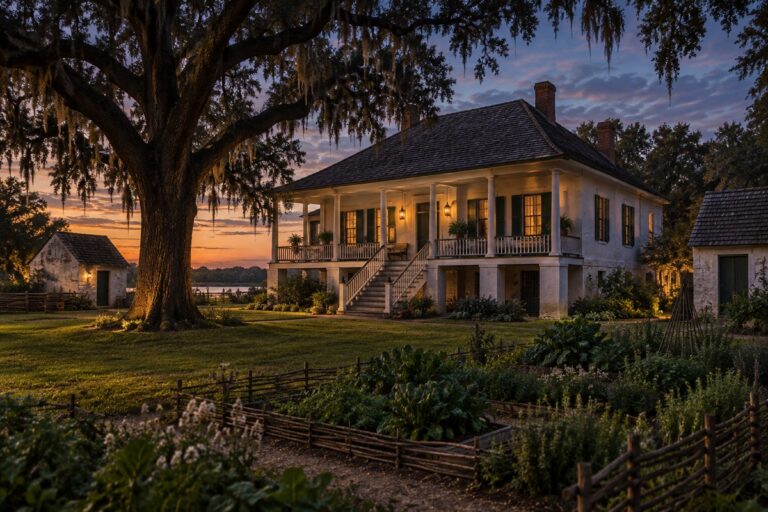
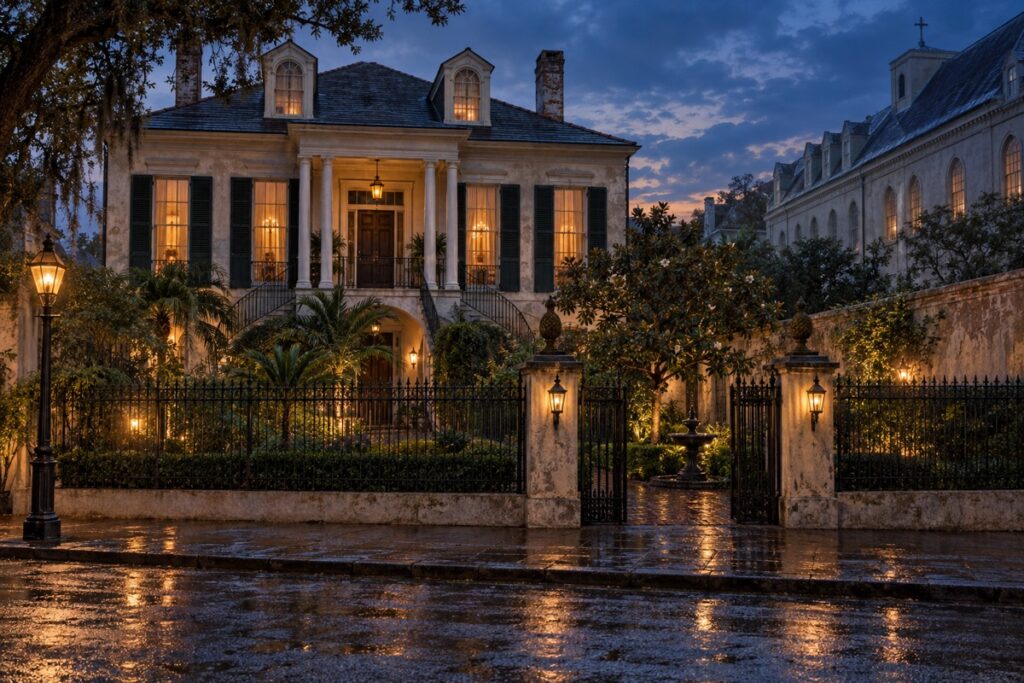
The house stands near the lower end of Chartres Street, where the French Quarter approaches Esplanade Avenue. This location places it within a neighborhood shaped by river commerce, Creole building traditions, immigration, war, and preservation. The property is worth visiting even without its ghost stories. Its rooms and courtyard offer a close view of how a substantial New Orleans household changed across generations.
Historic BK House also illustrates why haunted history must begin with documented history. The names of prominent owners survive easily, while the lives of enslaved people, domestic workers, craftspeople, tenants, and neighbors are harder to recover. A careful guide does not use those missing records as permission to invent. It identifies what is known, acknowledges what remains uncertain, and treats folklore as a separate layer of public memory.
The documented history
The house was designed by architect François Correjolles for auctioneer and businessman Joseph LeCarpentier in 1826. Its raised center-hall plan, generous rooms, and courtyard reflected both New Orleans building practice and the needs of an affluent urban household. The property later passed through several owners and tenants, each leaving a different mark on the site.
After the Civil War, Confederate general P. G. T. Beauregard rented the house for a period. His association helped give the property one of its best-known names. The building is also closely linked with author Frances Parkinson Keyes, who acquired it in the twentieth century, directed a major restoration, and made it her home. Her stewardship helped preserve the house at a time when many historic buildings faced neglect or demolition.
The museum now interprets nearly two centuries of people connected to the property. That history includes enslaved people whose labor sustained households and businesses before emancipation. Their experiences cannot be reduced to background atmosphere. Records created under slavery often preserve property transactions more readily than individual voices, so responsible interpretation must explain both the evidence and its limits.
Reading the house and garden
Begin outside. Study the height of the main floor, the rhythm of the facade, the openings, shutters, and the relationship between the house and Chartres Street. Then compare the formal rooms with the courtyard and service areas. The change in scale helps reveal how public display, family life, labor, food preparation, storage, and circulation were organized.
Inside, look beyond furniture and decorative objects. Doorways, floorboards, fireplaces, hardware, and room connections show how people moved through the building. Ask which features date to 1826, which were altered by later owners, and which were reconstructed during restoration. The answers make the house more interesting because they show preservation as an ongoing process rather than a frozen scene.
Reported hauntings and local folklore
Stories attached to Historic BK House include unexplained footsteps, sounds resembling gunfire, uneasy sensations, and figures seen in or near the house. Some tour narratives connect these reports with periods of conflict or with former residents. Such accounts should be attributed to visitors, guides, or oral tradition. They should not be folded into the verified chronology unless contemporary records support the connection.
Ghost stories change as they pass from one teller to another. A vague noise can become a detailed encounter. A general neighborhood legend can move into a specific room. Those changes do not make folklore worthless. They show how communities use stories to explain atmosphere, loss, and places that feel unusually close to the past.
Old buildings also produce ordinary mysteries. Sound moves through masonry, wooden floors, stairwells, courtyards, and shared walls. Streetlight and headlights cross old glass. Humidity and temperature affect doors and timber. These explanations do not invalidate a visitor’s personal experience. They provide the physical setting needed to judge a story fairly.
A note on care
Center the lives of enslaved people as history, not atmosphere. Avoid romanticizing the antebellum household or using human suffering as a theatrical device. Follow museum rules, protect fragile surfaces, and respect staff, neighbors, and other visitors. A haunted-history guide should deepen public understanding, not turn tragedy into decoration.
Planning your visit
The museum currently schedules guided tours on Monday, Tuesday, Thursday, Friday, and Saturday, with tours commonly offered at 10 a.m., 11 a.m., 1 p.m., 2 p.m., and 3 p.m. It is normally closed on Wednesday and Sunday. Programs, private events, and preservation work can change access, so confirm the calendar before travel.
- Address: 1113 Chartres Street, New Orleans, Louisiana 70116.
- Phone: 504-523-7257.
- Official information: Check the museum’s visit page before travel.
- Time needed: Allow about one hour for the guided house tour, plus additional time for the garden and nearby streets.
- Photography: Follow the museum’s current rules. Flash, tripods, and commercial photography may be restricted.
- Accessibility: Historic stairs, thresholds, paving, and narrow rooms can limit access. Contact the museum about the route you plan to use.
Build a French Quarter history route with the Hermann-Grima House, where interpretation focuses on urban domestic life and slavery, and the New Orleans Pharmacy Museum, which documents medicine and pharmacy. Each property has its own ticketing and schedule.
Frequently asked questions
Is Historic BK House really haunted?
The property is associated with reported experiences and long-circulating stories. These accounts are part of its modern reputation, but they do not establish paranormal activity as fact.
Can the public tour Historic BK House?
Yes. The museum offers guided tours on posted days and at scheduled times. Buy or reserve through the official website and confirm access before arriving.
Who built Historic BK House?
The house was designed by François Correjolles for Joseph LeCarpentier in 1826. Later residents and owners, including P. G. T. Beauregard and Frances Parkinson Keyes, shaped its public identity.
How long should a visit take?
Plan about one hour for a standard guided tour. Allow more time if you want to study the garden, architecture, or surrounding French Quarter streets.
Where should I confirm hours and admission?
Use the official Historic BK House website or call 504-523-7257 immediately before travel. Historic properties may adjust schedules for events, maintenance, weather, and seasonal programming.
Sources and editorial note
HauntsUSA separates documented history from reported folklore. Visitor details were last reviewed on September 26, 2026. Hours, prices, access, and tour policies can change without notice.