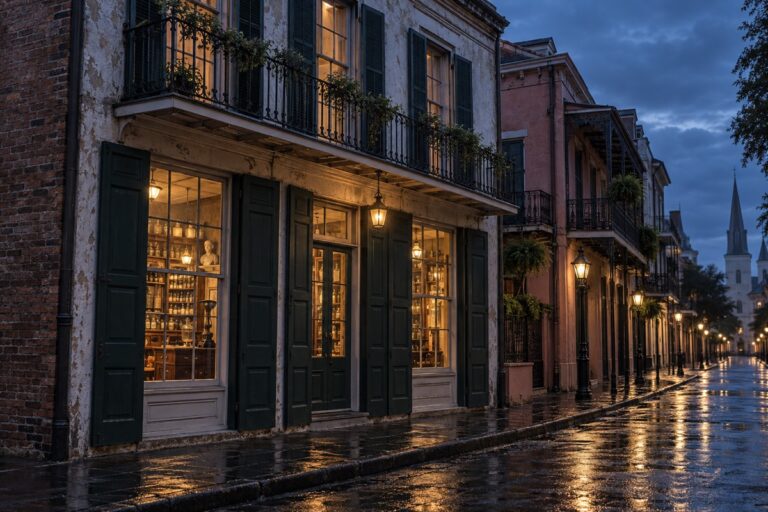
A preserved Chartres Street apothecary where the history of medicine, regulation, commerce, and unsettling folklore survives behind rows of old bottles and instruments.
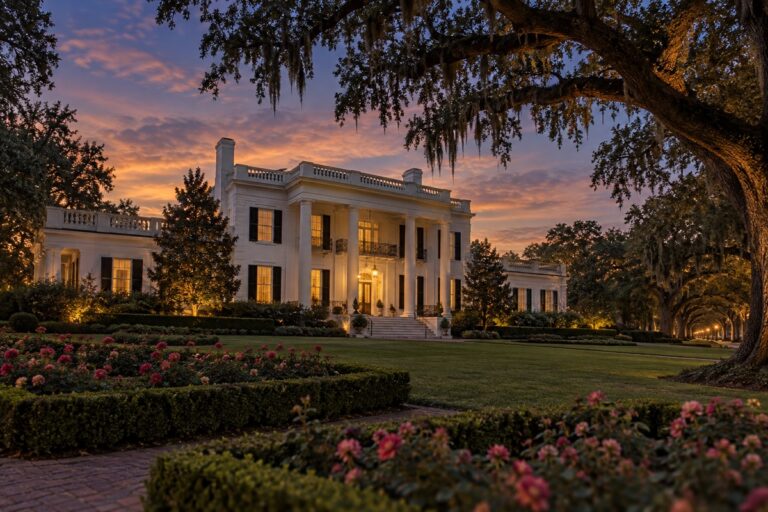
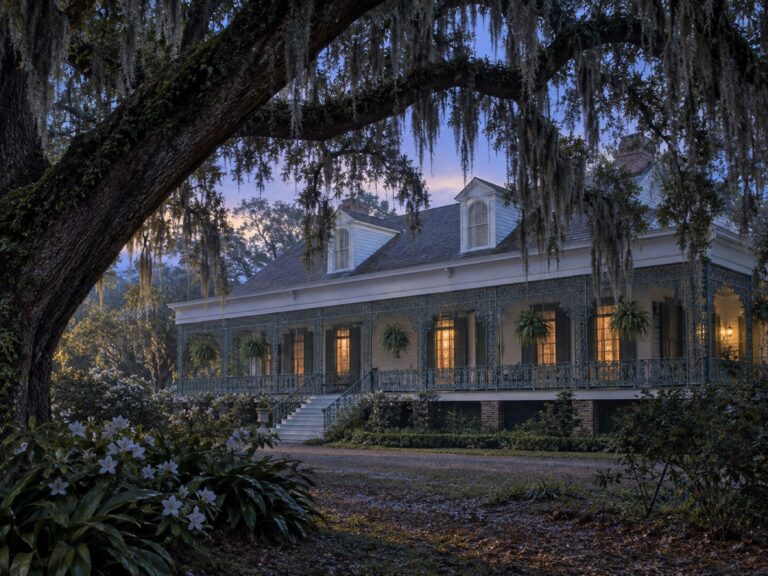
Built in 1929-1930 during Huey P. Long's governorship, the Georgian-style mansion housed nine governors and their families before becoming a museum and event venue interpreting Louisiana political and domestic life.
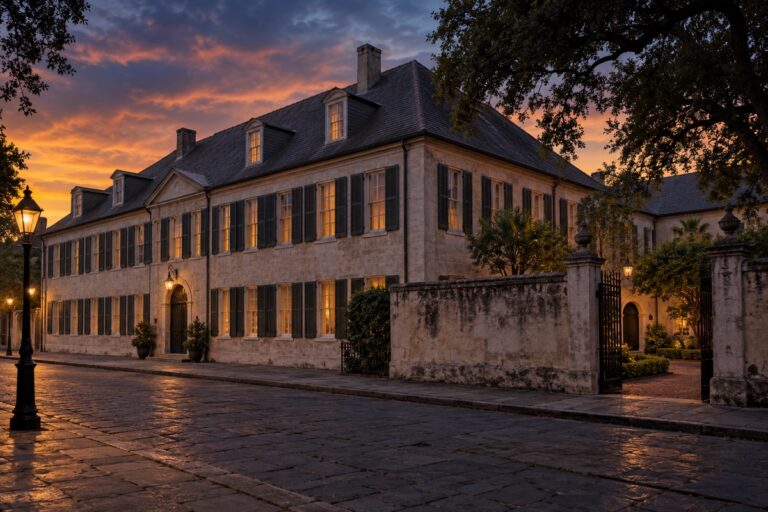
Authorized by the French crown in 1745 and completed in the early 1750s, the surviving convent reflects the Ursulines’ roles in education, health care, religion, and colonial community life.
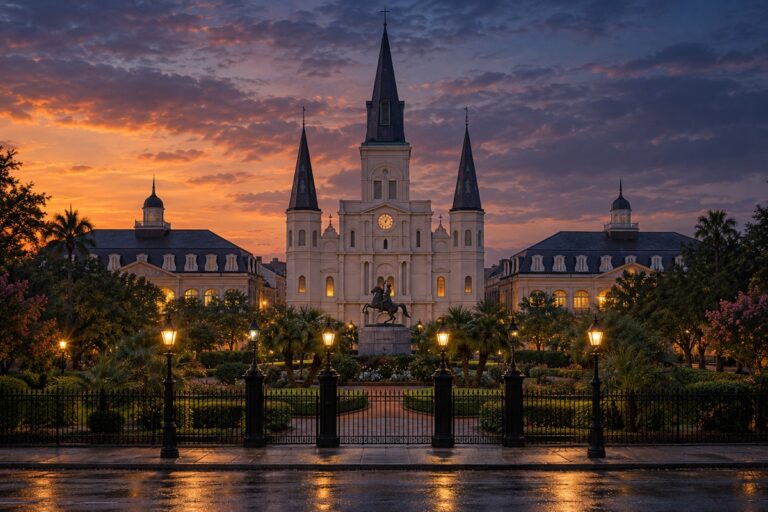
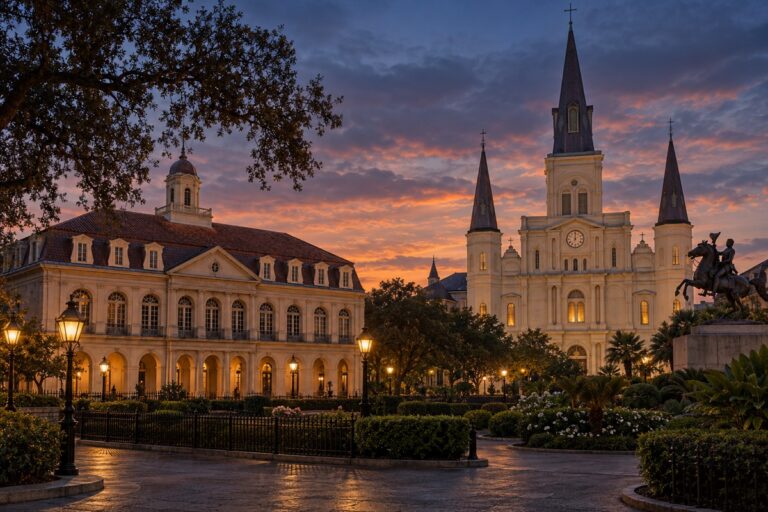
A Catholic church has occupied this part of Jackson Square since the colonial era; the present cathedral incorporates major nineteenth-century rebuilding of the Spanish-period church completed in 1794.
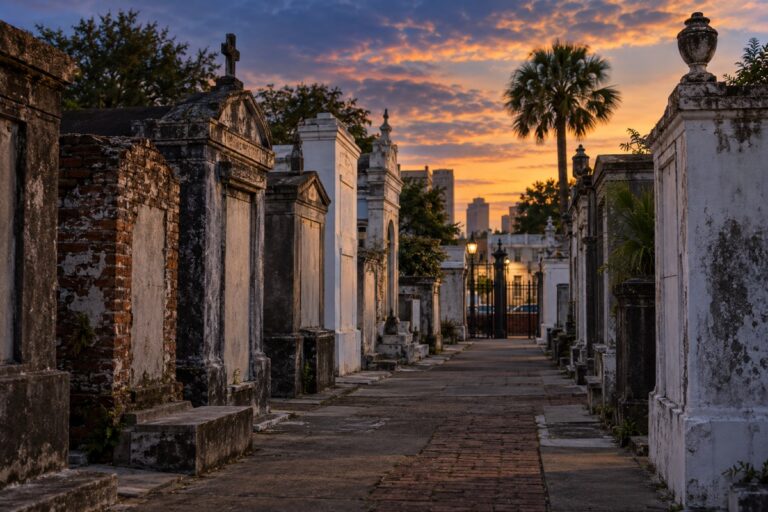
St. Louis Cemetery No. 1 was established in 1789 and is the oldest surviving cemetery in New Orleans. Its above-ground tombs, Catholic traditions, African American history, and association with Marie Laveau have made it central to the city’s memory and folklore. Public tourism is restricted to the authorized tour operator, while family members follow separate cemetery access procedures.
The Cabildo was rebuilt under Spanish rule after the 1788 fire and later served as a civic building associated with the Louisiana Purchase transfer, courts, government, and museum collections.
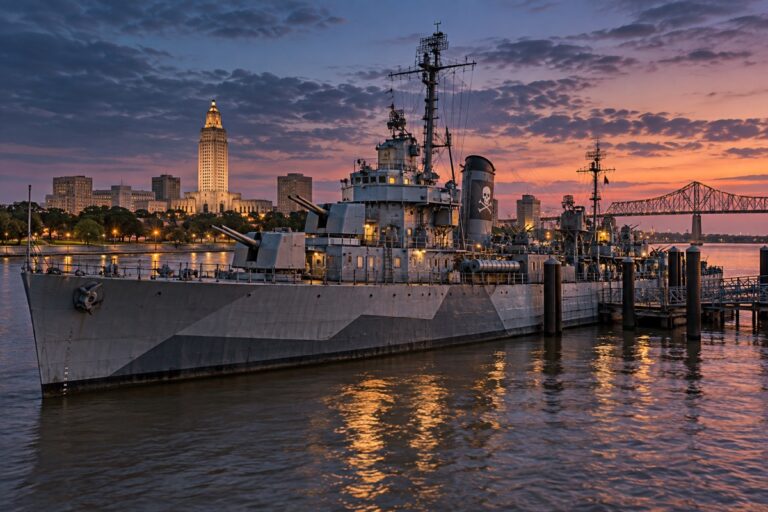
Commissioned in 1943, USS Kidd earned battle stars in World War II and Korea, survived a kamikaze strike, was decommissioned in 1964, and opened in Baton Rouge in 1983 as a carefully restored memorial ship.