Quick answer: St. Louis Cemetery No. 1 was established in 1789 and is the oldest surviving cemetery in New Orleans. Its above-ground tombs, Catholic traditions, African American history, and association with Marie Laveau have made it central to the city’s memory and folklore. Public tourism is restricted to the authorized tour operator, while family members follow separate cemetery access procedures.
A cemetery beyond the old city walls
New Orleans faced fire, disease, and pressure on its existing burial ground in 1788. Officials ordered the St. Peter Street cemetery closed and selected a new site beyond the fortified city. The chosen ground bordered marshy land near Charity Hospital. Burials began in 1789, and a Spanish royal decree approved the cemetery as permanent on August 14 of that year.
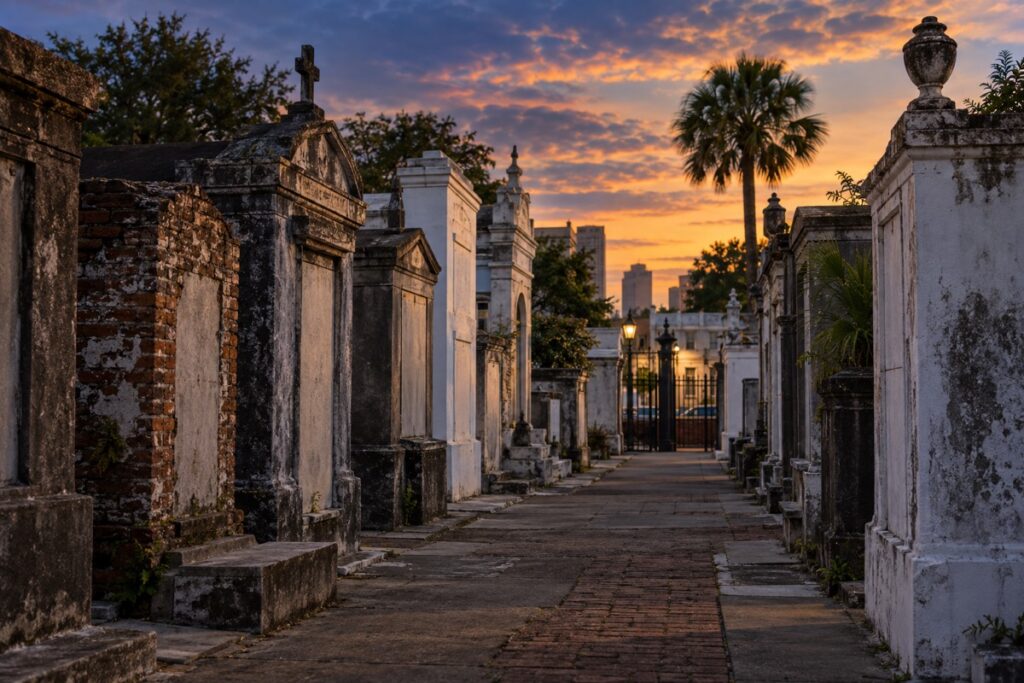
Early burials likely followed the in-ground practices used at the previous cemetery. Conditions in the low-lying city created continuing problems. In 1803, an ordinance directed that interments take place above ground. The rule was not followed in every case, but it encouraged the family tombs, wall vaults, and memorial structures that now define the landscape.
The architecture also drew from French and Spanish traditions. A tomb could hold several generations, with remains eventually gathered so a vault could be used again. This practical system produced a compact city of stucco, brick, stone, iron, and inscriptions.
A changing New Orleans population
The cemetery expanded as New Orleans changed after the Louisiana Purchase and the Haitian Revolution. Catholic, Protestant, Caribbean, African, European, free, and enslaved communities all shaped the city. Historical sections of the cemetery included space associated with Protestants and with African Americans and people of color.
Street extensions and urban growth later reduced the cemetery’s footprint. Burials were moved, and portions of the Protestant ground were separated or sold. The surviving cemetery was listed on the National Register of Historic Places in 1975 for its nationally important art and architecture. Louisiana added it to the African American Heritage Trail in 2008.
Many notable New Orleanians are connected with St. Louis Cemetery No. 1. The best known is Marie Laveau, the nineteenth-century free woman of color remembered as a spiritual practitioner and community figure. Her reputed tomb became a place where visitors left marks and offerings. Preservation rules now protect the structure from damaging practices.
Ghost stories, wishes, and folklore
Cemetery legends describe Marie Laveau walking among the tombs, voices heard in empty passages, and figures that vanish around corners. Some traditions tell visitors to mark a tomb, turn three times, or leave an offering in exchange for a wish. Such behavior can permanently damage historic masonry and is not allowed.
The folklore reflects New Orleans beliefs, commercial storytelling, and the powerful physical experience of the cemetery. It should not be confused with proven history. Marie Laveau’s life has often been distorted by racial stereotypes and sensational entertainment. A responsible visit begins with her documented place in Creole and African American history.
How to visit legally
- Address: 425 Basin Street, New Orleans, Louisiana.
- Tour access: New Orleans Catholic Cemeteries states that public tours are offered only through Cemetery Tours New Orleans.
- Tour phone: 504-777-3027 or 800-368-1789.
- Cemetery office: 504-596-3050.
- Family access: Families with interment rights follow the pass process described by New Orleans Catholic Cemeteries.
- Rules: Food, alcohol, unauthorized vehicle tours, and non-service animals are prohibited.
Schedules, ticket arrangements, religious observances, weather closures, and funeral activity can affect access. The cemeteries close on Mardi Gras Day and may close early before the Endymion parade. Confirm current details before traveling.
Continue through New Orleans history
The cemetery offers essential context for several nearby HauntsUSA guides. The New Orleans Pharmacy Museum explores medicine and public health in the nineteenth-century city. The Historic BK House preserves another layered French Quarter property. The Hermann-Grima House interprets domestic life and slavery inside a preserved French Quarter residence.
St. Louis Cemetery No. 1 is not scenery for a thrill. It remains sacred ground and a working archive of families whose stories include the city’s wealth, faith, epidemics, migrations, racial divisions, and cultural resilience.
Frequently asked questions
Can tourists enter St. Louis Cemetery No. 1 alone?
General tourist access is restricted. New Orleans Catholic Cemeteries states that public tours are offered only through its authorized operator. Family access follows a separate pass procedure.
Why are so many graves above ground?
Low ground and flooding encouraged above-ground interment, while French and Spanish memorial traditions influenced the architecture. An 1803 ordinance directed above-ground burial.
Is Marie Laveau buried here?
A tomb in the Glapion family plot is widely accepted as her burial place. Visitors must not mark or touch the tomb.
Is the cemetery haunted?
Stories describe apparitions, voices, and the presence of Marie Laveau. These accounts are folklore and personal testimony, not verified paranormal evidence.
When was the cemetery established?
Burials began in 1789, and a Spanish royal decree approved the cemetery as permanent on August 14, 1789.
Sources and editorial note
- New Orleans Catholic Cemeteries: St. Louis Cemetery No. 1
- New Orleans Catholic Cemeteries: preservation and restoration
HauntsUSA separates cemetery history, religious practice, and folklore. Access information was reviewed on September 26, 2026. Confirm tour rules directly before visiting.
Editorial image: AI-created historical interpretation for HauntsUSA. It is not documentary evidence of paranormal activity.