Quick answer: The house at 1140 Royal Street is associated with Delphine LaLaurie, whose abuse of enslaved people was exposed after an 1834 fire. The event is documented, but later retellings added gruesome details that cannot all be verified. The present structure was substantially rebuilt after the fire and later expanded. It is a private residence, not a museum, and its history should be approached as a record of slavery and violence rather than as a horror attraction.
Delphine LaLaurie and Royal Street
Marie Delphine Macarty was born into a prominent Creole family in New Orleans in 1787. She married three times and became a wealthy property owner. In 1831, she acquired the Royal Street property while a house was already under construction. The residence was completed for her and her third husband, physician Louis LaLaurie.
LaLaurie’s social standing did not protect her reputation from growing concern about the treatment of people she enslaved. Contemporary law offered almost no meaningful protection to enslaved people, yet surviving accounts indicate that complaints and suspicion preceded the event that made the household notorious.
The fire of April 10, 1834
A fire broke out at the house on April 10, 1834. Firefighters and others who entered discovered seven enslaved people who had been starved, restrained, and severely abused. Reports in the New Orleans Bee appeared immediately. News of the discovery drew an angry crowd, and the house was attacked after the LaLauries escaped.
The central facts are grave enough. Enslaved people were found in conditions that showed prolonged cruelty. Later writers expanded the story with increasingly elaborate scenes of torture, secret rooms, and named victims. Historian Carolyn Morrow Long’s archival work separates evidence from invention. A responsible account should not repeat sensational details merely because they are familiar from tours, television, or fiction.
Delphine LaLaurie fled New Orleans and eventually settled in Paris. She died there in 1849. Records indicate that her remains were later sent to New Orleans, probably for burial in St. Louis Cemetery No. 1, although incomplete interment records prevent absolute certainty.
The building visitors see today
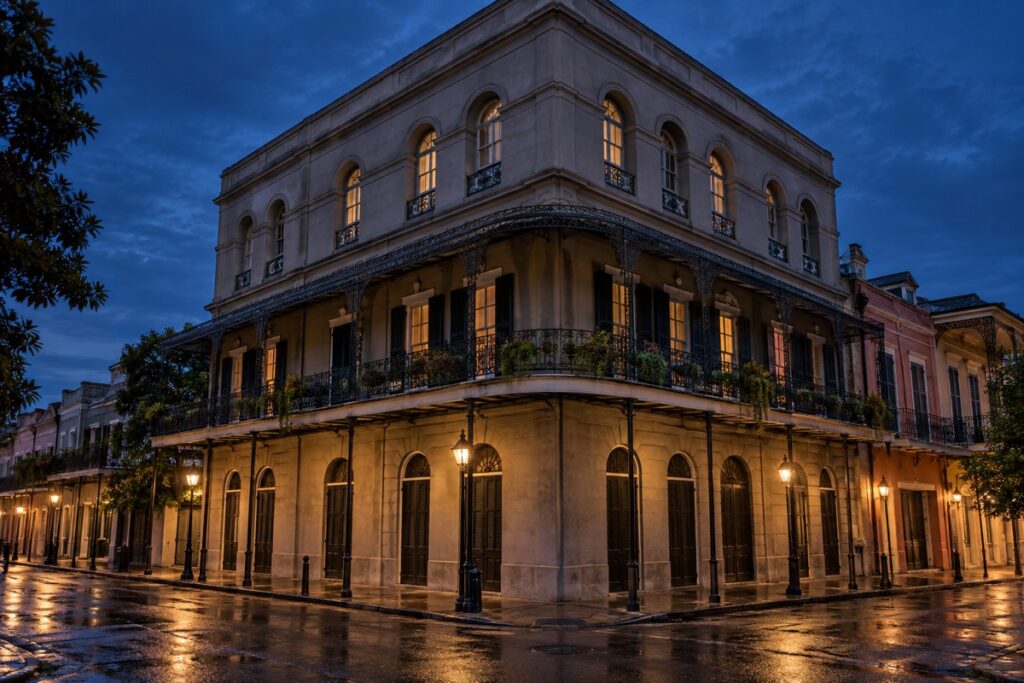
The present house is not unchanged from the night of the fire. Research assembled by the Vieux Carré Survey states that very little of the earlier residence may have remained after fire and mob destruction. Pierre Trastour rebuilt the property around 1837 or 1838. A third floor and other additions came later in the nineteenth century.
The rebuilt structure served several purposes. Records document educational use, including Franklin High School, and later a music conservatory. The site therefore holds more than one chapter of New Orleans history. The city’s preservation records classify the main building as having major architectural or historical significance.
How the haunted reputation developed
The Royal Street house was called haunted during the nineteenth century. Newspaper accounts, travelers, and later commercial storytellers helped transform the address into a landmark of American gothic folklore. Reports describe screams, figures at windows, cold areas, and the presence of people who suffered in the household.
These are legends and personal reports, not verified evidence. The danger is not merely factual error. Sensational ghost stories can erase the identities and humanity of the enslaved people whose documented abuse created the site’s reputation. HauntsUSA does not invent names, deaths, or apparitions where the historical record is silent.
Visiting 1140 Royal Street responsibly
- Address: 1140 Royal Street, New Orleans, Louisiana 70116.
- Access: The property is a private residence. There is no general public interior access.
- Viewing: The exterior can be seen from the public sidewalk. Do not block doors, steps, traffic, or neighboring homes.
- Photography: Use normal public-street etiquette. Do not photograph through windows or enter private property.
- Tours: Walking tours may discuss the house from the street. Verify the operator’s historical standards before booking.
For a public museum that interprets nineteenth-century domestic life and slavery, visit the nearby Hermann-Grima House. The Historic BK House provides another carefully preserved French Quarter interior. Continue to the New Orleans Pharmacy Museum for medical and public-health history.
Why this history requires care
The LaLaurie story is often marketed as a tale of a monstrous woman in a haunted mansion. That framing is too narrow. The abuse occurred within a legal and economic system that treated human beings as property. The crowd’s anger in 1834 did not end slavery in New Orleans, and later fascination with the house did not restore what was taken from its victims.
The most honest way to discuss the site is to state what contemporary evidence supports, identify later folklore as folklore, and resist decorative cruelty. The house is historically important because it reveals both an individual crime and the wider society that made such violence possible.
Frequently asked questions
Can visitors tour inside the LaLaurie Mansion?
No regular public interior tour is available. The property is a private residence. Visitors should remain on the public sidewalk.
Is the current building the same house from 1834?
Not entirely. The earlier house was badly damaged in 1834. Preservation research states that it was rebuilt around 1837 or 1838, with a third floor and other additions added later.
What was discovered after the fire?
Contemporary reports describe seven enslaved people found starved, restrained, and severely abused. Many more elaborate details in later versions cannot be independently verified.
Is the LaLaurie Mansion haunted?
The house has carried a haunted reputation since the nineteenth century. Reports of sounds and apparitions are folklore and personal testimony, not verified paranormal evidence.
Where was Delphine LaLaurie buried?
She died in Paris in 1849. Her remains were later sent to New Orleans and were probably placed in a family tomb in St. Louis Cemetery No. 1, but incomplete records leave uncertainty.
Sources and editorial note
- Historic New Orleans Collection Vieux Carré Survey: 1140 Royal Street
- 64 Parishes: Delphine LaLaurie, by Carolyn Morrow Long
- Louisiana Historical Association: Dictionary of Louisiana Biography
HauntsUSA separates documented abuse, architectural history, and later ghost lore. Property status was reviewed on September 26, 2026. The house is private and should be viewed only from public space.
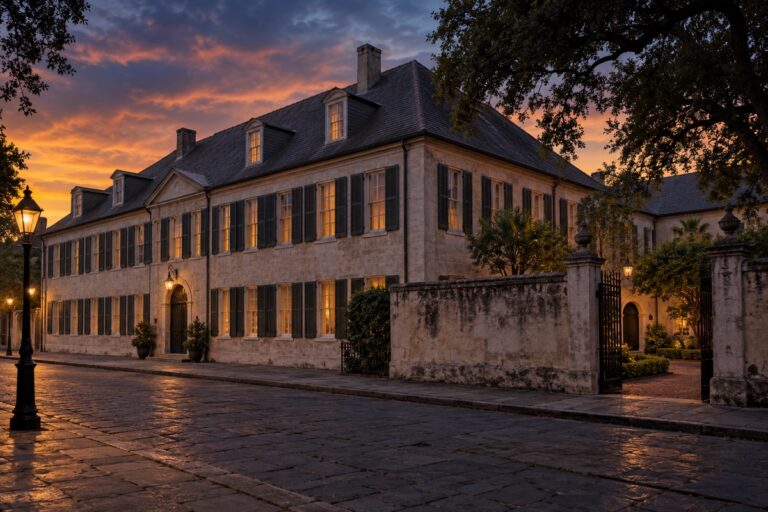
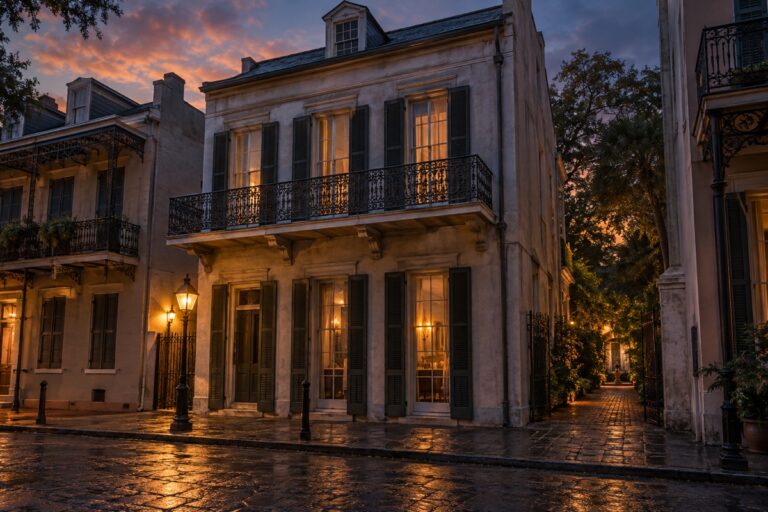
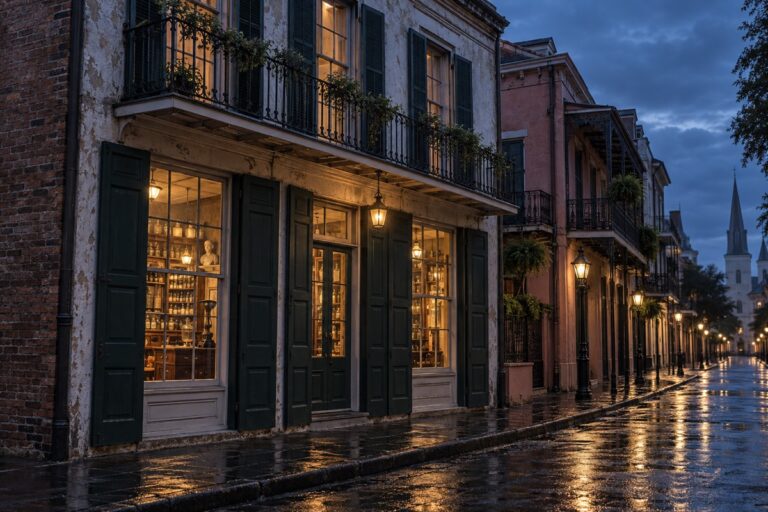
Editorial image: AI-created historical interpretation for HauntsUSA. It is not documentary evidence of paranormal activity.