Quick answer: The Shriver House Museum interprets how the Battle of Gettysburg disrupted one civilian family. George and Hettie Shriver moved into the Baltimore Street home in 1860. Hettie fled with their daughters as fighting approached, while Confederate sharpshooters later occupied the building. The restored house is strongest as civilian history; ghost claims remain folklore.
The Shriver family before Gettysburg
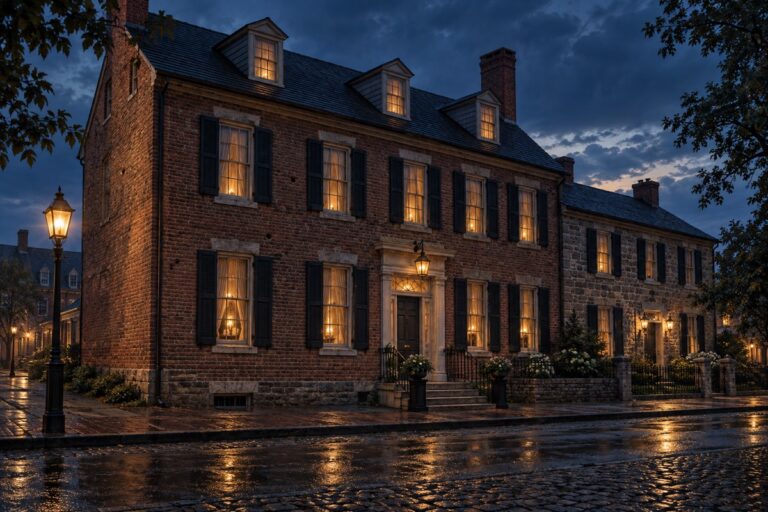
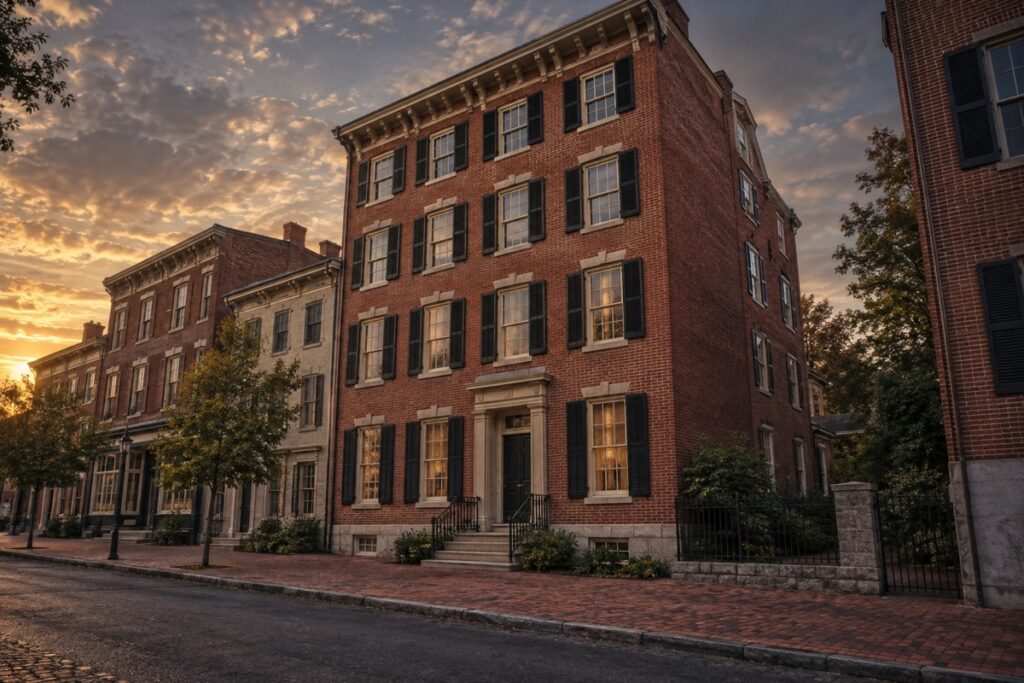
George and Hettie Shriver moved into their newly completed four-story brick house in 1860 with daughters Sadie and Mollie. The lower level was intended for George’s business, while the upper floors served as the family home. George enlisted in Union service, leaving Hettie to manage the household during an increasingly uncertain war.
The building’s combined domestic and commercial plan reflects Gettysburg before it became a national memory site. Families worked, raised children, and planned businesses along Baltimore Street. This ordinary setting makes the interruption of July 1863 more legible.
Flight and occupation during the battle
As artillery and gunfire approached on July 1, Hettie left Gettysburg with seven-year-old Sadie and five-year-old Mollie. When they returned six days later, they found the home damaged and household items missing or broken. Neighbors reported that Confederate sharpshooters had used the attic to fire toward Union positions on Cemetery Hill.
The museum interprets openings made in the south-facing brick wall and material evidence found during restoration. Its account says two Confederate soldiers died in the attic and describes forensic testing consistent with blood. Visitors should understand which conclusions come from building evidence, which come from neighbor testimony, and which are later reconstruction.
George Shriver’s fate
George continued serving with Cole’s Cavalry. He was captured during fighting near Brandy Station and sent to Andersonville prison in Georgia. He did not return to the family. His story broadens the site’s timeline beyond the three days at Gettysburg, connecting one household to military service, captivity, and long-term loss.
For Hettie and the children, the battle’s end did not restore the life they had planned in 1860. Civilian history includes repair, displacement, financial strain, grief, and adaptation after armies moved away.
Abandonment, restoration, and museum use
The house remained a residence for roughly a century and then stood abandoned for nearly thirty years. Del and Nancie Gudmestad acquired and restored it in the 1990s, opening the museum in 1996. Work uncovered bullets, household objects, and other material used in interpretation. Rooms were furnished to evoke the 1860s.
Gettysburg History assumed ownership and management in January 2025. Guided tours now connect the Shriver family to the wider civilian experience. Restoration makes the building readable, but visitors should not assume every object remained exactly where it stood during the battle.
The museum’s artifacts can support different kinds of conclusions. A bullet found in a wall helps document combat near the building. A child’s shoe sealed inside construction can illustrate a period custom. Recreated furnishings help visitors imagine scale and use, but they are not automatically family possessions. Good interpretation identifies each category clearly.
Why civilian history changes the battle story
Military maps often emphasize units, commanders, and lines of fire. A household view asks different questions: who found food, protected children, repaired a damaged roof, or waited for news from a prisoner of war? The Shriver story connects those domestic decisions to the same landscape seen from Cemetery Hill.
It also continues after July 3. George’s capture and death, Hettie’s return, and the long residential life of the house show that the consequences of battle did not end when organized firing stopped.
Ghost stories and evidentiary limits
A house associated with sharpshooters, death, abandonment, and restoration naturally attracts paranormal stories. Reports of sounds or figures appear in popular media and visitor accounts. They are not equivalent to the museum’s architectural evidence or family records.
HauntsUSA presents such stories as later folklore. Begin with the documented household and wartime sequence. The Gettysburg town guide supplies regional context, while the Jennie Wade House guide follows another Baltimore Street family.
Planning a responsible visit
- Reserve or verify guided-tour times with the museum.
- Expect stairs and the constraints of a historic multi-story building.
- Ask guides how artifacts and damage were authenticated.
- Do not touch preserved brickwork, openings, or displayed objects.
- Keep paranormal claims distinct from family and building records.
Frequently asked questions
When was the Shriver House built?
The house was completed in 1860, shortly before the Civil War transformed the family’s life.
Did the Shriver family stay during the battle?
Hettie Shriver fled with her daughters as fighting approached and returned six days later.
Were sharpshooters in the house?
The museum presents neighbor accounts and surviving building evidence that Confederate sharpshooters used the attic.
When did it become a museum?
After private restoration in the 1990s, the Shriver House Museum opened in 1996.
Who operates it now?
Gettysburg History assumed ownership and management in January 2025.
Sources and editorial note
- Shriver House Museum: Our History
- Shriver House Museum: Visitor Information
- National Park Service: Civilians at Gettysburg
HauntsUSA separates family history, restoration evidence, and later folklore. Visitor information was reviewed on September 27, 2026.
Editorial image: AI-created historical interpretation for HauntsUSA. It is not documentary evidence or proof of paranormal activity.