Quick answer: The Jennie Wade House preserves the Baltimore Street home where Mary Virginia “Jennie” Wade was killed on July 3, 1863, while helping her sister’s household and preparing bread. National Park Service interpretation identifies her as the Battle of Gettysburg’s only direct civilian fatality. Paranormal programs are a separate, later layer of the site’s history.
Who was Jennie Wade?
Mary Virginia Wade, commonly called Jennie, was twenty years old in 1863. She and her mother supported the family through sewing. As fighting approached Gettysburg, Wade went to the Baltimore Street home of her sister, Georgia Wade McClellan, who had recently given birth. The location initially appeared safer than the family’s Breckenridge Street home.
The house stood between shifting Union and Confederate positions. Family members sheltered while gunfire struck the building. Wade helped care for the household and provided bread and water for Union soldiers nearby.
The morning of July 3
On July 3, a bullet passed through two doors and struck Wade as she worked with bread dough in the kitchen. She died immediately. Union soldiers moved her body to the cellar and later buried her near the house. Her remains were eventually reinterred in Evergreen Cemetery, where a monument marks her grave.
The National Park Service presents Wade within a broader civilian history, alongside residents who nursed wounded people, hid soldiers, lost property, or documented the battle. Her death is singular, but her household’s ordeal also represents the danger civilians faced when combat entered streets and homes.
The house as a museum
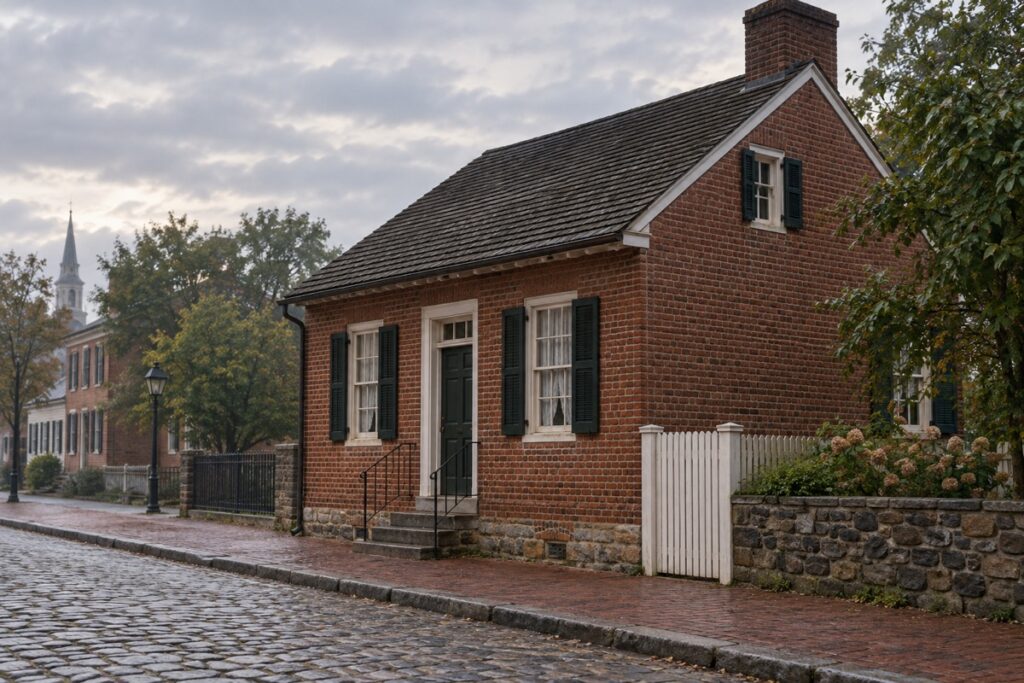
The property became a museum in 1901. Preservation focused on the house, battle damage, family memory, and objects associated with the event. The operator offers guided daytime history tours and publishes seasonal schedules. Because the building retains historic stairs and floors, accessibility is limited.
Some details repeated in popular retellings require care. The nature of Wade’s relationship with Jack Skelly, a Gettysburg soldier mortally wounded at Winchester, has been described in different ways. The venue’s research calls them childhood friends who became sweethearts but cautions against assuming every romantic tradition is settled fact.
From memorial history to ghost tourism
Evening ghost programs have attached reports of footsteps, voices, moving objects, and apparitions to the house. These are advertised experiences and participant accounts, not independent verification of paranormal activity. Daytime historical tours explicitly separate themselves from ghost hunting and prohibit paranormal equipment.
The distinction matters. Wade’s documented death should not be reduced to a thrill device. Folklore can be discussed as part of how the house has been marketed and remembered, but claims need clear attribution and should never replace the civilian context.
What visitors can learn
The building’s small rooms make the battle’s proximity understandable in a way that maps alone cannot. Doors, walls, cellar space, and the surrounding street show how little separation existed between domestic work and military fire. Guided interpretation can also explain later restoration and which displayed objects have direct provenance.
Her first burial near the house was an emergency response during an active battle. Later reinterment in Evergreen Cemetery placed Wade within a formal memorial landscape. That sequence shows how battlefield death, family remembrance, and public commemoration developed in stages rather than in one planned ceremony.
The damage visible today also needs interpretation. A historic opening can be genuine evidence while the story attached to it grows through generations of guides, visitors, and publicity. Asking what was documented when the museum opened helps separate material history from later embellishment.
Place the house within the Gettysburg town history guide. A second civilian perspective appears in the forthcoming Shriver House Museum guide.
Planning a respectful visit
- Check seasonal hours and obtain tickets through the official operator.
- Expect stairs, original flooring, and accessibility limitations.
- Choose a daytime history tour when your priority is documented interpretation.
- Do not touch damage or historic surfaces unless a guide explicitly permits it.
- Treat the house as a civilian death site, not simply a haunted attraction.
Frequently asked questions
Was Jennie Wade the only civilian killed at Gettysburg?
The National Park Service identifies her as the battle’s only direct civilian fatality.
Was she in her own home?
No. She was staying in the Baltimore Street home of her sister, Georgia Wade McClellan.
What was Wade doing when she died?
She was working with bread dough in the kitchen when a bullet passed through two doors and struck her.
Are daytime tours ghost tours?
No. The operator states that daytime history tours do not discuss the paranormal and do not permit ghost-hunting equipment.
Is the house accessible?
The operator warns that original stairs and flooring prevent full wheelchair or stroller accessibility. Confirm current accommodations directly.
Sources and editorial note
- National Park Service: Civilians at Gettysburg
- Jennie Wade House: History
- Jennie Wade House: Visitor Information
HauntsUSA separates civilian history, museum interpretation, and later paranormal programming. Visitor information was reviewed on September 27, 2026.
Editorial image: AI-created historical interpretation for HauntsUSA. It is not documentary evidence or proof of paranormal activity.