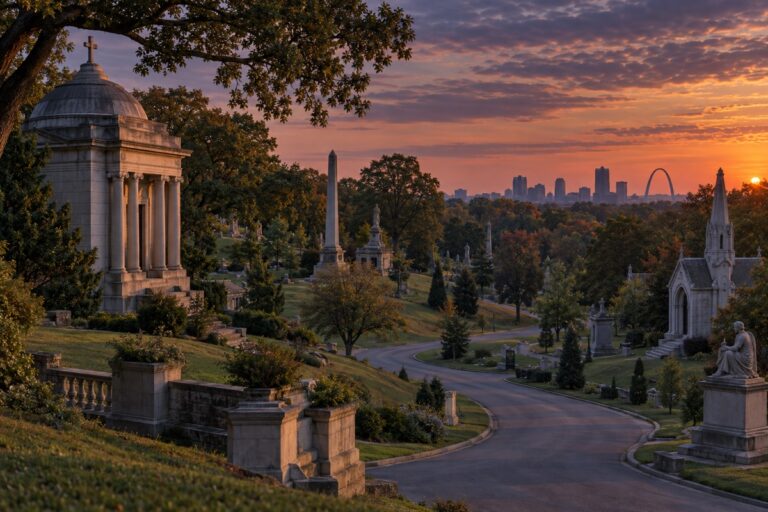
Established during the rural cemetery movement and dedicated in 1850, Bellefontaine combines landscape design, monuments, architecture, horticulture, and the graves of generations of St. Louis residents.
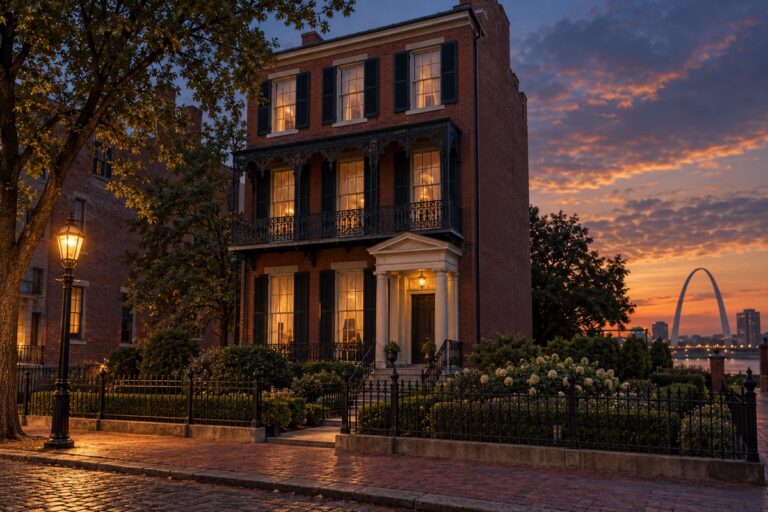
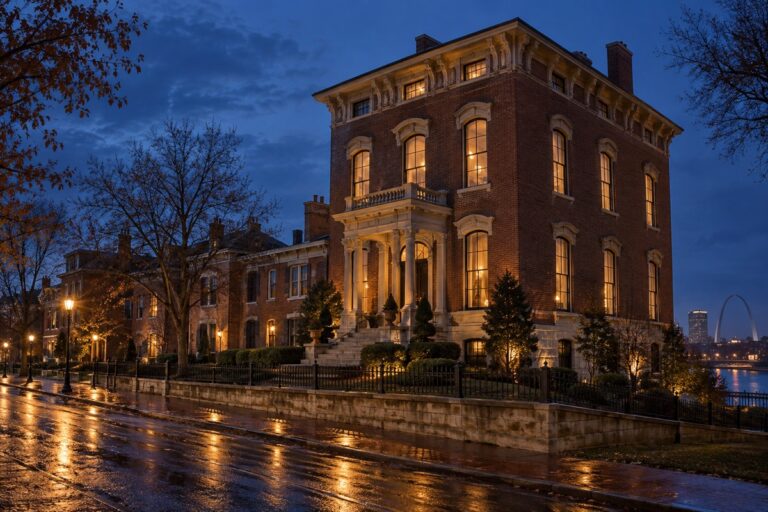
Built in 1851 on Lucas Place and occupied by the Campbell family for more than eight decades, the house preserves an unusually detailed record through objects, papers, photographs, and restoration research.
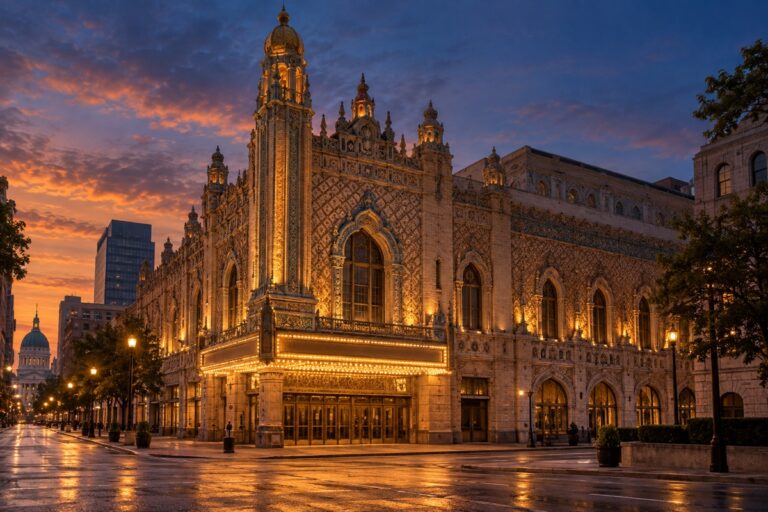
Opened in 1929, the Fox is an elaborate movie palace whose design, entertainment history, closure, and restoration reflect changing patterns of performance and downtown life.
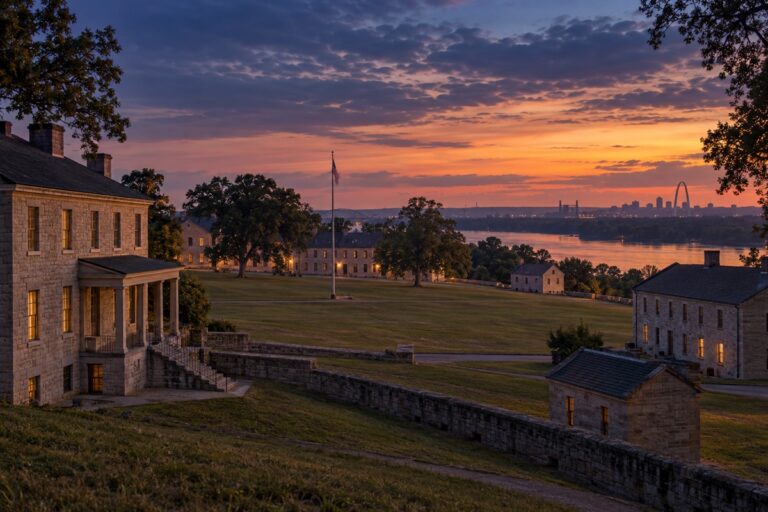
Established in 1826, Jefferson Barracks became a major military post, training center, hospital landscape, and burial place connected to conflicts from westward expansion through the twentieth century.
In St. Louis, the Lemp Mansion is inseparable from the rise and decline of one of the city's great brewing families. Its brick walls and formal rooms stand near the former Lemp brewery complex, where lager production became an industrial empire. The mansion's later reputation for tragedy and ghost stories has made it a familiar name in American haunted history, but the fuller story begins with immigration, beer, and nineteenth-century St. Louis.
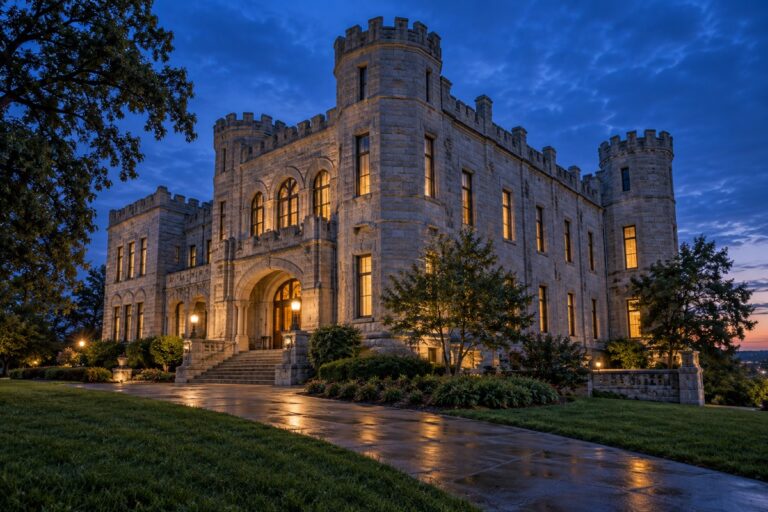
Pythian Castle in Springfield, Missouri, was built in 1913 by the Knights of Pythias as a home for children and older members. The United States military acquired the property during the Second World War and used it for troop rehabilitation and prisoner-of-war functions. Today the privately operated landmark offers scheduled history tours, ghost tours, investigations, and events. It is not open for casual entry outside a booked program.