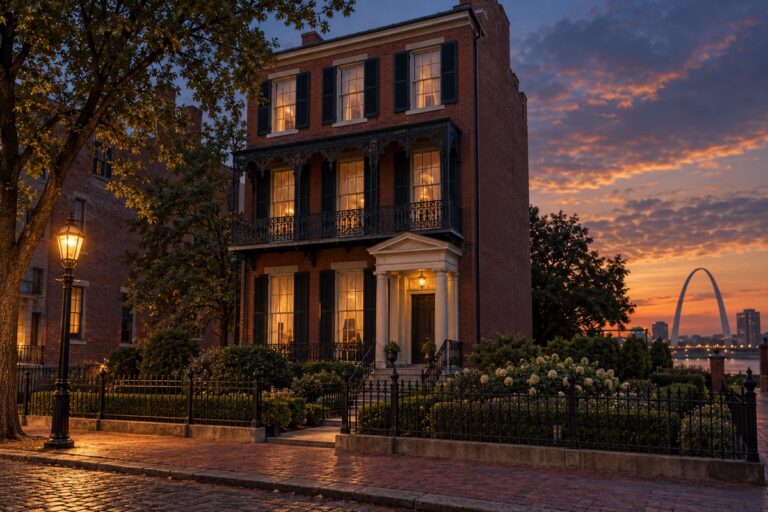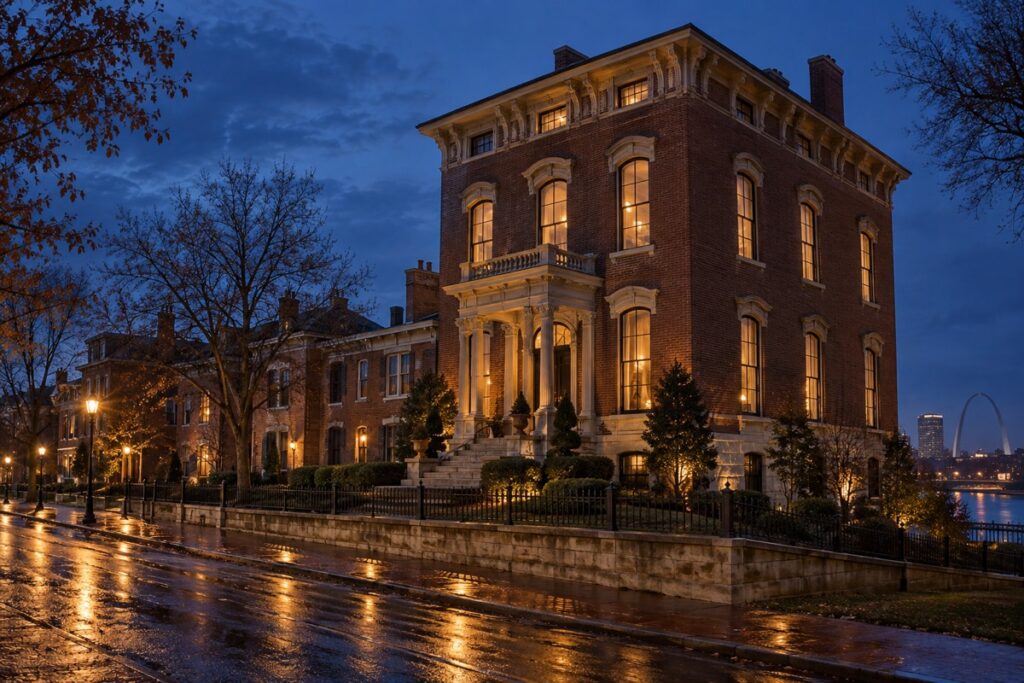
Quick answer: Lemp Mansion is a historic house, inn, restaurant, and event venue at 3322 DeMenil Place in St. Louis, Missouri. It was associated with the Lemp brewing family, whose nineteenth-century lager business used the city’s cave system for cool storage. Family deaths and business decline later fed a powerful haunted-house reputation.
Why Lemp Mansion matters
The Lemp story belongs first to immigration and industrial St. Louis. German brewing knowledge, underground geology, rail and river markets, refrigeration, advertising, and family enterprise helped create a major business. The mansion stood close to that world rather than apart from it.
Its reputation also demonstrates how biography can harden into a curse narrative. Several tragic deaths in one family are real historical events. Calling them evidence of a supernatural curse can flatten individual lives and turn mental-health crises into entertainment.
The documented history
John Adam Lemp arrived from Germany and began selling lager beer in St. Louis during the nineteenth century. Natural caves offered conditions suitable for storage before mechanical refrigeration. The family brewery grew into an industrial enterprise under later generations.
The mansion served as both family residence and a place connected to brewery business. Its location near the complex allowed domestic and industrial life to overlap. Success brought wealth and public status, but competition, Prohibition, changing markets, and family conflict altered the business.
A series of family deaths, including suicides, became central to later retellings. These events should be described in restrained language, with attention to dates, relationships, and the limits of surviving evidence. The house eventually entered a new life as a restaurant, lodging property, and event space.
History, memory, and the haunted reputation
Visitors and staff report voices, footsteps, figures, moving objects, ringing phones, and strong sensations in bedrooms, stairways, and service areas. Tours and media programs have made Lemp Mansion one of the best-known haunted places in St. Louis.
The stories often merge separate people and periods into one dramatic family downfall. Good editorial work restores chronology. It distinguishes brewery history, private grief, property changes, and modern paranormal programming.
Discussion of suicide requires care. A death should not be used as evidence that a person remains trapped or malevolent. Readers in crisis deserve language that is factual rather than romantic or sensational.
What to notice during a visit
Study the mansion’s relationship to the former brewery district and the nearby cave landscape. Inside public areas, note the stair, woodwork, rooms, and later adaptations for dining and lodging. Ask where business and domestic functions met.
Explore the surrounding Benton Park and Cherokee Street area to understand the industrial and immigrant city beyond the mansion. The Lemp family story becomes clearer when placed alongside other breweries and neighborhoods.
Planning a visit
- Location: 3322 DeMenil Place, St. Louis, Missouri 63118.
- Access: Restaurant, lodging, tours, mystery dinners, weddings, and events follow separate schedules. Confirm the specific experience before arrival.
- Best for: Brewing-history readers, St. Louis architecture travelers, historic-inn guests, and adults interested in carefully framed paranormal lore.
- Before you go: Confirm current hours, tickets, accessibility, and photography rules on the official website.
Frequently asked questions
Is Lemp Mansion haunted?
The venue markets Lemp Mansion as haunted and visitors report experiences. These accounts do not prove a supernatural cause.
Can the public visit?
Yes, through dining, lodging, tours, or events. Some rooms are private or reserved.
How much time should visitors allow?
Allow at least ninety minutes for dining or a tour. An overnight stay and neighborhood walk require more time.
What is the most important historical context?
The lager industry, cave storage, immigrant enterprise, brewery decline, and family biography are the essential foundation. Tragedy should not be presented as a curse.
Sources and editorial note
The official Lemp Mansion history and venue pages provide the family and brewery narrative, current uses, address, and phone number. City directories, brewery records, newspapers, and mental-health-sensitive editorial standards should guide expansion.
HauntsUSA separates documented history from reported experiences, local legend, and venue marketing. Paranormal claims are never stated as proven fact. Generated artwork is labeled as an editorial interpretation rather than documentary photography.
Last reviewed September 26, 2026. Visitor details can change. Confirm current information with the site before travel.
Brewing, caves, and the neighborhood
St. Louis brewing grew from more than one family. German-speaking immigrants brought knowledge and consumer tastes, while river trade, railroads, grain, ice, caves, and later refrigeration supported an industry. The Lemp properties should be compared with surviving breweries, worker housing, saloons, and commercial streets. That wider landscape prevents a dramatic family story from standing in for the city’s entire brewing past.
Weather is part of the visit
Coastal conditions change quickly. Wind, rain, fog, heat, and slippery trail surfaces can affect the climb and whether volunteers open the lighthouse floor. Bring layers, stable shoes, water, and patience. Do not cross barriers for a photograph. The most memorable view often comes from stopping along the trail and watching the light station in relationship to the ocean, not from rushing to the door.
The mansion’s present restaurant and inn preserve access, but they also shape which stories visitors hear. Dining rooms, themed events, overnight stays, and television programs have created a modern layer that is now several decades old. That history of tourism should be documented alongside the nineteenth-century family and brewery.
Continue exploring St. Louis
Compare the documented history and clearly labeled traditions at Jefferson Barracks and Campbell House Museum. Check each guide for sources and current access information.