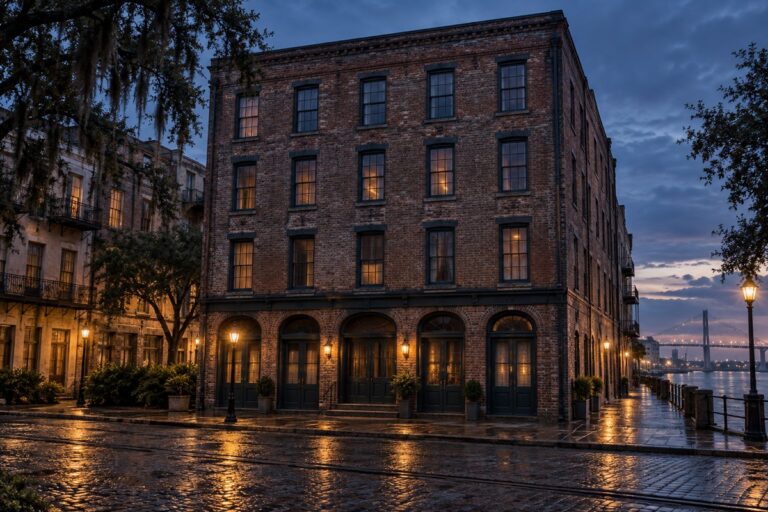
A small Savannah inn and restaurant assembled from early nineteenth-century buildings, best known today for intimate rooms and the long-told story of a spirit called Anna.
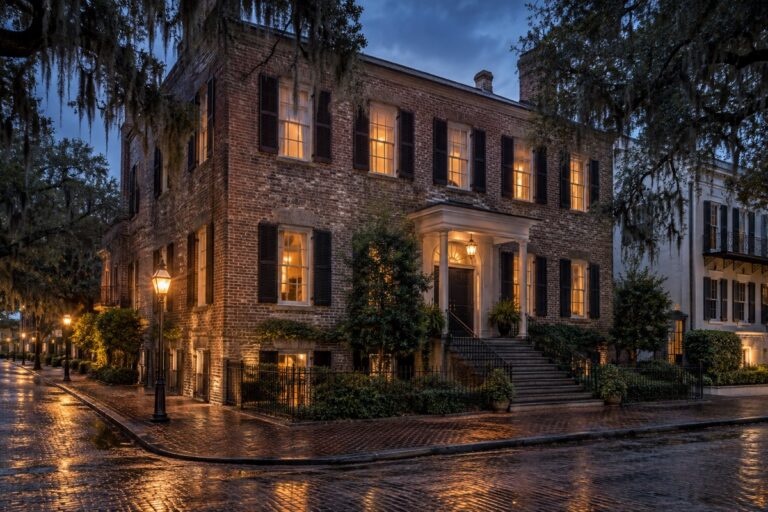
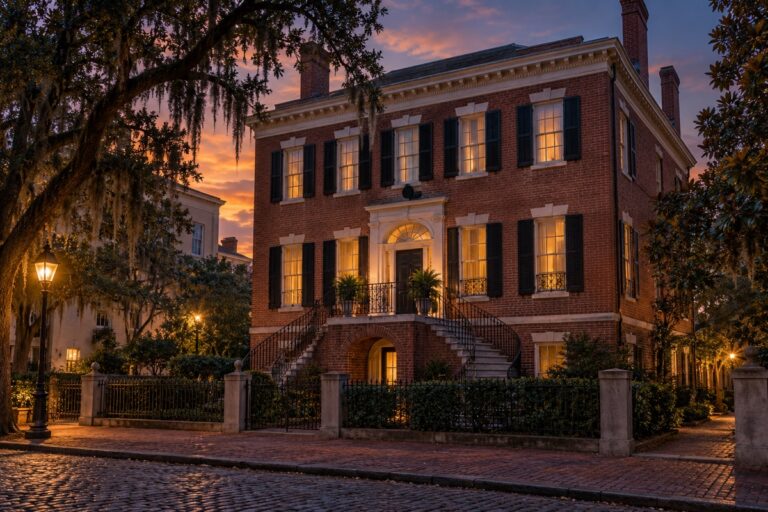
Completed in 1849 for merchant Andrew Low, the house later became associated with Juliette Gordon Low and preserves evidence of elite family life, domestic labor, slavery, commerce, and philanthropy.
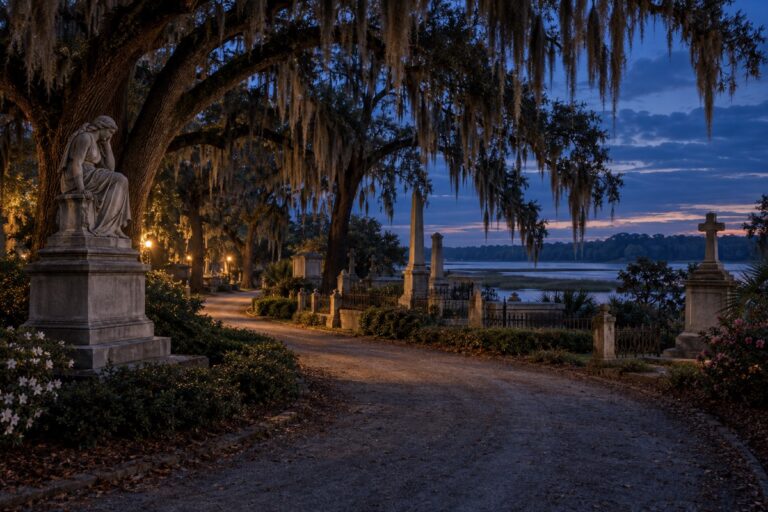
Bonaventure Cemetery is Savannah’s largest municipal cemetery and one of its most important historic landscapes. The site began as part of Bonaventure Plantation, became a private cemetery in 1846, and entered city ownership in 1907. Its live oaks, funerary sculpture, river bluff, notable burials, and local folklore make it a natural stop for readers interested in haunted Savannah, but it remains an active burial ground that deserves quiet and respect.
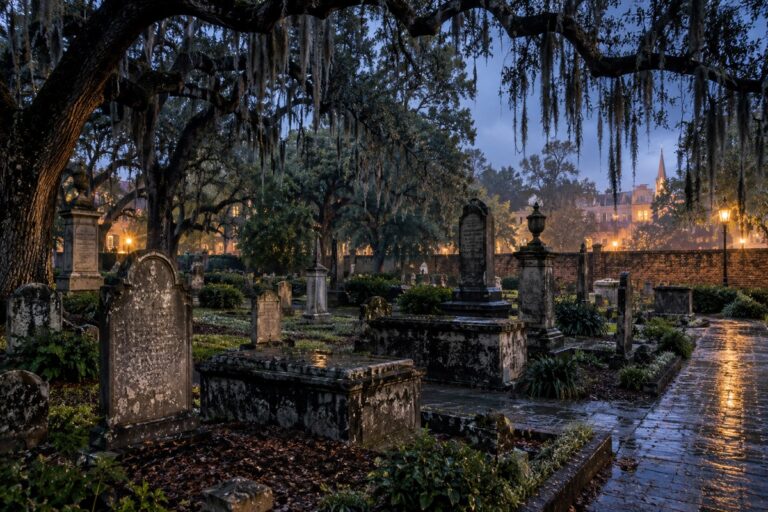
Savannah's oldest intact municipal cemetery preserves more than a century of burials, civic memory, weathered monuments, and stories shaped by the city's long afterlife in folklore.
Master builder Isaiah Davenport completed the Federal-style brick house around 1820; its rescue in 1955 helped launch Historic Savannah Foundation and the city’s modern preservation movement.
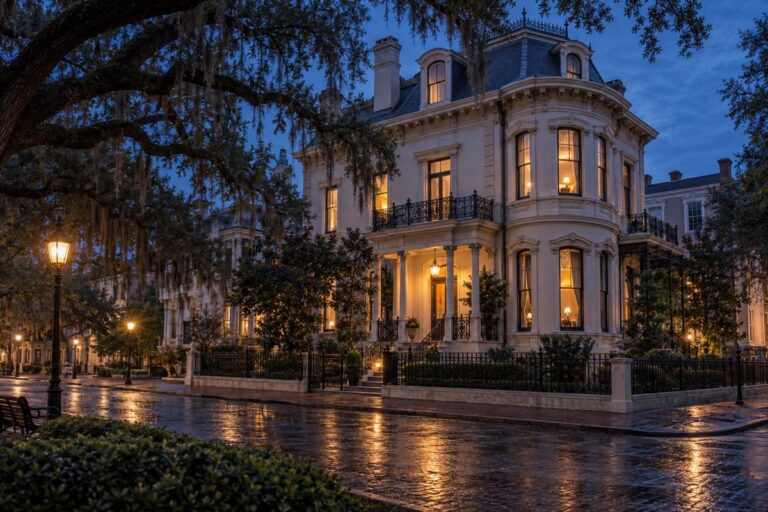
An 1873 mansion on Lafayette Square whose architecture, early electric lights, literary fame, and reported hauntings span more than a century of Savannah life.
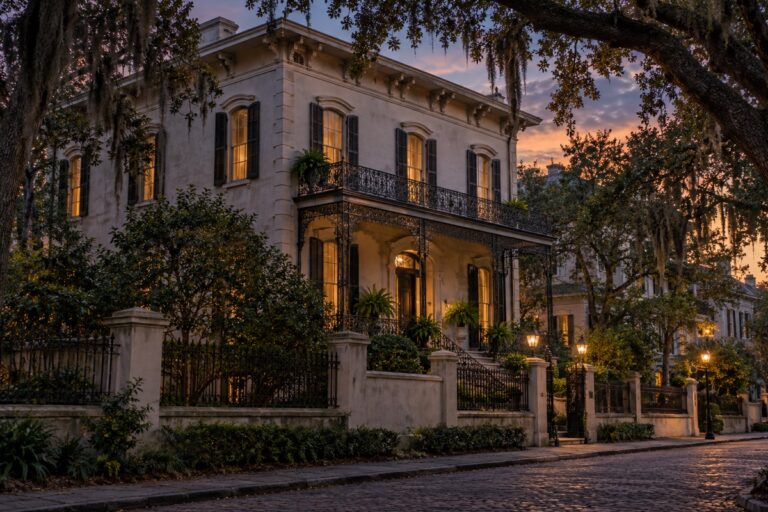
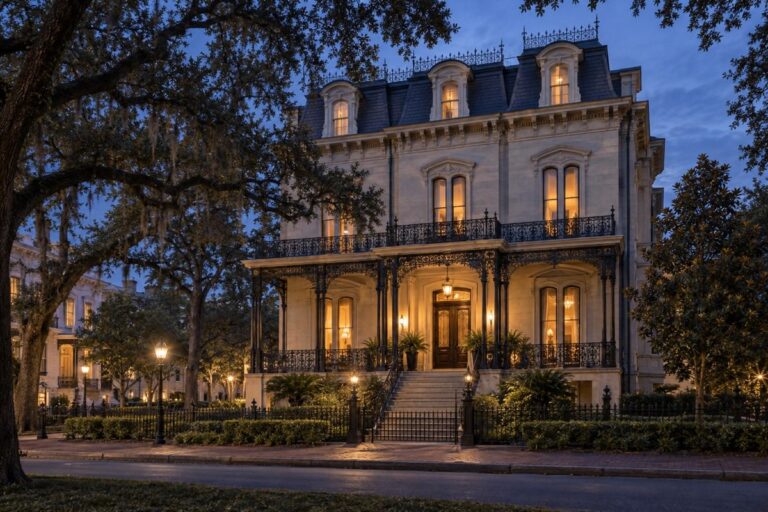
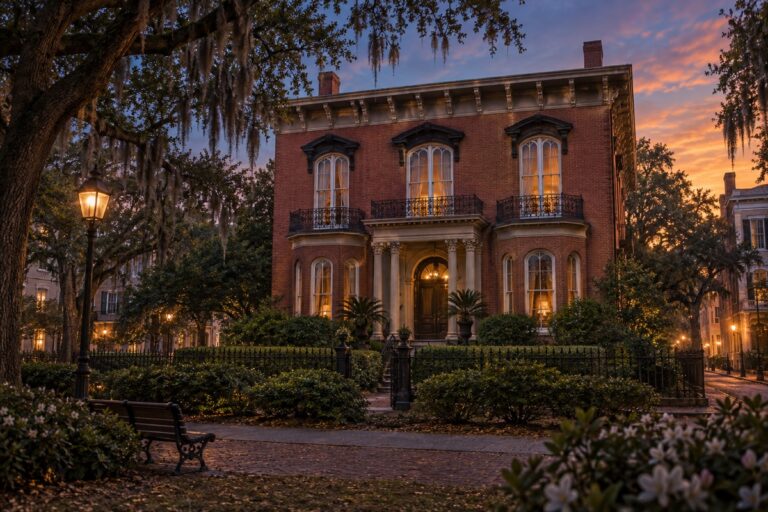
Construction of the Italianate house began in 1860 from a design by John S. Norris and was completed after the Civil War; later owner Jim Williams carried out a prominent restoration.
An 1821 Bay Street building that began as Savannah's City Hotel, later housed a brewery, and remains one of the city's most discussed haunted addresses.