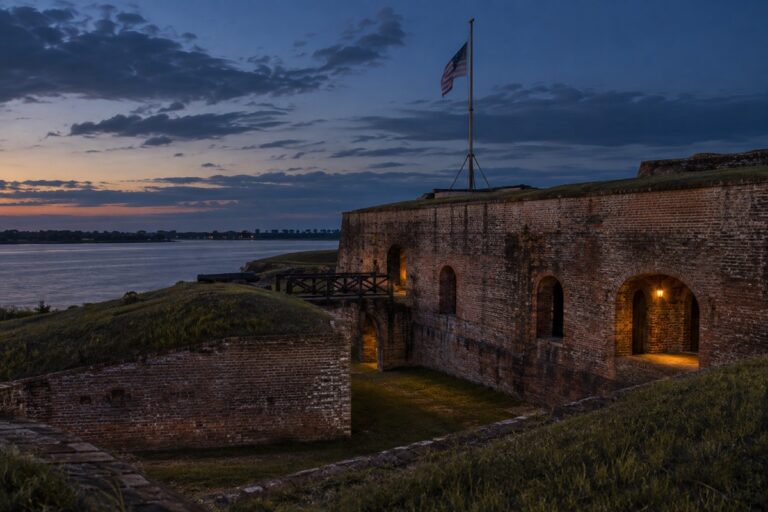
Georgia's oldest surviving brick fortification stands on the Savannah River, preserving two centuries of military history and a quieter body of reported ghost lore.
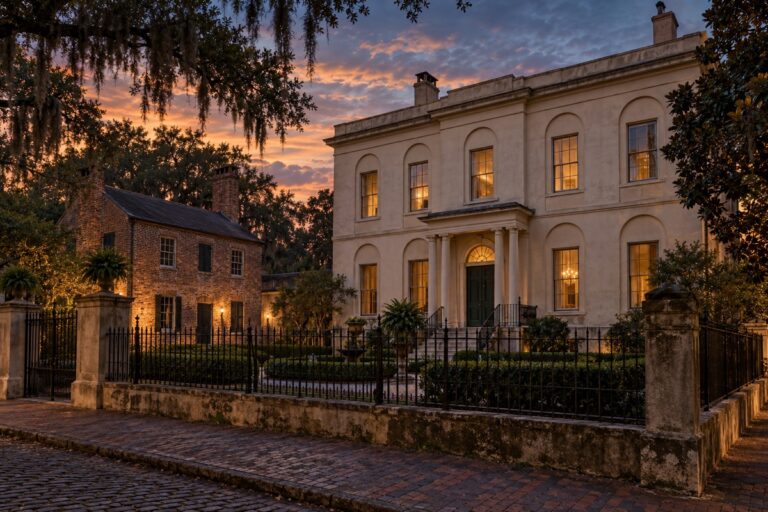
Completed in the early nineteenth century from a design by William Jay, the Owens-Thomas complex preserves a Regency mansion, carriage house, garden, and unusually intact urban slave quarters.
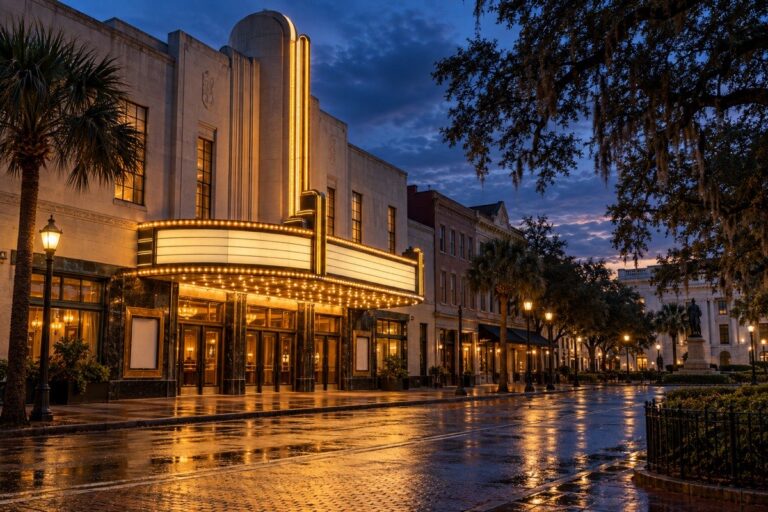
The Savannah Theatre opened in 1818 and remains an active performance venue on Chippewa Square. Fires, rebuilding, famous performers, changing entertainment styles, and more than two centuries of audiences have given the building a rich history. Stories of footsteps, voices, and shadowy figures form part of its modern haunted reputation, while the documented record reveals one of America’s enduring theatrical institutions.
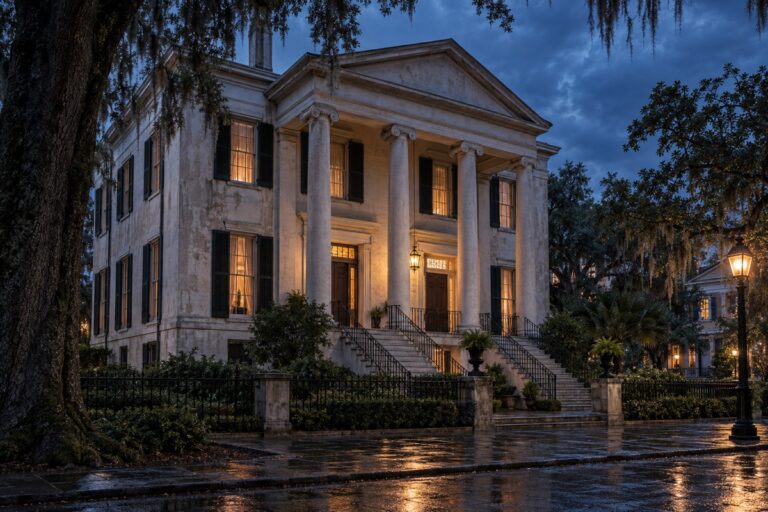
The Sorrel-Weed House is a monumental Greek Revival residence built around 1840 for Savannah merchant Francis Sorrel. Architect Charles B. Cluskey designed the house beside Madison Square. It now operates as a museum offering architectural tours, ghost tours, and paranormal programs. Its verified history includes wealth created within an economy built on slavery.
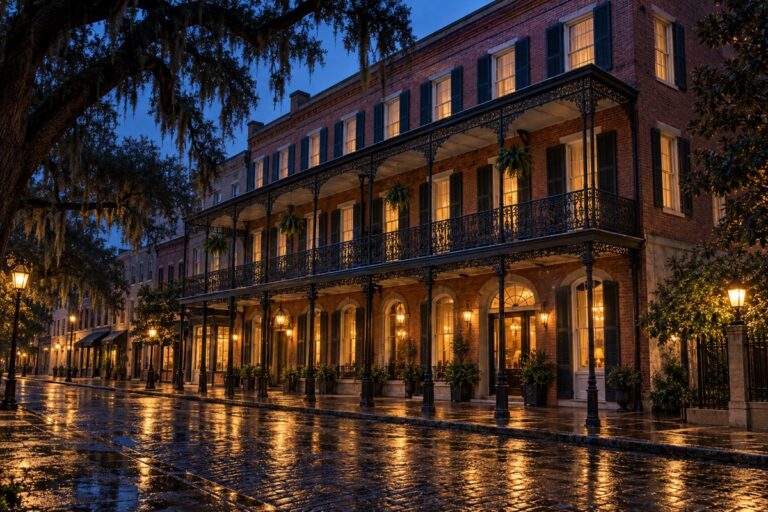
The Marshall House opened on Savannah’s Broughton Street in 1851 and is one of the city’s oldest operating hotels. It served as a hospital during periods of war and epidemic, later spent decades in other uses, and returned to hotel service after restoration. Stories of footsteps, children, faucets, and Civil War figures now support its haunted reputation.
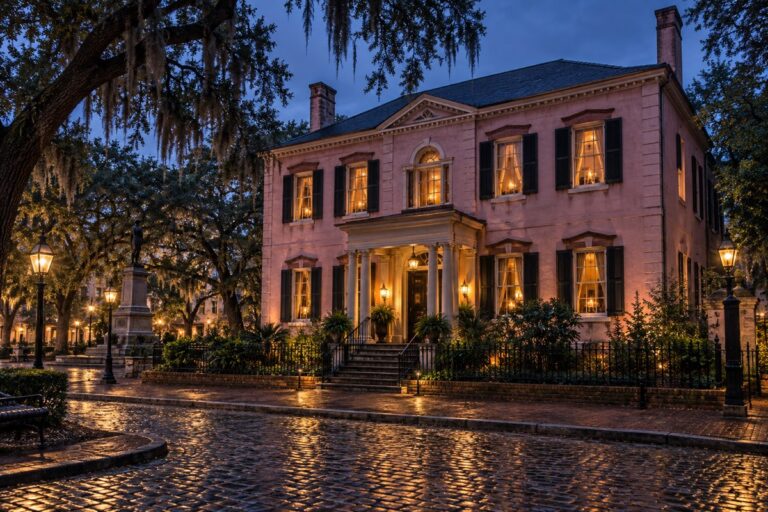
The Olde Pink House is a historic Savannah mansion and restaurant facing Reynolds Square. James Habersham Jr. began the residence in 1771, while architectural scholarship dates the surviving completed house to the late eighteenth century. It later served as Planters Bank, a tea room, and other businesses before becoming a restaurant.
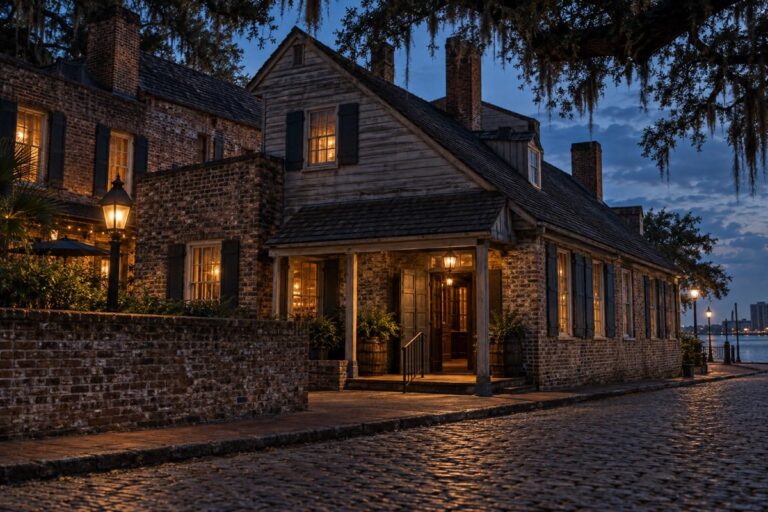
A surviving tavern complex near the Savannah River where colonial trade, maritime legend, preservation, and modern dining occupy the same historic rooms.