Quick answer: Reverend Alexander Dobbin built the stone Dobbin House in 1776 as a home and classical school. The building later became associated with antislavery activity and served as a hospital after the Battle of Gettysburg. It now operates as a tavern and historic attraction. Underground Railroad and ghost claims should be evaluated separately and with clear sourcing.
Alexander Dobbin and the 1776 house
Alexander Dobbin was an Irish-born Presbyterian minister, educator, landowner, and civic leader. He acquired land in the Gettysburg area in 1774 and built the large stone house in 1776. Its size supported both his family and a classical school, described by the property as an early academy west of the Susquehanna River.
Dobbin also participated in the creation of Adams County and the selection of Gettysburg as county seat. The house therefore belongs to the region’s colonial settlement, education, religious, and civic history before it entered Civil War memory.
Architecture and household life
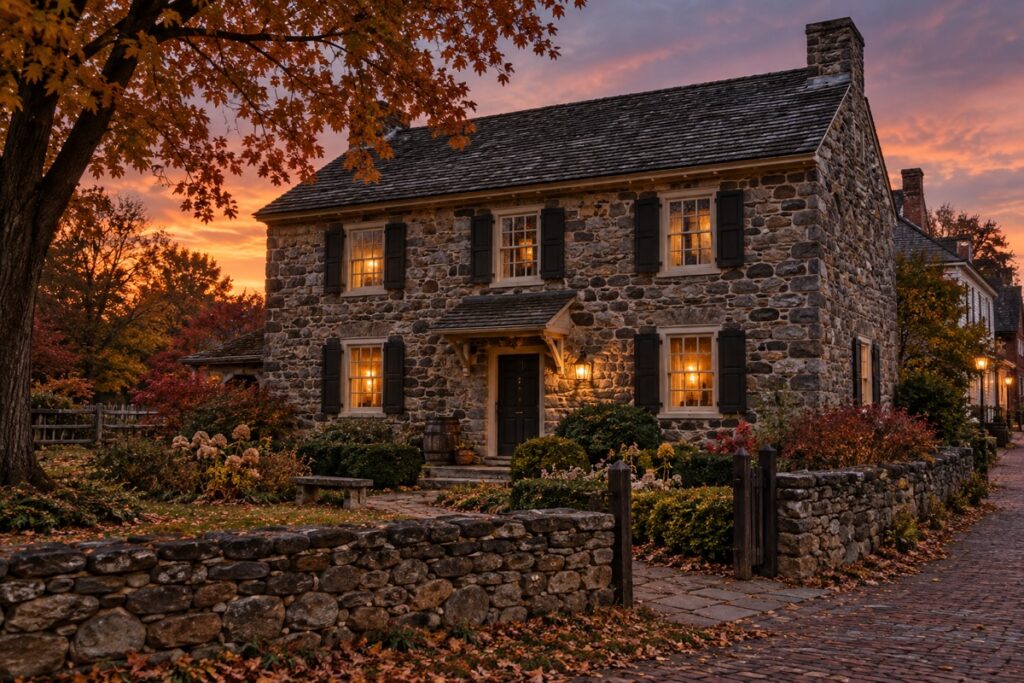
Native stone walls, multiple fireplaces, woodwork, and a large plan reflect the needs of a substantial household and school. Dobbin’s first wife, Isabella, had ten children, and after her death he married Mary Agnew, a widow with nine children. The scale of family life complicates the romantic image of a quiet colonial inn.
Modern interiors use period-style furnishings and reproductions selected in part through estate inventories and archaeological finds. That creates a strong interpretive setting, but it remains a restored commercial property rather than an untouched room arrangement from 1776.
The Underground Railroad claim
The property identifies a concealed crawl space as a place used to hide freedom seekers during the mid-nineteenth century. This claim is central to its interpretation. Underground Railroad history is often difficult to document because secrecy protected participants, so responsible presentation should identify the evidence, distinguish family tradition from records, and avoid romanticizing the danger faced by enslaved people.
Terms such as “station” became common later and can imply a formal network that did not operate uniformly. The core history is resistance to slavery under extraordinary legal and physical risk. Visitors should ask how the space was dated and which sources connect it to antislavery activity.
The house during and after the battle
When the Battle of Gettysburg ended, buildings across town and nearby farms were converted into hospitals. The Dobbin House property says wounded Union and Confederate soldiers received care here. The claim fits the documented medical crisis that overwhelmed Gettysburg, but specific patient stories should still be traced to records before repetition.
Hospital use changed ordinary rooms into improvised medical spaces. Food, clean water, bedding, ventilation, waste removal, and the labor of caregivers became urgent concerns. This broader context is more historically useful than assuming every later sound must represent a wounded soldier.
Its location near the later National Cemetery places it within a dense memory landscape. Lincoln delivered the Gettysburg Address eighty-seven years after the house’s construction, a chronological link the venue often notes.
Tavern use and ghost lore
The Dobbin House now operates as a restaurant and tavern in a restored historic setting. Ghost-tour stories describe sounds, figures, or Civil War presences. These claims are folklore and personal experience, not proof of paranormal activity. The site’s documented layers already provide a substantial story without inventing named spirits.
Compare the building with the Gettysburg town history guide and the forthcoming Hotel Gettysburg guide. Together they show how hospitality sites from different eras shape the visitor landscape.
Planning a responsible visit
- Check the official property site for dining hours, tours, and current access.
- Remember that the building is an operating restaurant with staff and guests.
- Ask what documentation supports Underground Railroad interpretation.
- Do not enter concealed, closed, or service areas without permission.
- Treat paranormal reports as folklore rather than established history.
Frequently asked questions
When was the Dobbin House built?
Alexander Dobbin built the stone house in 1776, decades before Gettysburg became an incorporated borough.
Was it originally a tavern?
It was built as Dobbin’s home and classical school. Its current tavern use is a later chapter.
Did the house shelter freedom seekers?
The property interprets a concealed space as an Underground Railroad hiding place. Visitors should consider the site’s cited evidence and the limits of records created under secrecy.
Was it used as a Civil War hospital?
The property states that it served wounded soldiers after the Battle of Gettysburg, as many local buildings did during the medical emergency.
Is the Dobbin House proven to be haunted?
No. Apparition and sound reports are folklore or personal accounts, not independently verified paranormal evidence.
Sources and editorial note
- Dobbin House Tavern: History
- Dobbin House Tavern: Historical Tours
- Borough of Gettysburg: Town History
HauntsUSA separates architectural and civic history, sourced Underground Railroad interpretation, and later ghost lore. Visitor information was reviewed on September 27, 2026.
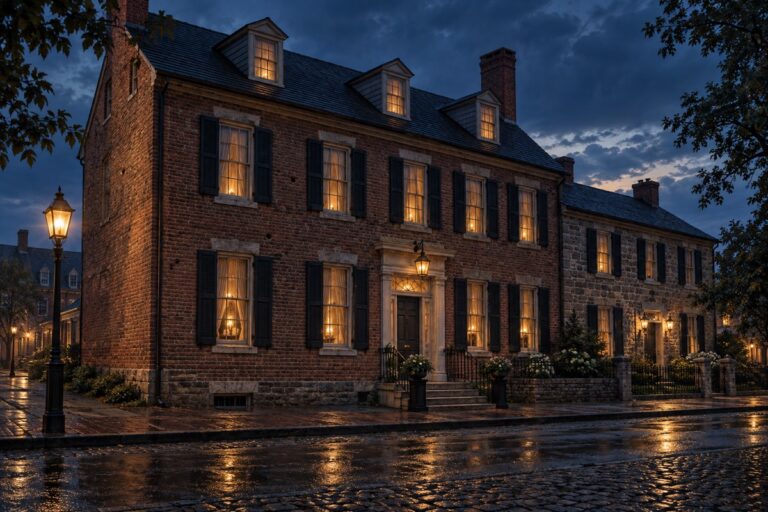
Editorial image: AI-created historical interpretation for HauntsUSA. It is not documentary evidence or proof of paranormal activity.