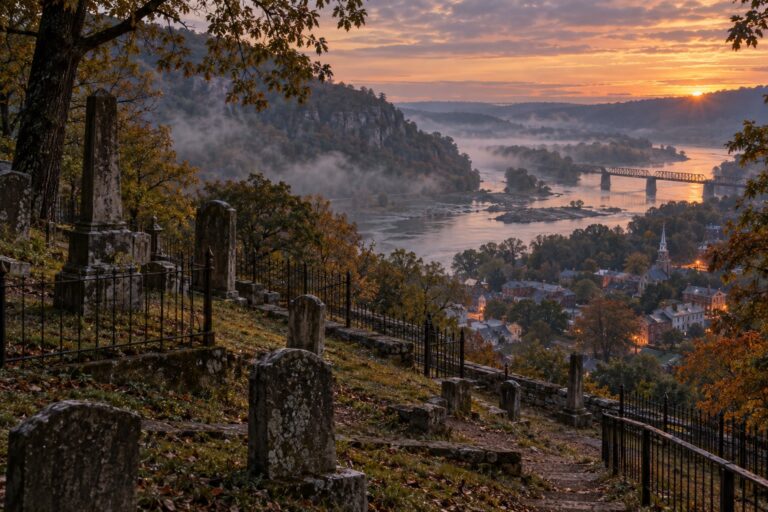
The hillside cemetery contains graves of town residents and families connected to Harpers Ferry's industrial, commercial, religious, and civic history. Its elevated landscape also reflects generations of commemoration and preservation.
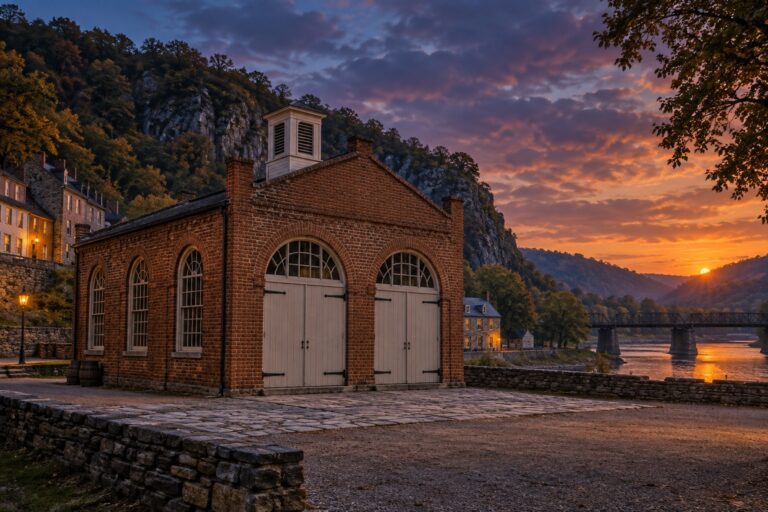
Built in 1848 as an armory engine house, the small brick building became the final stronghold of John Brown and his followers during the 1859 raid. Its repeated relocation and return reveal changing commemoration of abolition, Civil War memory, tourism, and Black education.
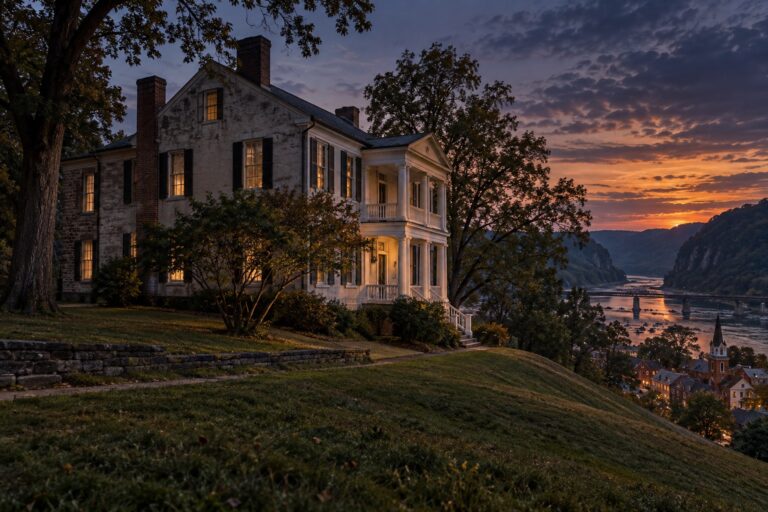
The Armory paymaster's house served wartime and refugee needs before becoming an early classroom and administrative building for Storer College, one of the nation's important institutions founded to educate formerly enslaved people and their descendants.
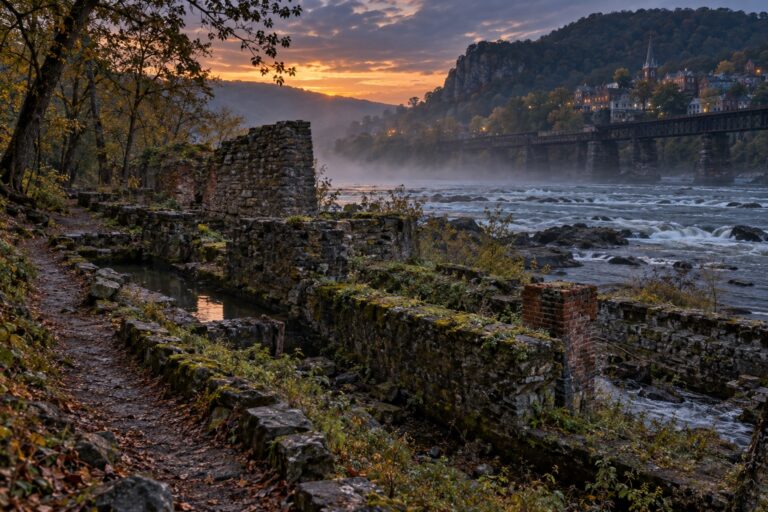
Virginius Island supported mills, factories, canals, worker housing, and transportation before war, repeated flooding, economic change, and abandonment left foundations and archaeological remains along the Shenandoah.