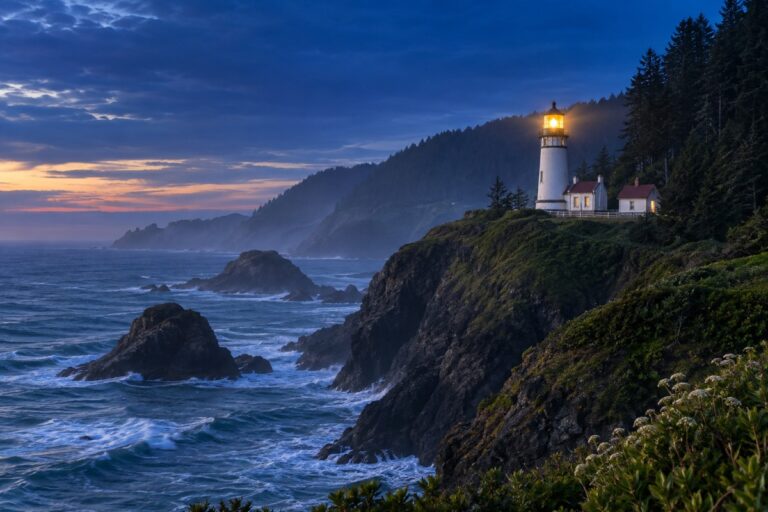
Heceta Head Lighthouse rises above one of the most dramatic stretches of the Oregon coast. The white tower stands on a forested headland, 206 feet above the Pacific, while its beam reaches far beyond the rocks below. Visitors come for the coastal trail, the engineering history, and the preserved keeper's house. They also come because a gentle resident ghost, usually called Rue, has become part of the lighthouse's modern folklore.
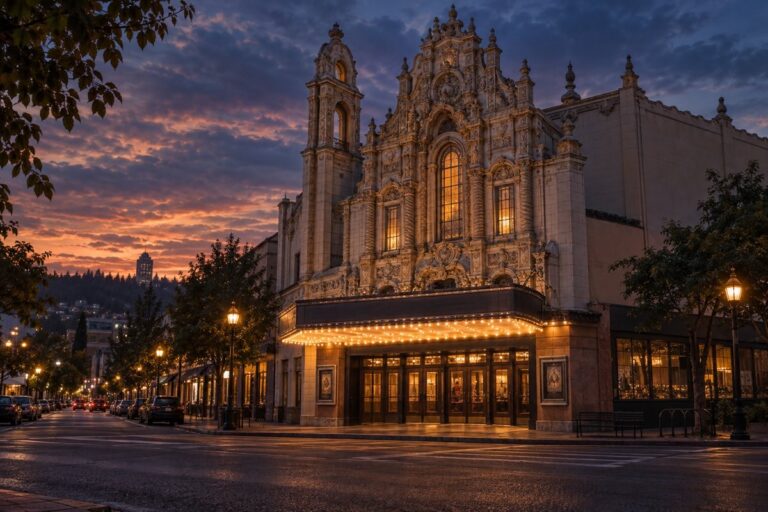
The Hollywood Theatre opened in 1926 and has remained in operation through changing film technology, neighborhood development, nonprofit preservation, and restoration.
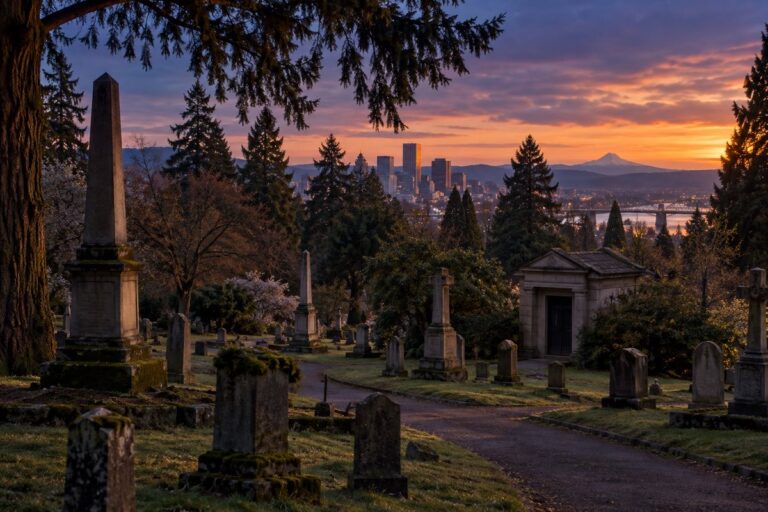
The landscape's first recorded burial dates to 1846; it became Mount Crawford Cemetery in 1855 and was renamed Lone Fir in 1866, preserving broad Portland and regional history.
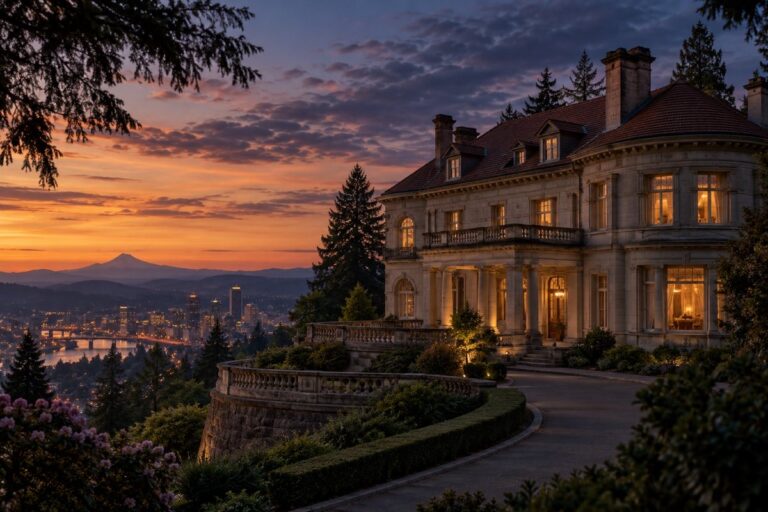
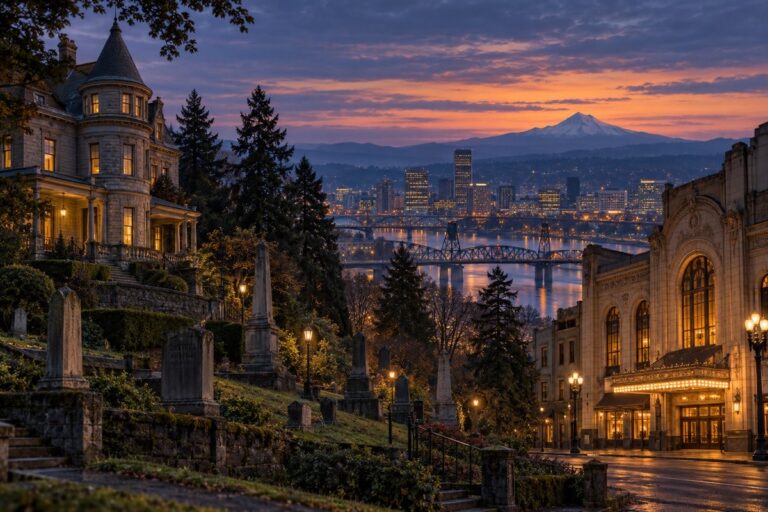
Construction began in 1912, and Henry and Georgiana Pittock moved into the completed mansion in 1914; the house reflects publishing, business, civic activity, domestic work, and later public preservation.
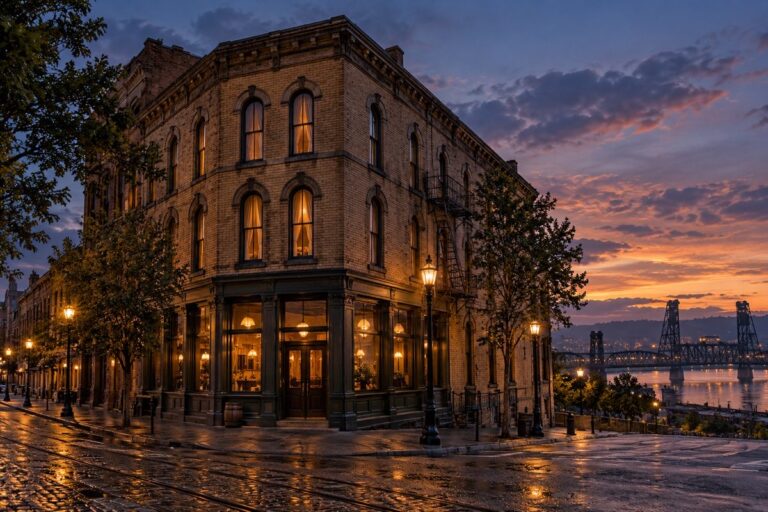
The White Eagle developed as an early twentieth-century saloon and lodging house near Portland's industrial waterfront, serving immigrant workers and passing travelers before later restoration.
Portland developed on the homelands of Indigenous peoples including Chinookan-speaking communities through settler colonization, river commerce, timber, immigration, exclusion, industry, reform, and neighborhood change.