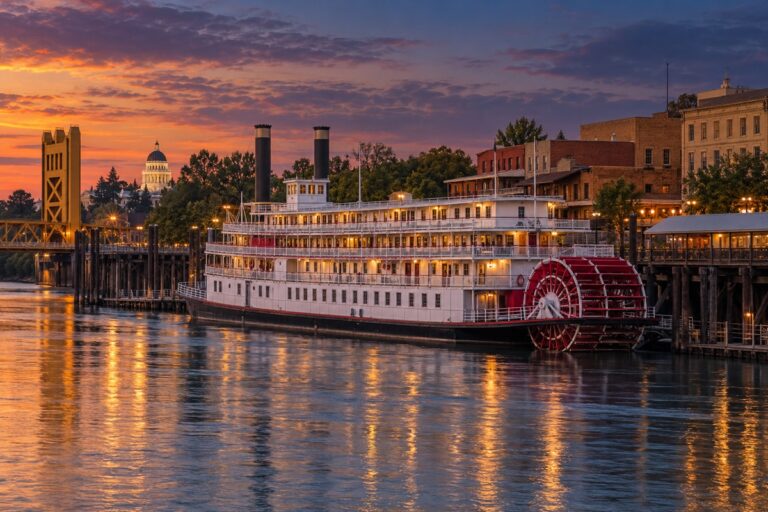
Christened in 1927 with its sister ship Delta Queen, the sternwheeler carried overnight passengers between Sacramento and San Francisco before wartime service, abandonment, restoration, and permanent mooring as a hotel and entertainment venue.
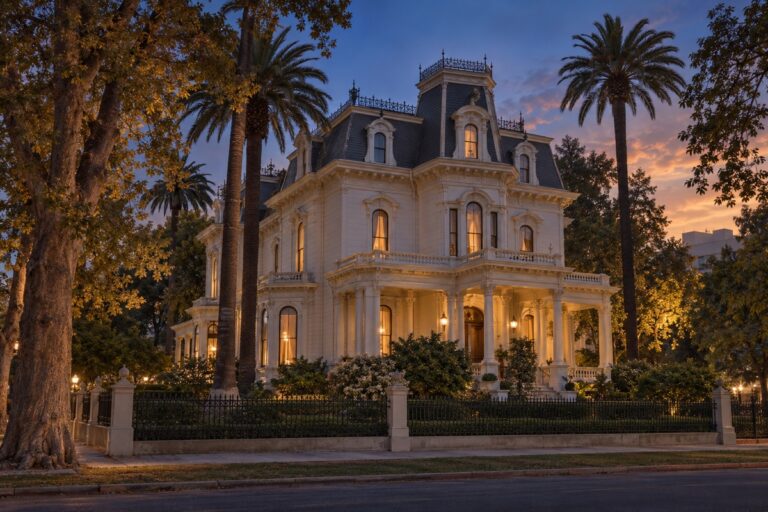
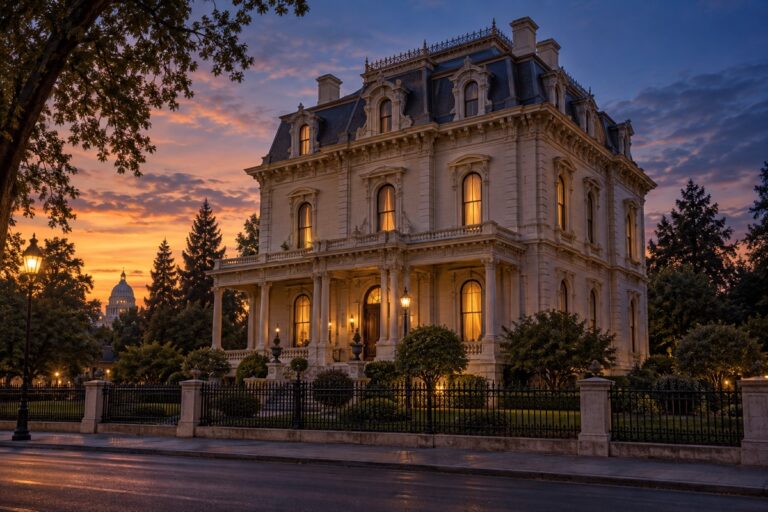
Built in 1877 and purchased by California in 1903, the Victorian mansion housed thirteen governors and their families until 1967. Furnishings and rooms preserve layers of executive, household, and social history.
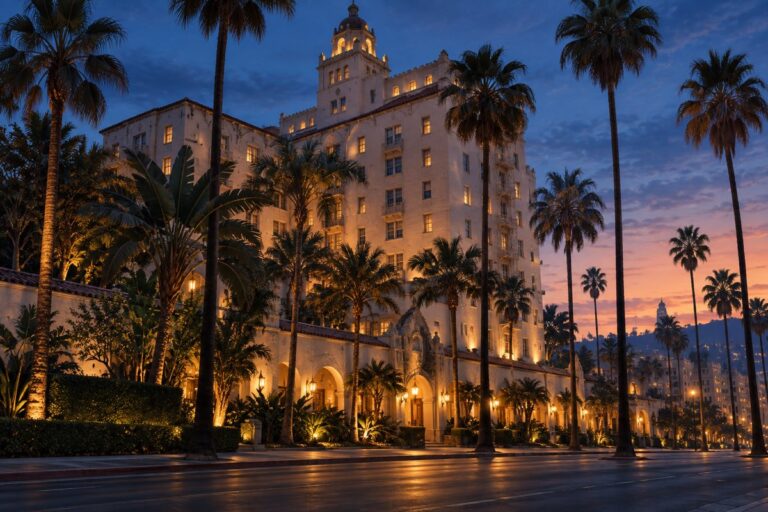
Opened in 1927, the Hollywood Roosevelt is linked to early film culture, the first Academy Awards ceremony, architecture, and changing Hollywood tourism.
Built in the 1850s and enlarged by Leland and Jane Stanford, the mansion served political and family functions before becoming a home for children and later a restored state historic park and official reception center.
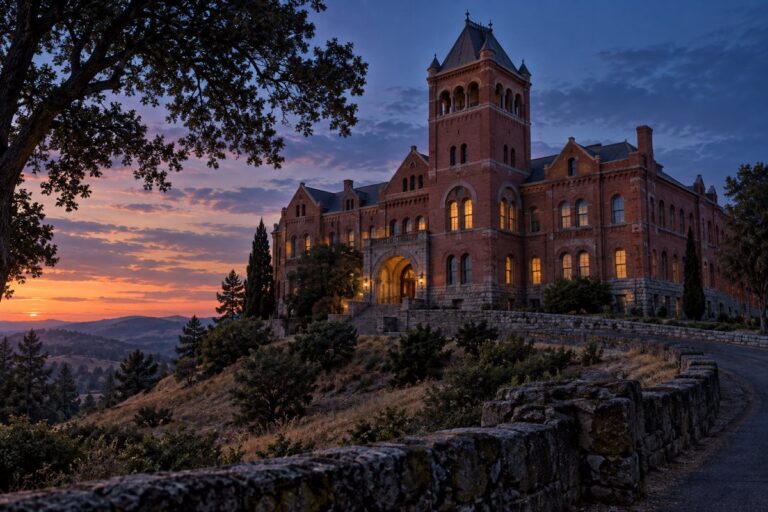
The Romanesque building opened as the Preston School of Industry, part of California’s juvenile reform system, and later became a preservation project.
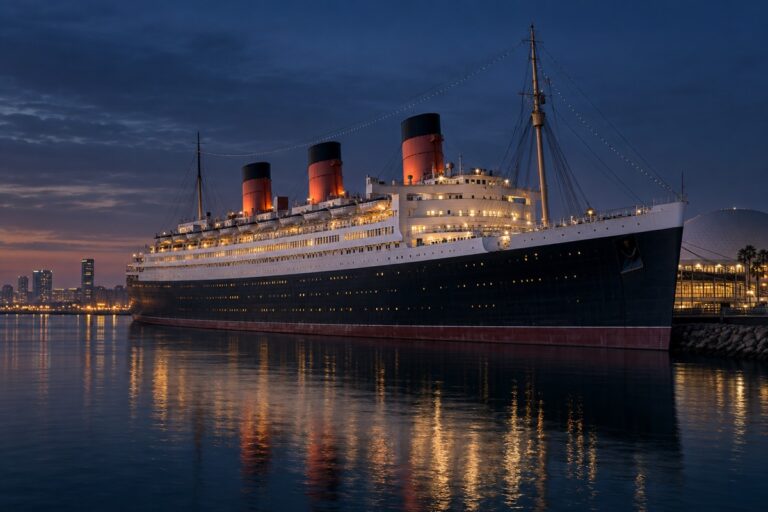
Moored beside the Long Beach waterfront, the Queen Mary is both a landmark of twentieth-century engineering and one of California's most persistent settings for maritime ghost stories. The ship is impressive before any legend enters the picture. Its dark hull, three red funnels, Art Deco interiors, and long decks belong to an era when an ocean crossing was a public event. Today, visitors come for that history, for the preserved rooms, and for the reports that certain parts of the ship still feel occupied after the crowds have passed.
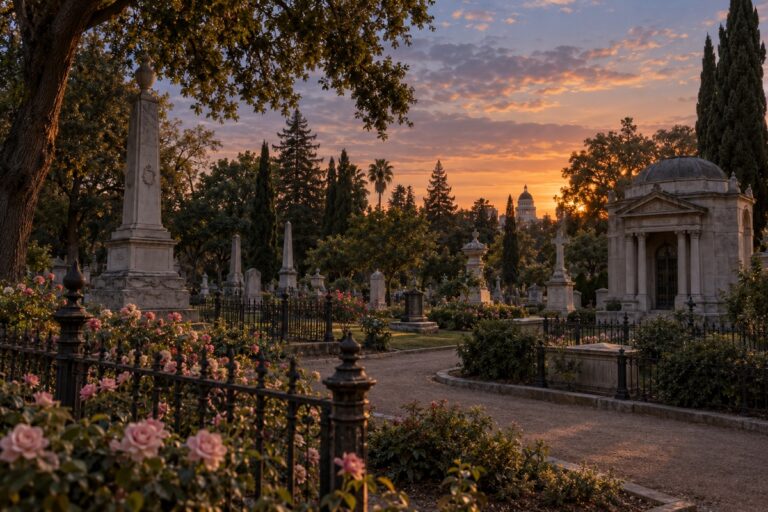
Established in 1849, the cemetery preserves burial sites, monuments, gardens, and community histories connected to early statehood, epidemics, immigration, politics, and the uneven ways Sacramento has commemorated its dead.
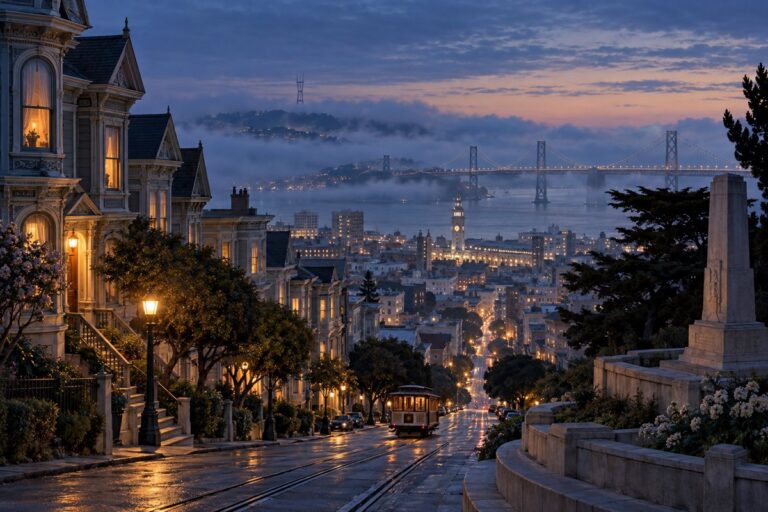
San Francisco is a living San Francisco Bay Area community whose documented history and preservation landscape explain why ghost traditions developed around selected streets, buildings, and burial grounds.