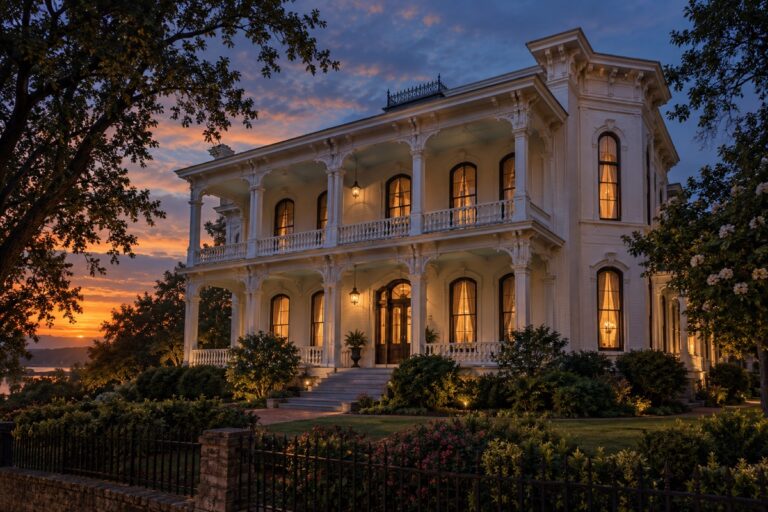
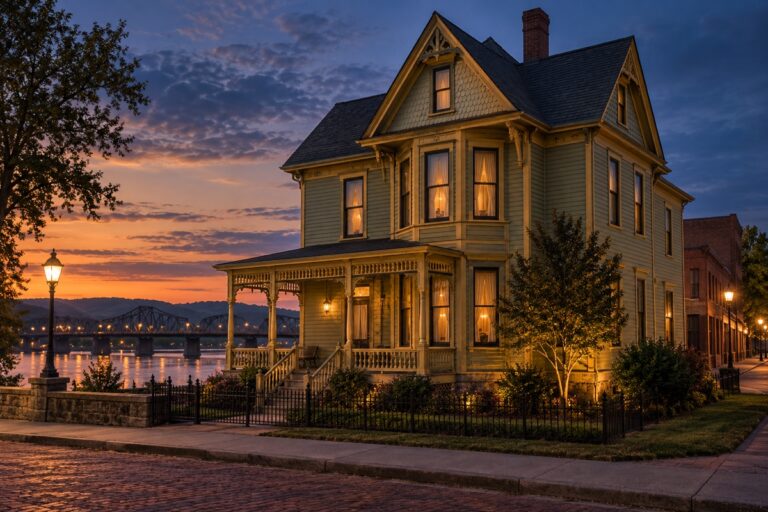
Built about 1870 by David McKibben and later occupied by Susan Bonneville, the elaborate Victorian Renaissance house survived through restoration and adaptive use as a community event venue.
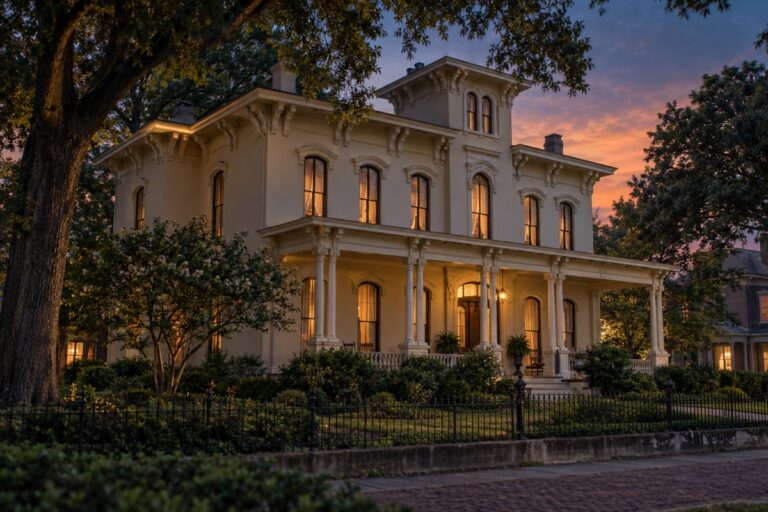
The Italianate house became the family home of federal prosecutor William Henry Harrison Clayton in 1882. Its rooms, furnishings, and setting connect domestic life to the powerful federal court of Judge Isaac C. Parker and to Fort Smith's Victorian development.
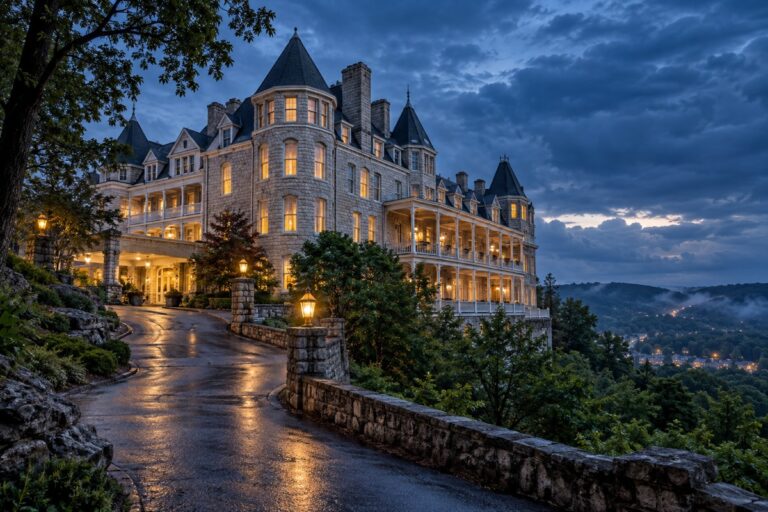
High above Eureka Springs, the 1886 Crescent Hotel presents one of the most dramatic silhouettes in the Ozarks. Its stone walls, deep verandas, and hilltop setting would make it memorable without a single ghost story. Yet the building's long history as a resort, a school, and a fraudulent cancer hospital has produced a haunted reputation that now reaches far beyond Arkansas.
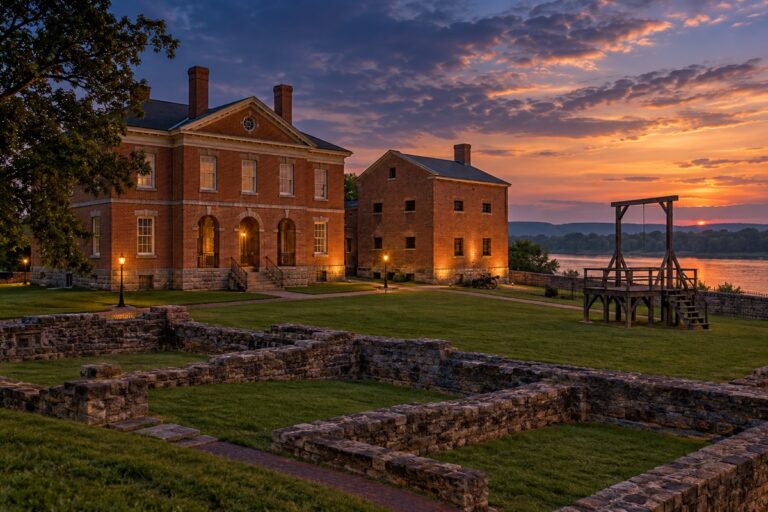
The national historic site preserves layers of two military forts and the federal court for the Western District of Arkansas. Its interpretation addresses Native removal, deputy marshals, incarceration, executions, and the reach of federal authority into Indian Territory.
The Victorian building known as Miss Laura's operated within Fort Smith's regulated vice district and survives as a museum interpreting prostitution, women's experiences, public policy, and the social economy of a border city.