Quick answer: The Ropes Mansion is a documented Georgian house in Salem, built from 1727 to 1729 and later remodeled in the Colonial Revival style. Its architecture, family collections, and garden are well supported by Peabody Essex Museum records. Ghost stories are part of its modern reputation, but they are not proof of paranormal activity.
A house with an unusually complete record
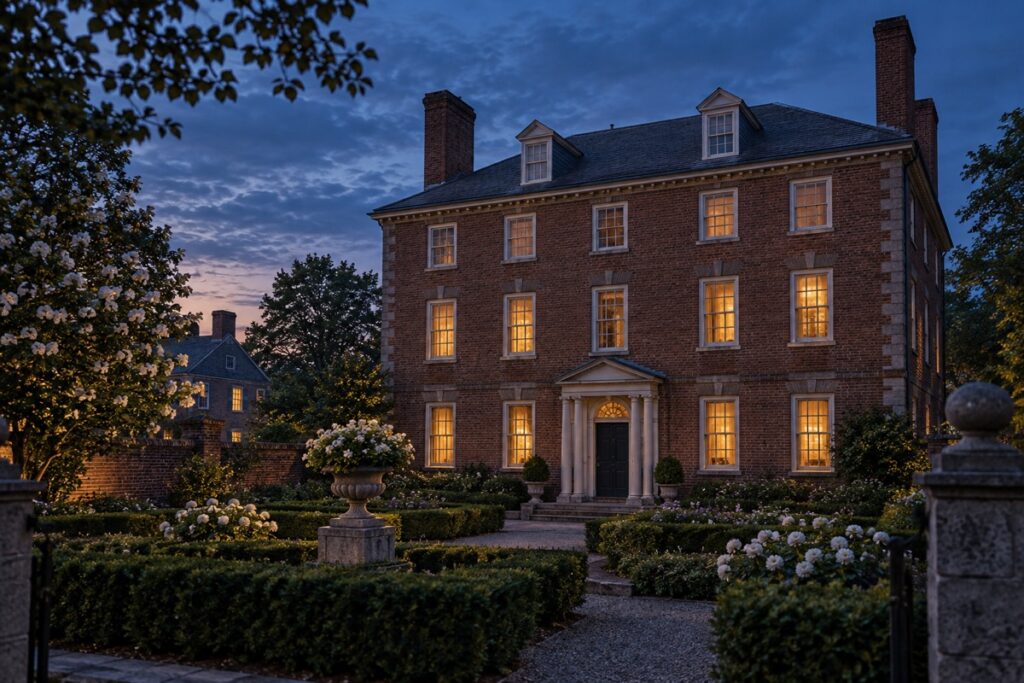
The Ropes Mansion stands at 318 Essex Street in Salem’s McIntire Historic District. The Peabody Essex Museum dates its construction to 1727 to 1729 and describes it as one of New England’s most significant and thoroughly documented historic houses. Four generations of the Ropes family lived here, leaving furniture, ceramics, silver, textiles, kitchenwares, papers, and personal objects that help interpreters move beyond a simplified colonial-house story.
The house began as a Georgian residence. In 1894, the Providence architectural firm Stone, Carpenter & Willson renovated it in the Colonial Revival style. That work is itself historic: it shows how late nineteenth-century Americans reimagined colonial design while adapting an older home to contemporary expectations.
The Ropes family and the museum plan
In 1893, three unmarried Ropes sisters living in Cincinnati learned that the Salem house and a substantial fortune had been left to them. They planned both a comfortable family home and what would become Salem’s first historic house museum. Their decisions preserved rooms and belongings that now allow visitors to compare several generations rather than encounter a single frozen year.
That layered history distinguishes the mansion from a theatrical reconstruction. Furnishings are meaningful because they can be connected to household use, taste, work, and inheritance. Visitors should still remember that any historic-house presentation involves conservation choices. Paint colors, furniture placement, restored finishes, and interpretive labels reflect research and museum practice.
The garden behind the house
The formal garden is among the property’s best-known features. It was designed in 1912 and occupies a quieter space behind busy Essex Street. Paths, clipped plantings, seasonal flowers, and a central axis create a deliberate Colonial Revival landscape rather than an untouched eighteenth-century garden. Peabody Essex Museum maintains the grounds and publishes current access information.
The garden can often be appreciated separately from a house tour, but hours and seasonal conditions change. Visitors should use marked paths and avoid leaning on historic fabric or garden structures. For wider architectural context, pair the stop with the nearby Witch House history guide.
Fire, restoration, and changing interiors
A fire in 2009 damaged the mansion and required major conservation work. The museum reopened the property after restoration. This modern episode matters because preserved buildings do not survive through age alone. They depend on documentation, skilled repair, climate control, funding, and continuous decisions about what to retain or replace.
Current self-guided visits typically lead through multiple rooms, with museum staff available for questions. Accessibility can be limited in an old multi-level house. Confirm present hours, tickets, and accommodations directly with the Peabody Essex Museum before traveling.
How the ghost lore developed
Stories about unusual sounds, figures, and a woman’s presence have circulated around the mansion, especially through tours and popular media. One recurring story links a female spirit to the Ropes family. These accounts vary in detail and rarely arrive with traceable primary documentation. HauntsUSA therefore treats them as folklore: evidence of the building’s cultural afterlife, not verified descriptions of an event.
The mansion’s age and carefully furnished rooms create an atmosphere that encourages imaginative storytelling. That does not make the stories worthless. Folklore can reveal what later visitors notice, fear, or wish to preserve. It should simply be labeled separately from the documented construction record, family papers, and museum collections.
Planning a responsible visit
- Check the season: The museum publishes limited seasonal dates and timed-entry requirements.
- Use museum interpretation: Ask guides about original objects, later alterations, and restoration choices.
- Respect the garden: Remain on paths and follow posted rules.
- Separate evidence from legend: Treat paranormal claims as stories unless a source documents their origin.
- Continue the route: The House of the Seven Gables guide adds waterfront and literary context.
Frequently asked questions
When was the Ropes Mansion built?
Peabody Essex Museum dates the Georgian house to 1727 to 1729. It received a major Colonial Revival renovation in 1894.
Is the Ropes Mansion part of the Peabody Essex Museum?
Yes. It is one of the museum’s historic architectural properties and contains family furnishings and decorative arts.
Can visitors enter the garden without touring the house?
Garden and house access may follow different seasonal schedules. Check the museum’s current visitor information before arriving.
Is the mansion proven to be haunted?
No. Reported apparitions and sounds are folklore and personal accounts, not independently verified evidence of paranormal activity.
How long should a visit take?
Allow about an hour for the house and garden, with more time if you are following an architecture route through the McIntire Historic District.
Sources and editorial note
- Peabody Essex Museum: Ropes Mansion & Garden
- Peabody Essex Museum: Historic Architecture Collection
- Peabody Essex Museum: Gardens
HauntsUSA separates museum-documented history from later ghost lore. Visitor information was reviewed on September 27, 2026. Confirm access directly with the Peabody Essex Museum.
Editorial image: AI-created historical interpretation for HauntsUSA. It is not documentary evidence or proof of paranormal activity.