Quick answer: The Savannah Theatre opened in 1818 and remains an active performance venue on Chippewa Square. Fires, rebuilding, famous performers, changing entertainment styles, and more than two centuries of audiences have given the building a rich history. Stories of footsteps, voices, and shadowy figures form part of its modern haunted reputation, while the documented record reveals one of America’s enduring theatrical institutions.
An 1818 opening night
The Savannah Theatre opened on December 4, 1818. The first program paired the comedy The Soldier’s Daughter with a farce called Raising the Wind. The original structure was designed by William Jay, the English architect responsible for several important Savannah buildings, including the Telfair Mansion.
The institution did not enjoy an easy first century. Ownership changed repeatedly, and the theatre went to auction twice during its first twenty years. A more stable stock company formed in 1838, the same year the theatre was incorporated. Its survival depended on repeated reinvention, local support, and the ability to recover after physical damage.
Performers, fire, and reconstruction
Edwin Booth, one of the leading Shakespearean actors of the nineteenth century, played engagements at the Savannah Theatre in 1876. Claims that his brother John Wilkes Booth performed here are often repeated, but the theatre’s own history says the connection remains unconfirmed. That distinction is important when a famous name can turn possibility into supposed fact.
In January 1896, actors Henry Irving and Ellen Terry appeared with their manager Bram Stoker. Stoker had already begun work on the novel that would become Dracula, published the following year. Baseball star Ty Cobb took the stage in a touring production of The College Widow in 1911, another example of the varied entertainment presented here.
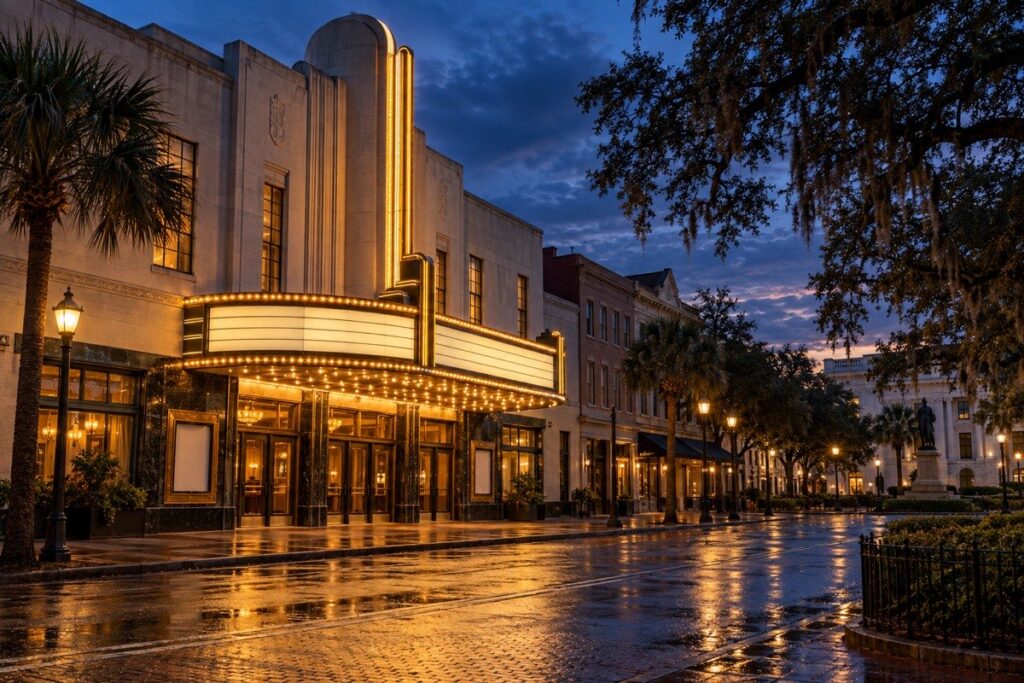
Fires repeatedly altered the structure. After a major 1948 fire, the building was remodeled in the Art Deco style visitors recognize today. It reopened as a movie house in 1950. The polished facade and marquee therefore belong to a later architectural chapter, while the institution and site reach back to 1818.
The theatre also took part in Savannah’s modern film history. During production of Forrest Gump in 1993, Paramount Pictures used the building for wardrobe and makeup connected with the famous Chippewa Square scenes.
Haunted theatre stories
Working theatres are fertile settings for ghost lore. Empty balconies, backstage corridors, curtains, lighting equipment, and old mechanical systems can turn ordinary movement into something difficult to identify. At the Savannah Theatre, visitors and staff have described footsteps, voices, cold spots, and shadowy figures. Haunted tours present some of those reports as part of the venue’s continuing story.
No single apparition has a documented identity that can be treated as historical fact. Stories are sometimes connected to performers, fire victims, or a child seen in the auditorium. Those links should be described as venue lore unless archival evidence supports a name and event. The theatre’s documented past is strong enough without assigning every unexplained sound to a tragedy.
Planning a visit
- Address: 222 Bull Street, Savannah, Georgia 31401.
- Phone: 912-233-7764.
- Access: The Savannah Theatre is an active performance venue. Entry normally requires a ticketed show, scheduled tour, or public lobby access.
- Haunted programming: Check the official theatre calendar for any current haunted-theatre tour.
- Location: The theatre faces Chippewa Square in Savannah’s historic district.
- Accessibility: Contact the box office about seating, stairs, and the specific route used for a tour.
The lobby contains a small museum of photographs, artifacts, and newspaper material. Performance schedules and tour offerings change throughout the year. Do not assume backstage or auditorium access when a production is rehearsing.
Continue through historic Savannah
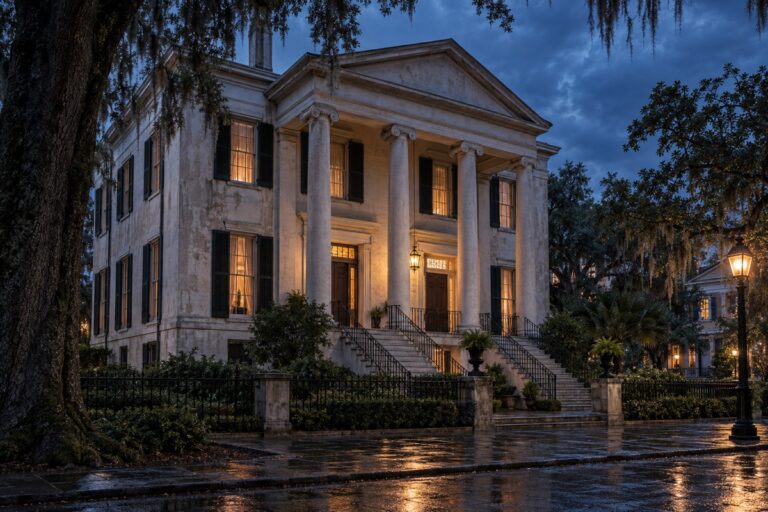
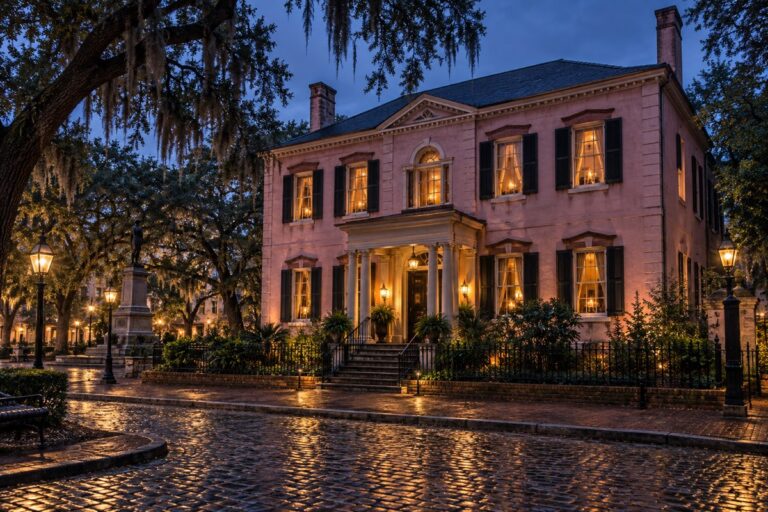
The theatre sits within an easy walking route through the historic district. The Hamilton-Turner Inn offers a contrasting view of elite domestic architecture. The Colonial Park Cemetery preserves a much earlier memorial landscape, while The Pirates’ House connects architecture, dining, and local ghost tradition.
What makes the Savannah Theatre valuable is continuity. Its walls have changed, its uses have shifted, and fire has forced reconstruction, yet audiences still gather at the same historic location. The legends belong to that continuity. They are best heard after the documented timeline is understood.
Frequently asked questions
When did the Savannah Theatre open?
It opened on December 4, 1818, with a comedy and a farce. The present building reflects later reconstruction and an Art Deco remodeling after the 1948 fire.
Is the Savannah Theatre haunted?
Staff and visitors have reported unexplained sounds and shadowy figures. These accounts are venue lore and personal testimony, not verified paranormal evidence.
Did John Wilkes Booth perform here?
The theatre confirms engagements by Edwin Booth in 1876. It says a performance by John Wilkes Booth is possible but unconfirmed.
Was the theatre used during filming of Forrest Gump?
Yes. Paramount used the building for wardrobe and makeup during the 1993 Savannah production period.
Can visitors enter without seeing a show?
Lobby access and tours depend on the current schedule. Contact the theatre or consult its official calendar before visiting.
Sources and editorial note
HauntsUSA separates documented theatre history from reported folklore. Visitor information was reviewed on September 26, 2026. Confirm performances, tours, and accessibility directly with the venue.
Editorial image: AI-created historical interpretation for HauntsUSA. It is not documentary evidence of paranormal activity.