Quick answer: Bonaventure Cemetery is Savannah’s largest municipal cemetery and one of its most important historic landscapes. The site began as part of Bonaventure Plantation, became a private cemetery in 1846, and entered city ownership in 1907. Its live oaks, funerary sculpture, river bluff, notable burials, and local folklore make it a natural stop for readers interested in haunted Savannah, but it remains an active burial ground that deserves quiet and respect.
From plantation landscape to public cemetery
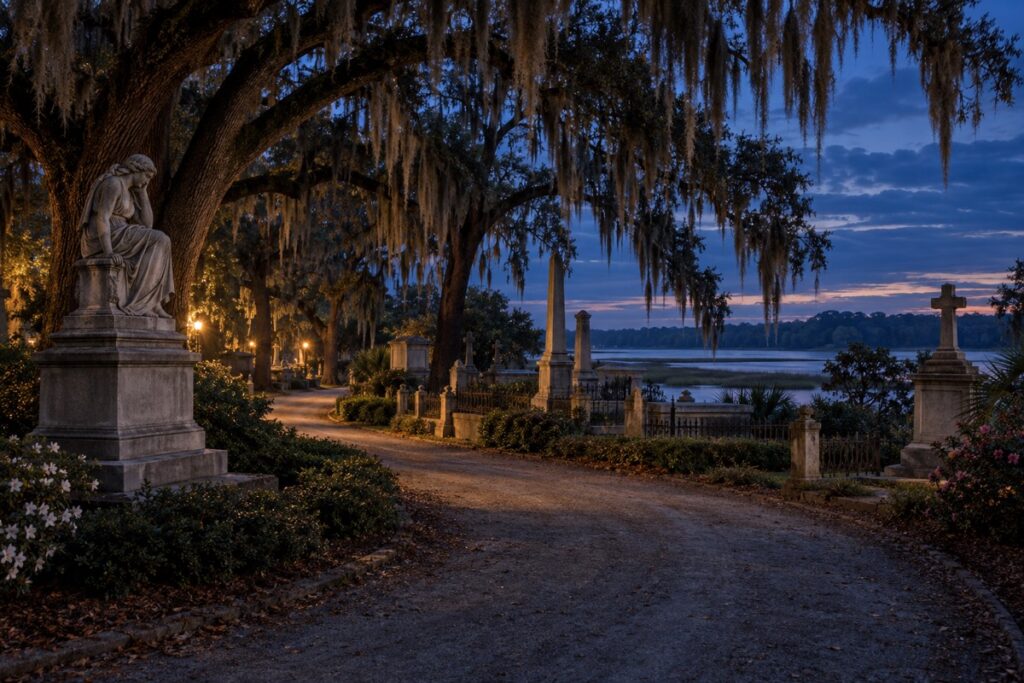
Bonaventure occupies more than 100 acres east of downtown Savannah on a bluff above the Wilmington River. Long before the property became a cemetery, it belonged to Bonaventure Plantation. The name and portions of the old landscape survived as the land took on a new use in the nineteenth century.
The site was purchased for a private cemetery in 1846. Like other rural cemeteries of the period, Bonaventure combined burial space with planned scenery. Curving roads, shade trees, garden plantings, monuments, and views encouraged visitors to contemplate memory in a setting removed from the crowded city. Savannah acquired the cemetery in 1907 and has maintained it as a municipal burial ground ever since.
The City of Savannah describes Bonaventure as a tourist destination for more than 150 years. That history predates the modern ghost-tour industry. Families, historians, artists, and travelers have long come to see its sculpture and the graves of people connected to Georgia’s cultural and civic life.
Art, memory, and famous burials
Bonaventure’s monuments record changing ideas about grief. Angels, crosses, urns, portrait carvings, family plots, and ironwork appear beneath the live oaks. Some markers are modest. Others were commissioned as elaborate works of art. Weather and vegetation have softened many surfaces, giving the cemetery the appearance of a garden that has matured around generations of memory.
Among the best-known burials are songwriter Johnny Mercer, poet Conrad Aiken, and six-year-old Gracie Watson. Gracie’s monument, carved in the likeness of the child, has become one of the cemetery’s most visited memorials. Visitors often leave small tokens. The gesture can be kind, but objects should never be placed where they damage stone or interfere with cemetery care.
Bonaventure also became widely recognized through Midnight in the Garden of Good and Evil. The book and film increased interest in Savannah’s cemeteries, although the famous Bird Girl statue shown on the book cover was removed from Bonaventure and is now preserved by the Telfair Museums.
Ghost stories and cemetery folklore
Stories about Bonaventure often center on unexplained voices, figures among the monuments, and the statue of Gracie Watson. A popular legend claims that Gracie’s sculpture cries tears of blood or that visitors hear a child near her grave. These are folklore traditions, not documented events. The child’s actual death from pneumonia in 1889 is a family tragedy and should not be turned into spectacle.
Other accounts describe shifting shadows under the trees or footsteps on an empty lane. The landscape can easily shape perception. Spanish moss moves in the slightest breeze, river weather changes quickly, and rows of sculpture create unexpected forms at the edge of vision. None of this settles what an individual experienced. It explains why Bonaventure inspires stories without requiring invented evidence.
Planning a respectful visit
- Address: 330 Bonaventure Road, Savannah, Georgia 31404.
- Hours: The City of Savannah lists daily public hours of 8:00 a.m. to 5:00 p.m.
- Phone: 912-651-6843.
- Admission: General cemetery access is free. Authorized guided tours may have separate schedules or fees.
- Maps: Download the city section maps before visiting. The grounds are extensive.
- Conduct: Remain on roads and paths, do not touch monuments, and yield immediately to funerals and cemetery work.
The Bonaventure Historical Society offers free tours on selected weekends, subject to its current calendar. Commercial activity and organized events may require city coordination. Drones, staged paranormal experiments, and visits outside posted hours are not appropriate in an active cemetery.
Build a deeper Savannah history route
Bonaventure works best as part of a wider study of Savannah’s memorial landscapes. Compare its nineteenth-century rural design with the compact colonial-era ground at Colonial Park Cemetery. Downtown, the Pirates’ House and the Kehoe House show how folklore becomes attached to working historic buildings.
The contrast matters. Bonaventure is not a haunted attraction. It is a public archive written in stone and landscape. Its ghost stories belong to Savannah’s culture, but the people buried here and the art created for them remain the central story.
Frequently asked questions
Is Bonaventure Cemetery haunted?
Visitors and local storytellers report apparitions, voices, and unusual experiences. The best-known tales involve the monument to Gracie Watson. These reports are folklore, not verified paranormal evidence.
Is Bonaventure Cemetery free to visit?
General public access is free during posted hours. Guided tours may follow separate schedules and prices.
How long should I allow?
Allow at least 60 to 90 minutes for a focused visit. The cemetery covers more than 100 acres, so visitors interested in architecture or genealogy may need longer.
Can I visit Gracie Watson’s grave?
Yes, during normal cemetery hours. Use the official map, approach quietly, and do not touch the sculpture or leave anything that could damage the site.
Are nighttime visits allowed?
No. The city lists public hours from 8:00 a.m. to 5:00 p.m. Entering after closing is trespassing and disrespects an active burial ground.
Sources and editorial note
HauntsUSA separates documented cemetery history from reported folklore. Visitor information was reviewed on September 26, 2026. Confirm hours and rules with the City of Savannah before traveling.
Editorial image: AI-created historical interpretation for HauntsUSA. It is not documentary evidence of paranormal activity.