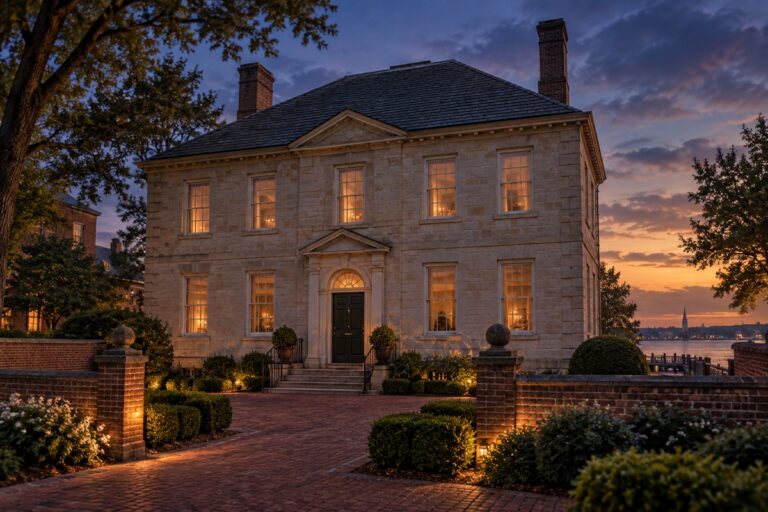
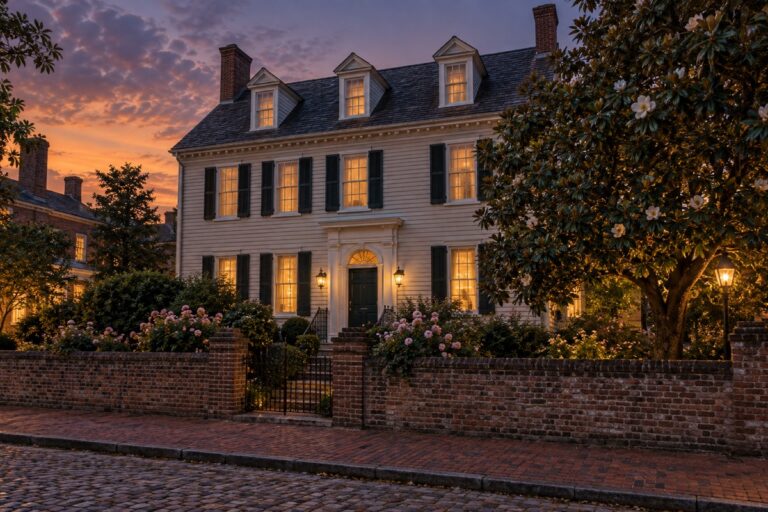
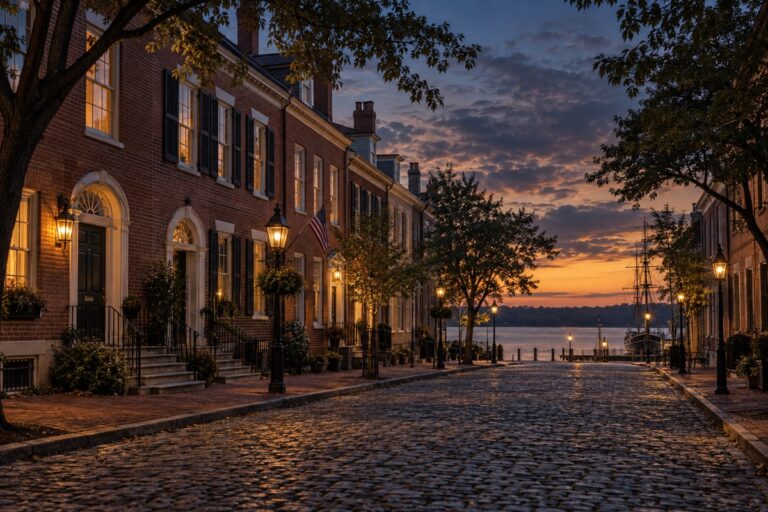
Merchant John Carlyle completed the Georgian stone house in 1753; its history includes colonial politics, enslaved workers, the Braddock conference, an adjacent hotel converted to a Union hospital, and a major twentieth-century restoration.
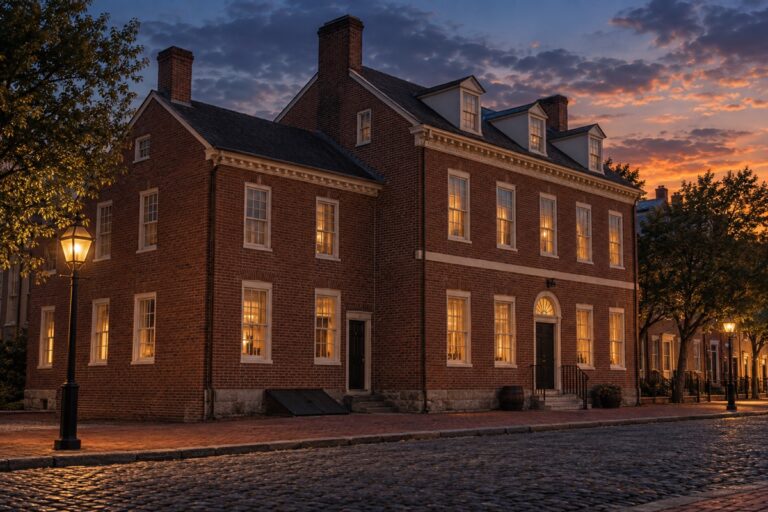
The museum occupies a circa-1785 tavern and the 1792 City Tavern and Hotel, where enslaved labor sustained a prominent hospitality business serving travelers, civic gatherings, and political life in the early republic.
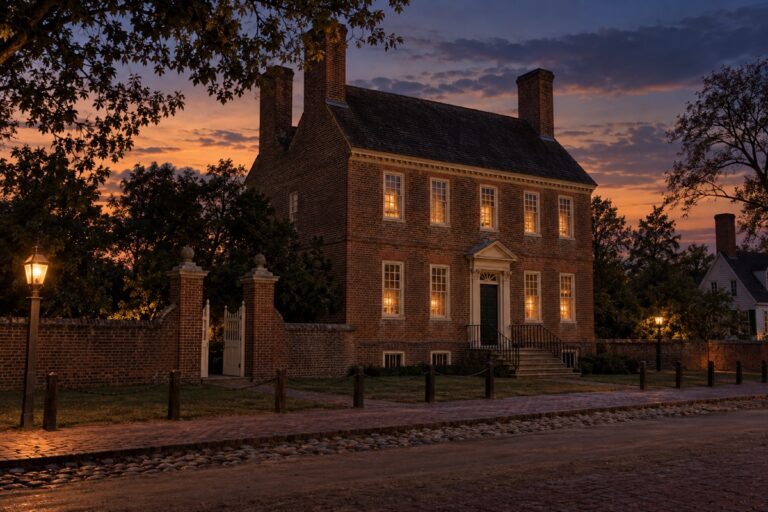
The Georgian house associated with jurist and teacher George Wythe reflects elite household life, law, politics, and slavery in eighteenth-century Williamsburg.
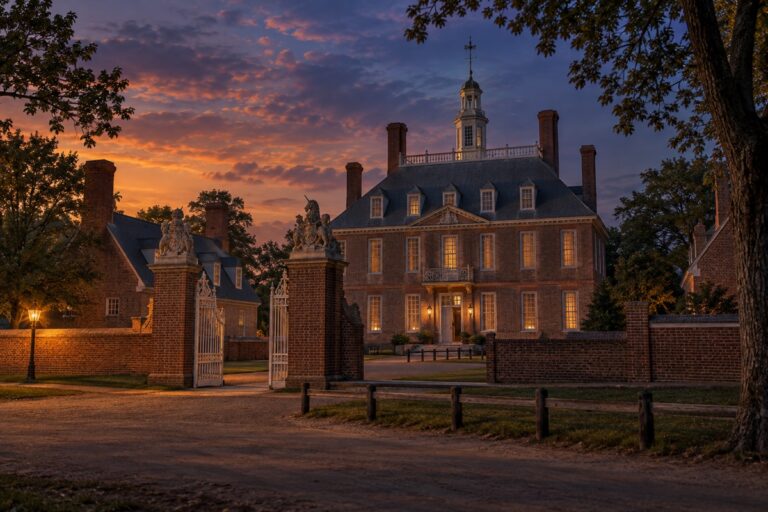
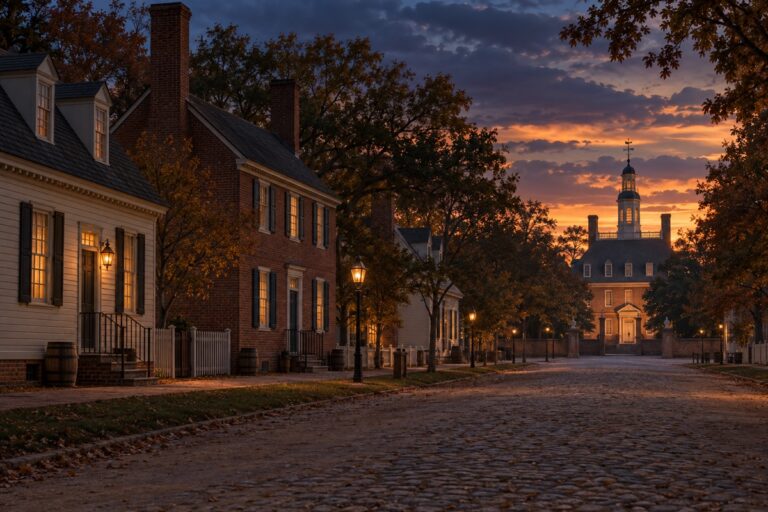
The Governor's Palace served Virginia's royal and early elected governors; the original complex burned in 1781 and the present building is a research-based twentieth-century reconstruction.
Built in 1785, the house was home to Lee and Fendall family members, enslaved and free African Americans, served as a Union hospital, and later housed labor leader John L. Lewis before becoming a museum.
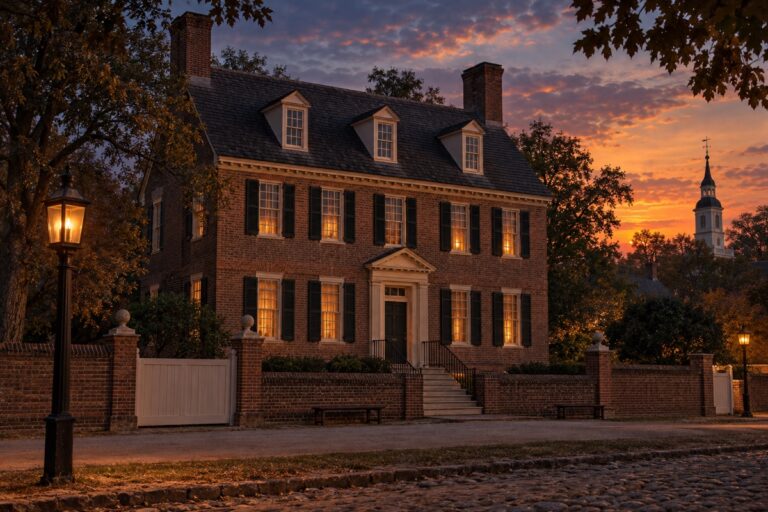
The Peyton Randolph property grew as an eighteenth-century urban household occupied by a prominent political family and by enslaved people whose work sustained it.
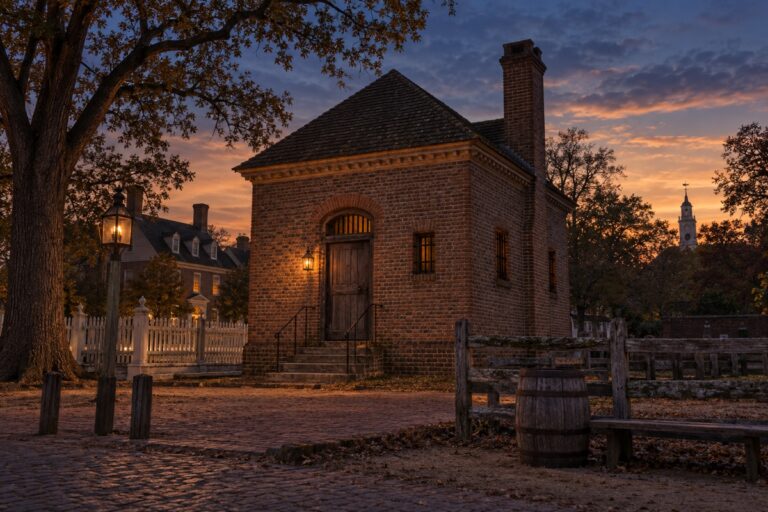
Williamsburg's Public Gaol held accused and convicted people, debtors, enslaved people, and some pirates within a colonial system of punishment and coercion.
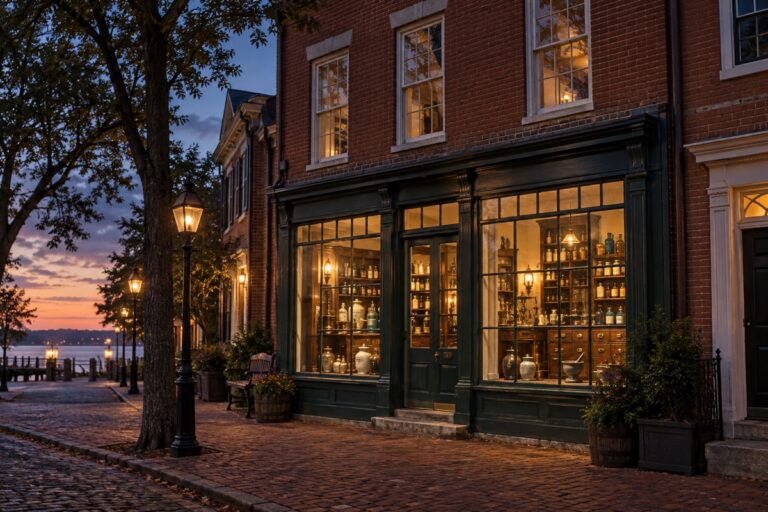
The Stabler and Leadbeater families operated an apothecary business from this site from the late eighteenth century until 1933, leaving an unusually intact collection of medicines, containers, records, and commercial spaces.
Alexandria developed on Piscataway and related Native homelands as a Potomac port shaped by tobacco, slavery, commerce, the federal district, Civil War occupation, rail and industry, Black community history, and preservation.
Williamsburg became Virginia's colonial capital in 1699 and later developed into a major center for preservation, archaeology, education, and public history.