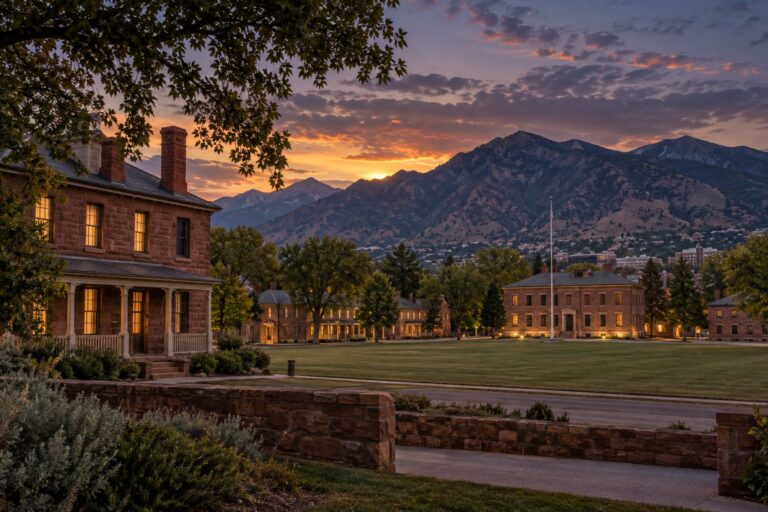
Established during the Civil War era, Fort Douglas became a lasting federal military presence overlooking the city. Surviving buildings, the cemetery, museum collections, and later university use connect territorial conflict, soldiers, families, national policy, and urban expansion.
Completed in 1901 for Alfred and Elizabeth McCune, the elaborate mansion reflects mining and railroad wealth, imported materials, skilled craftsmanship, changing institutional uses, and later preservation as an event venue.
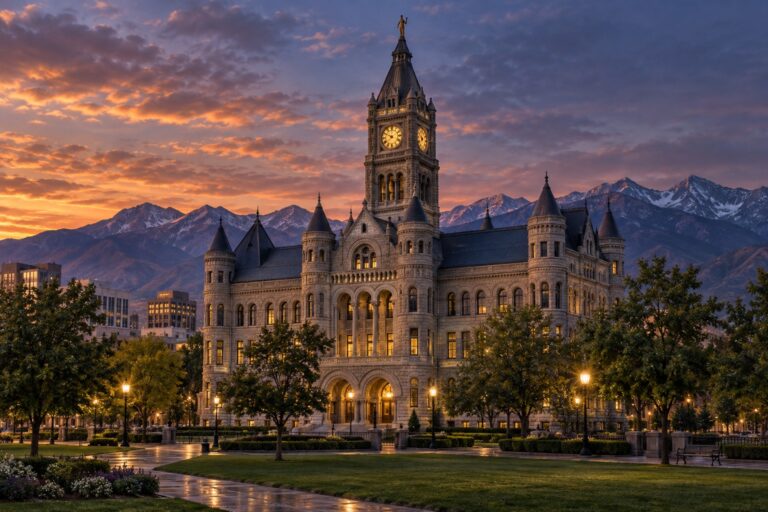
The late-nineteenth-century City and County Building became a monumental home for municipal and county government. Its sandstone walls, clock tower, sculpture, courtrooms, offices, and surrounding civic square reflect political growth and public architecture.
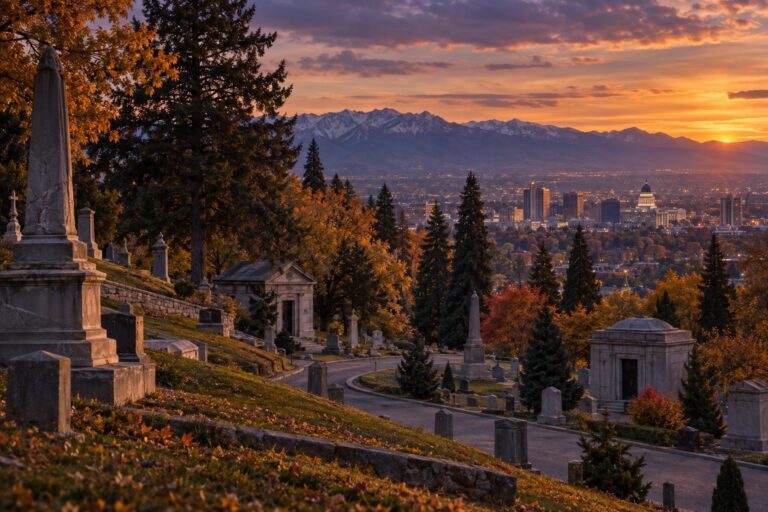
The large municipal cemetery on the city's northeastern bench contains burials, monuments, military sections, family plots, roads, and landscapes representing generations of religious leaders, immigrants, workers, public figures, and ordinary residents.