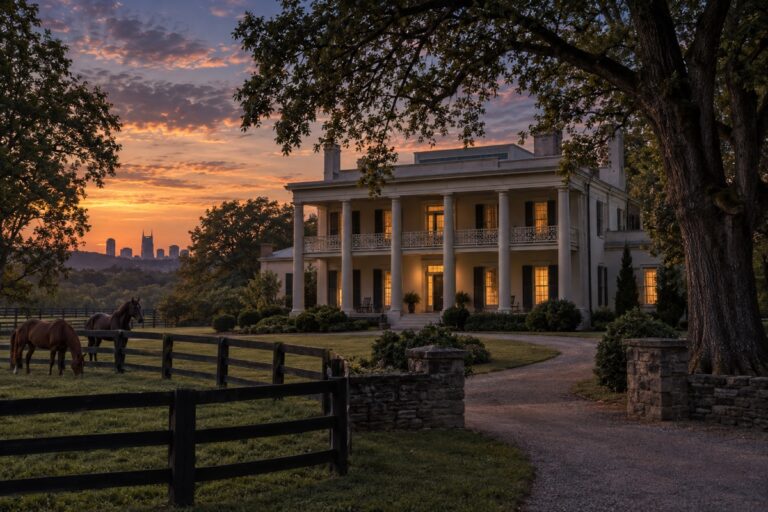
Belle Meade developed as a plantation and thoroughbred operation whose wealth depended on enslaved labor before the Civil War and paid labor afterward.
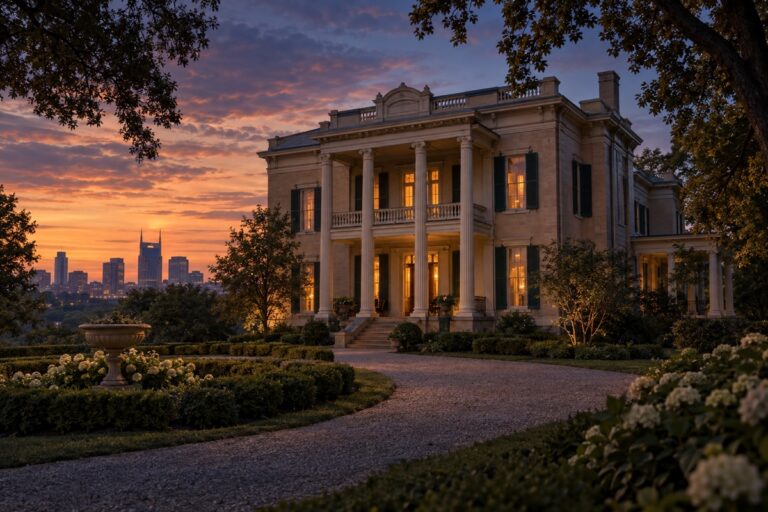
Belmont Mansion was the elaborate nineteenth-century home of Adelicia Acklen and later became part of a women's school and the campus now occupied by Belmont University.
Established by Maj. Gen. George H. Thomas in December 1863 and designated a national cemetery in 1867, the landscape holds Union dead, later veterans, German prisoners of war, major monuments, and a monumental entrance arch.
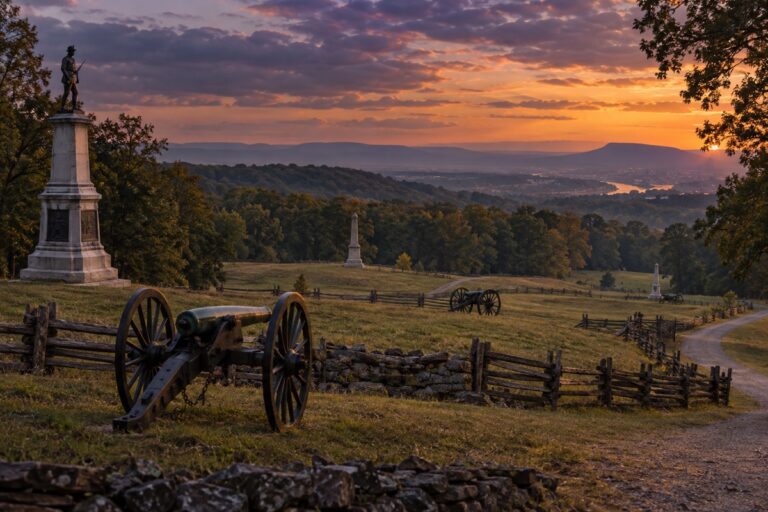
Established in 1890, the military park preserves landscapes associated with the 1863 Chickamauga and Chattanooga campaigns as well as Indigenous history, veterans' commemoration, military roads, monuments, and later preservation.
Founded in 1852 as part of the rural cemetery movement, Elmwood is an active cemetery, arboretum, bird sanctuary, and National Register property whose records reflect more than a century and a half of Memphis history.
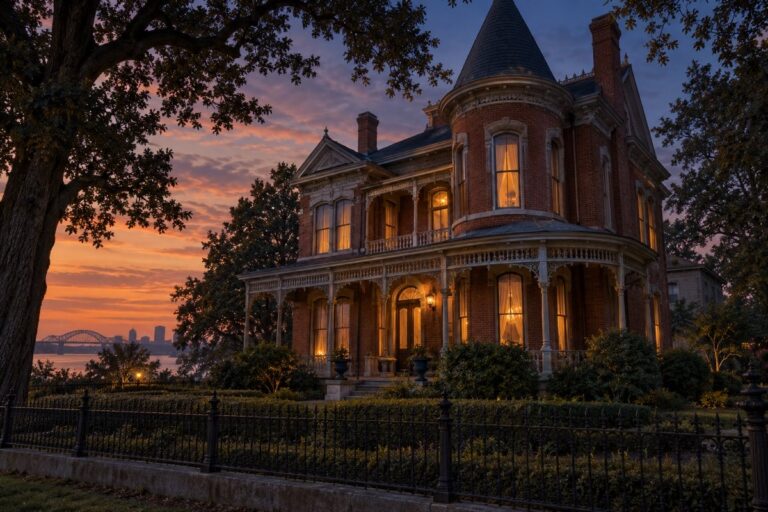
Built in 1852 and later home to the Neely and Mallory family, the house preserves unusually complete interiors and furnishings and has operated as a city-owned museum under MoSH since 1987.
A Grand Opera House opened on the site in 1890, was later renamed the Orpheum, and burned in 1923; the present theater opened in 1928 and was eventually saved from demolition.
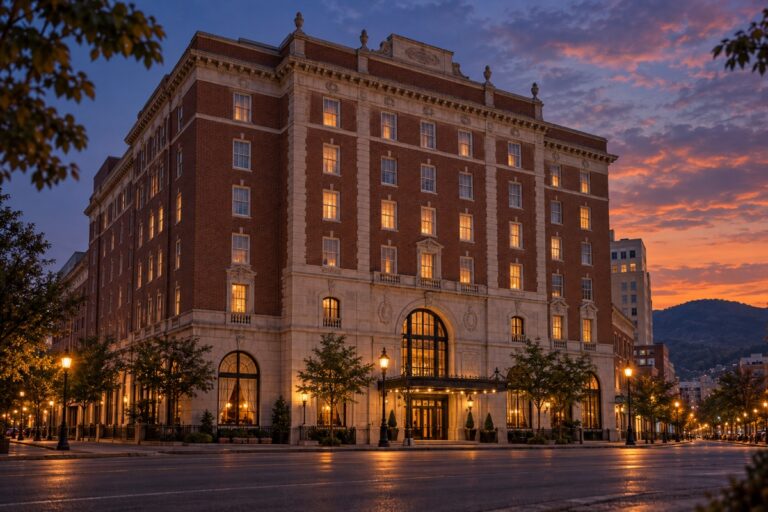
The Read House traces its hotel lineage to 1872, while the present Georgian-style building opened in 1926 and reflects Chattanooga's railroad, convention, travel, preservation, and downtown history.
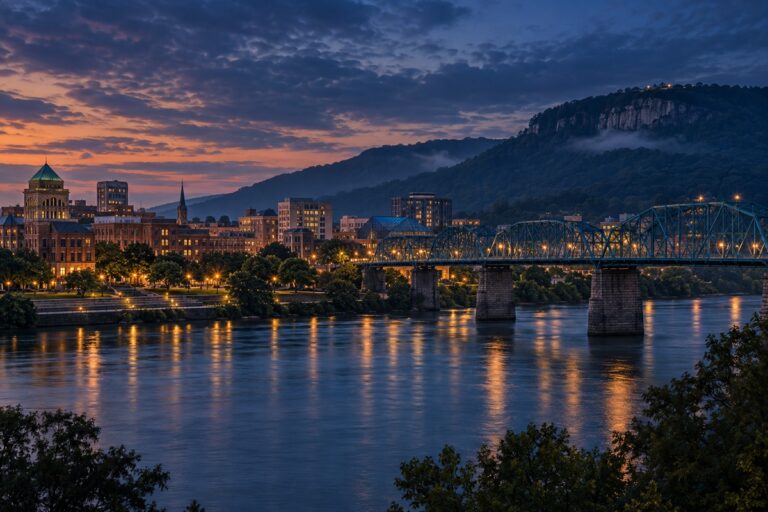
Chattanooga developed within Cherokee homelands at a Tennessee River crossroads through forced removal, railroads, Civil War campaigns, emancipation, industry, segregation, environmental repair, tourism, and preservation.
Memphis developed on Indigenous homelands above the Mississippi River through cotton and the domestic slave trade, transportation, epidemics, emancipation, migration, music, civil rights activism, and urban change.
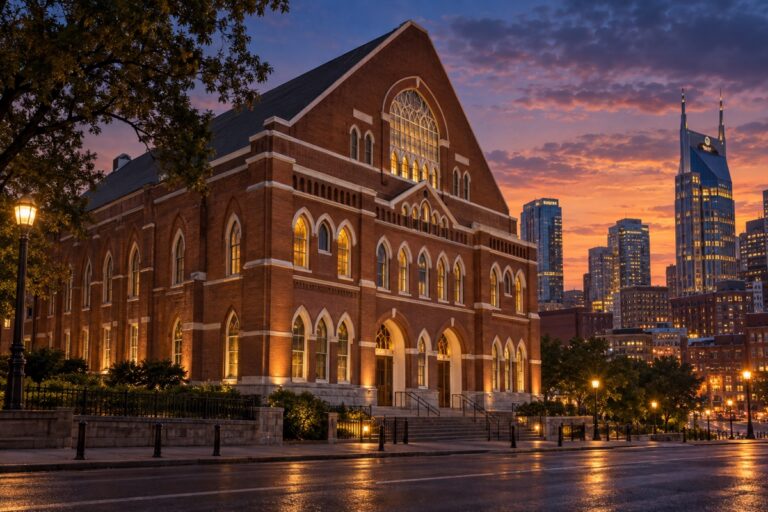
Nashville developed on the Cumberland River through Indigenous history, settlement, slavery and emancipation, state government, education, publishing, and music industries.