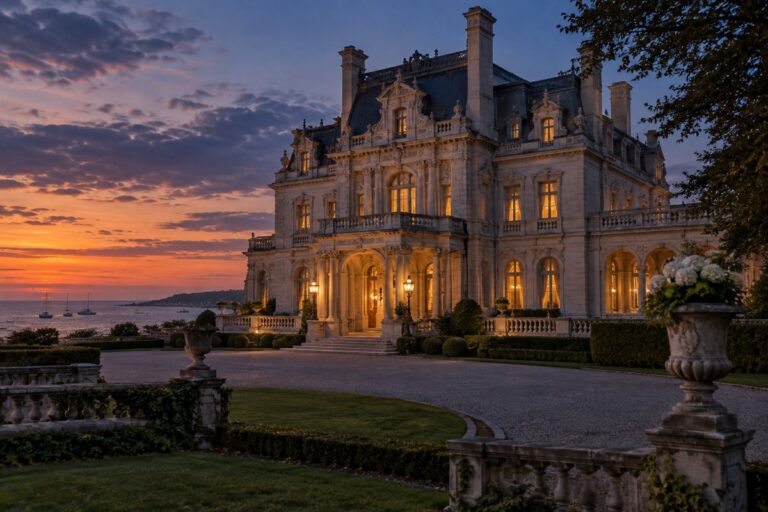
Richard Morris Hunt designed Belcourt for Oliver Hazard Perry Belmont; construction began in 1891, and the property later became closely associated with Alva Vanderbilt Belmont.
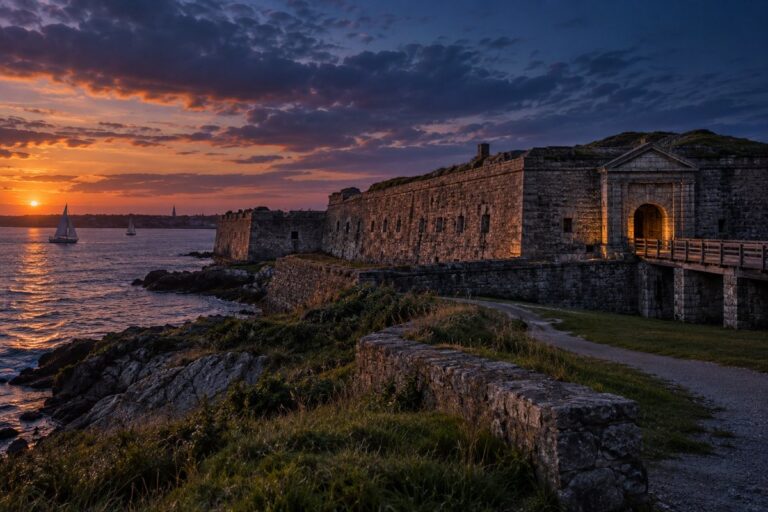
Fort Adams preserves layers of American coastal defense, including a major masonry fort begun in the 1820s to guard Narragansett Bay and Newport Harbor.
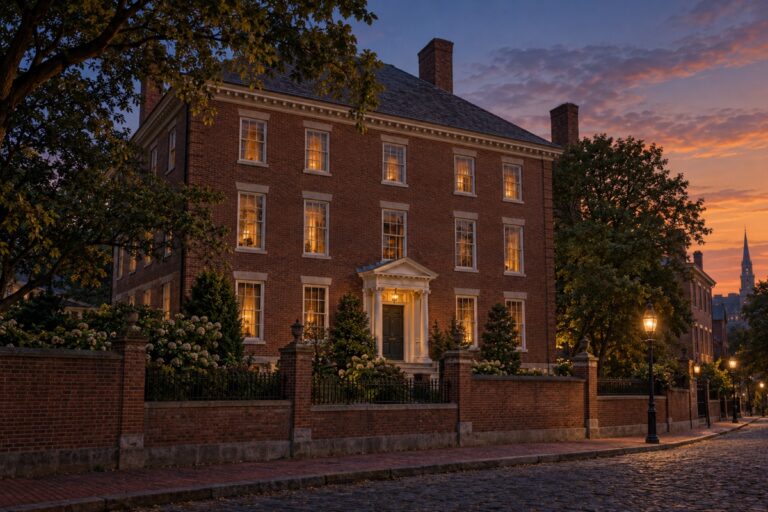
Completed in the 1780s for merchant John Brown, the mansion is a National Historic Landmark whose interpretation connects architecture and luxury to Atlantic commerce, the business of slavery, politics, and early United States trade.
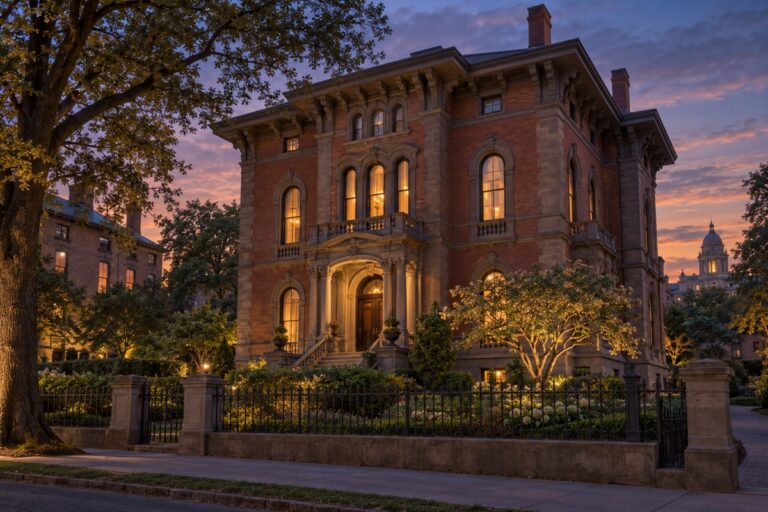
Completed in 1865 for Henry and Mary Ann Lippitt, the Renaissance Revival mansion preserves elaborate painted finishes, stained glass, woodwork, furnishings, technology, and four generations of family history tied to textile wealth and politics.
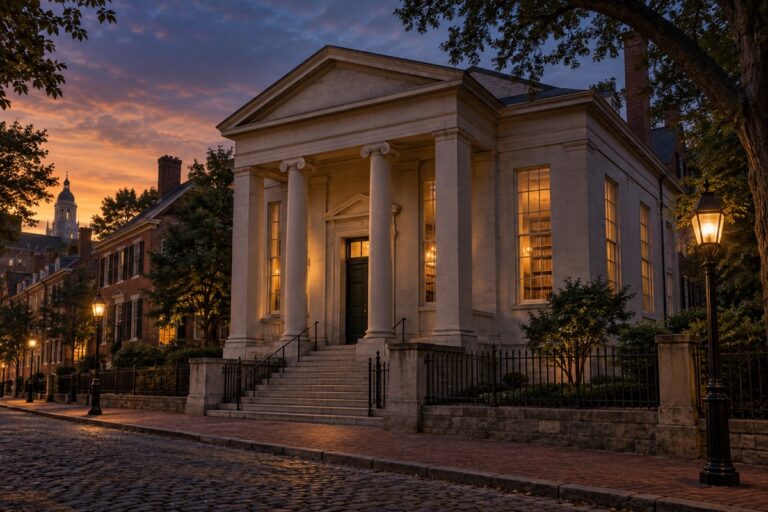
Founded in the nineteenth century and housed in an 1838 Greek Revival building, the Athenaeum preserves a circulating library, collections, architecture, and a long civic and literary history on Benefit Street.
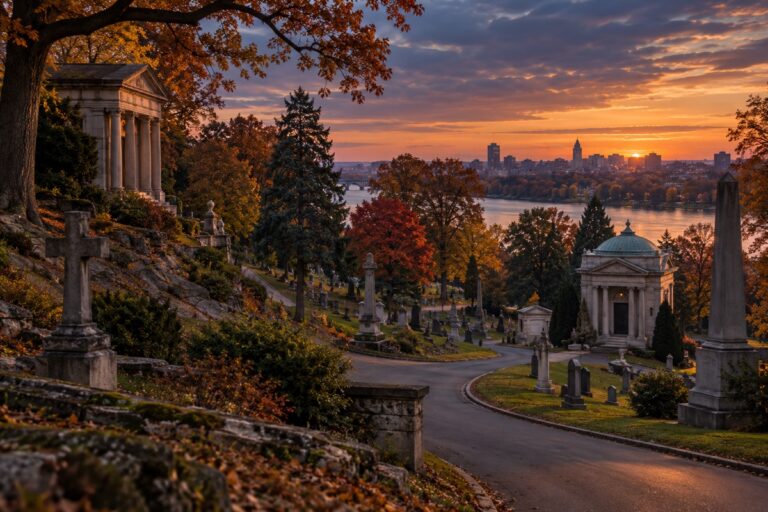
Founded in 1846 and developed as a rural cemetery, Swan Point combines landscape design, horticulture, monuments, architecture, and the graves of generations of Providence residents, including writer H. P. Lovecraft.
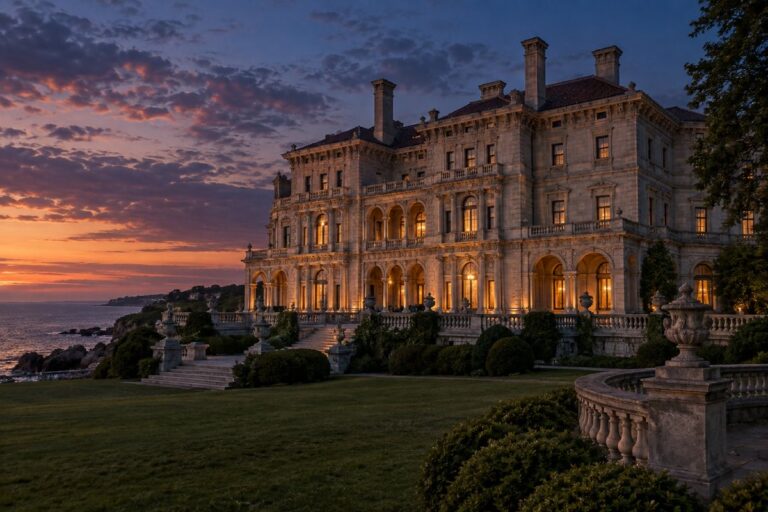
Richard Morris Hunt designed The Breakers for Cornelius Vanderbilt II and his family; built from 1893 to 1895, it became an emblem of Newport's Gilded Age summer colony.
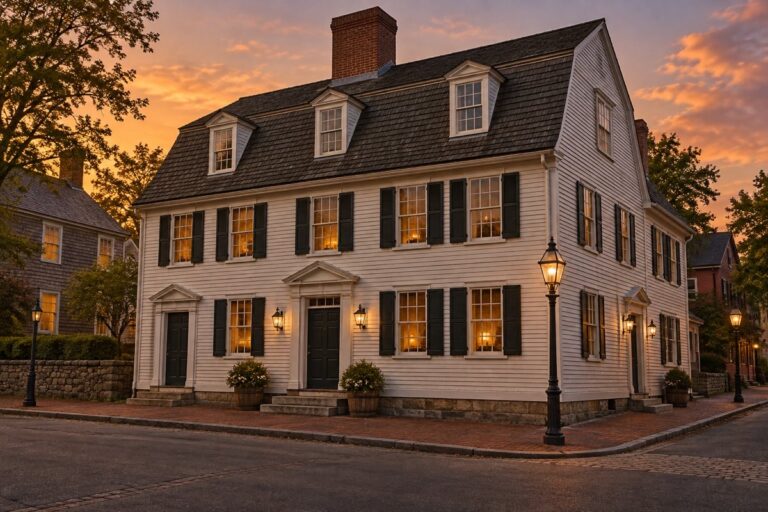
The building began as a residence in 1652 and became a tavern in 1673, serving travelers and civic gatherings through changing periods of Newport history.
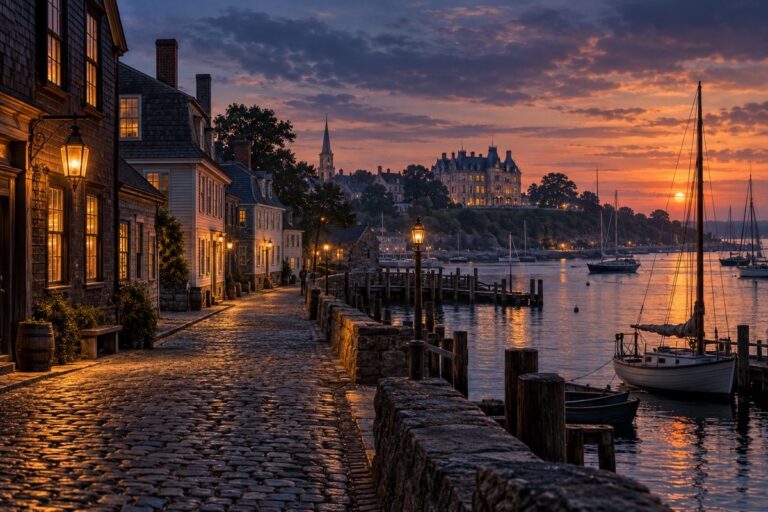
Newport developed on the homeland of the Narragansett people as a colonial port noted for religious diversity, maritime commerce, slavery, war, tourism, and later Gilded Age estates.