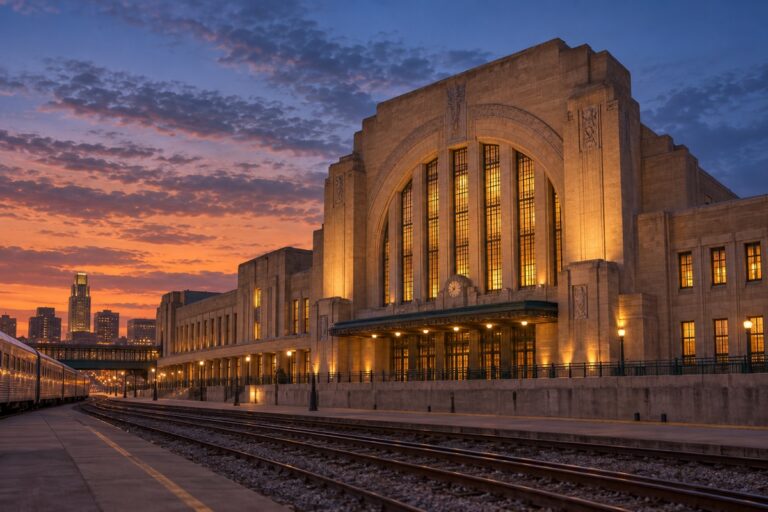
Omaha's 1931 Union Station survives as the Durham Museum, preserving a dramatic Art Deco great hall, passenger-train history, regional collections, and exhibitions about the diverse communities that built the city.
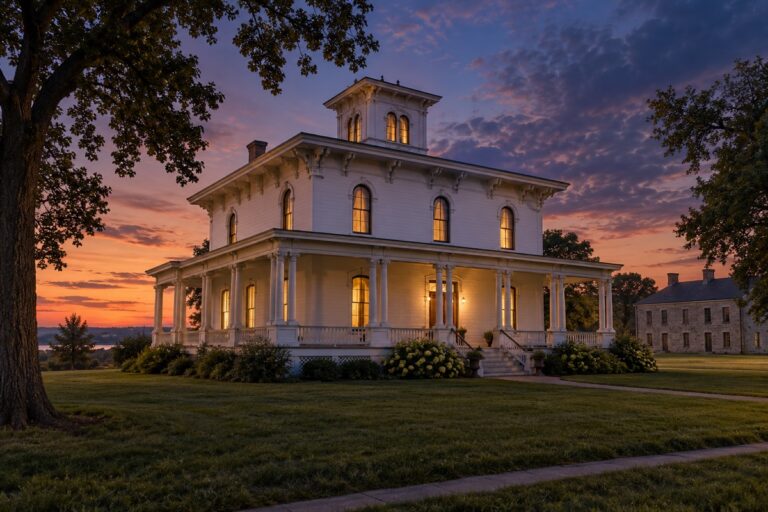
Built in 1879 at Fort Omaha, the Italianate residence housed General George Crook and later commanders. Its setting connects military administration, household labor, Plains warfare, federal Indian policy, and changing uses of the fort.
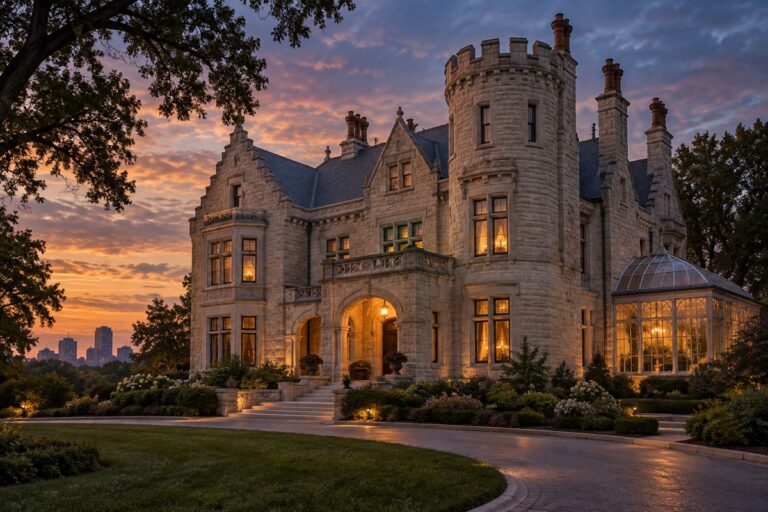
Completed in 1903 for George and Sarah Joslyn, the Scottish Baronial house known as Lynhurst contains richly varied woods, stonework, service spaces, and gardens connected to Omaha business, philanthropy, and civic culture.
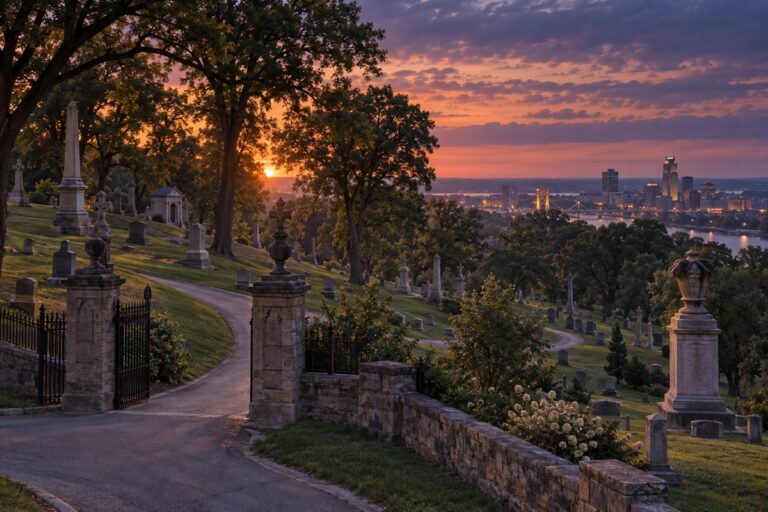
Established in the nineteenth century and developed as Omaha expanded, Prospect Hill preserves the graves and monuments of many communities while reflecting changing burial practice, civic memory, and the uneven record of settlement.