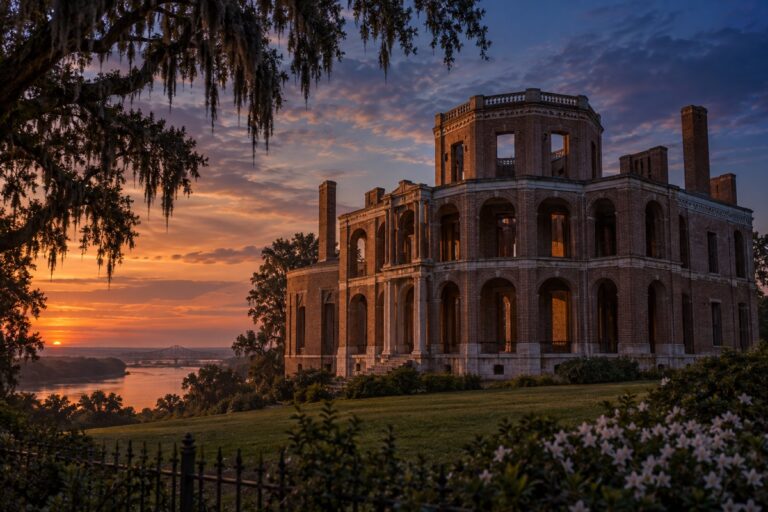
Construction of the octagonal Longwood began for Haller and Julia Nutt shortly before the Civil War and stopped before the elaborate upper floors were completed.
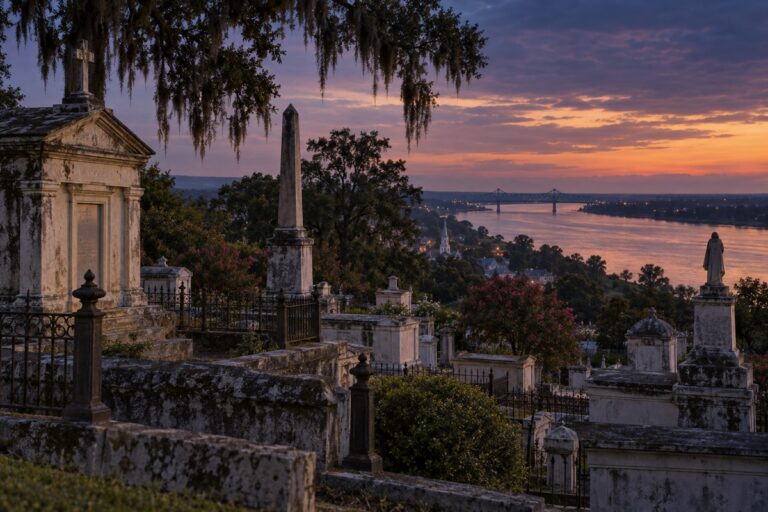
Established in 1822, Natchez City Cemetery includes older relocated graves, ornate monuments, family plots, and records central to the region's history.
Completed in 1860 by skilled enslaved artisans, the Old Warren County Court House survived the siege, later served county government, and opened as a museum after a community preservation campaign.
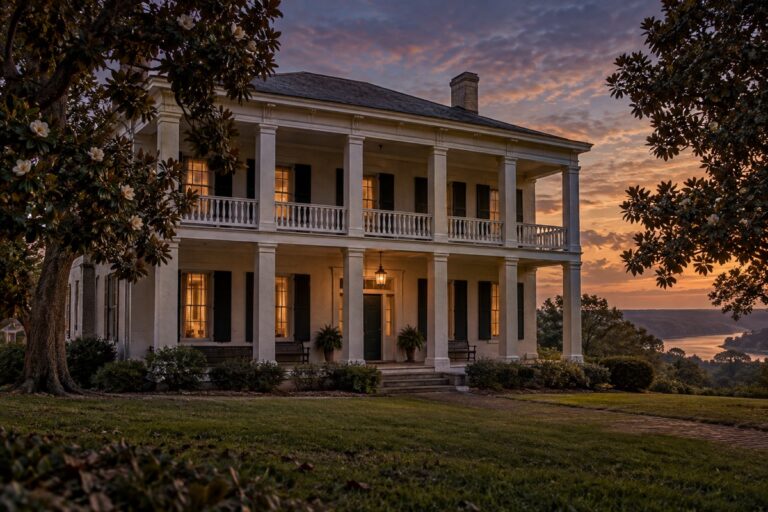
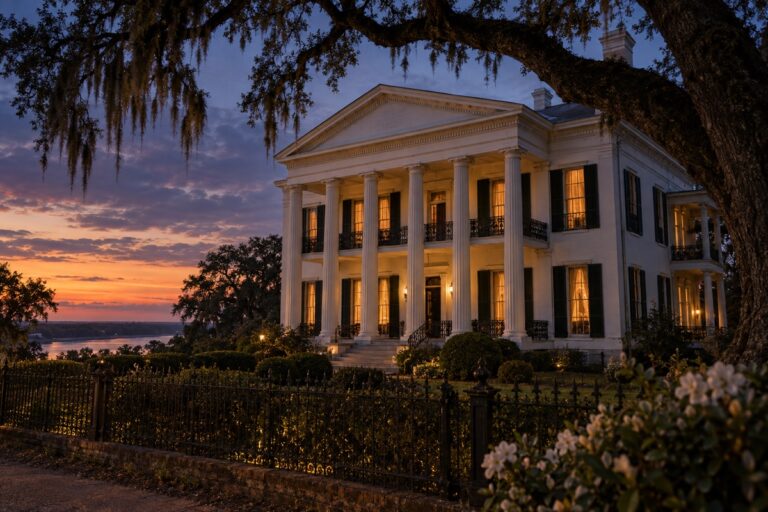
The circa-1836 Greek Revival house served as Confederate Lt. Gen. John C. Pemberton's headquarters during the Vicksburg siege and was the setting for command decisions before the July 1863 surrender.
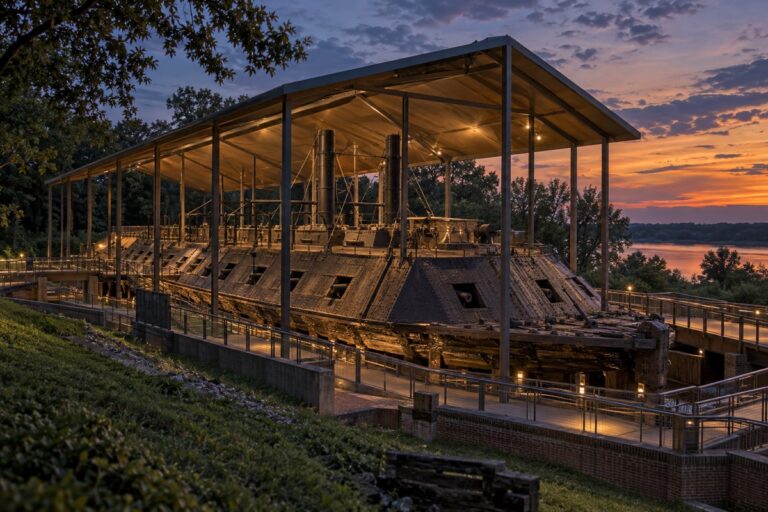
The Union ironclad USS Cairo sank in the Yazoo River in December 1862 after striking electrically detonated mines, then was located, raised in the 1960s, conserved, and displayed within the national military park.
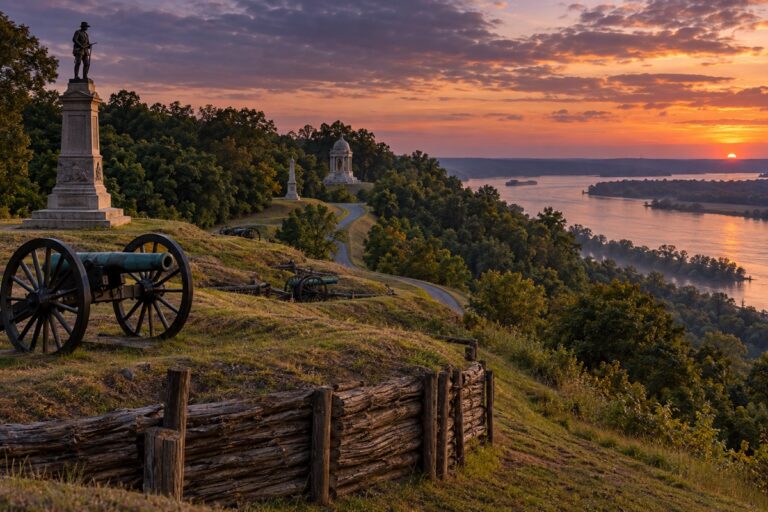
Established in 1899, the park protects siege and defensive lines, monuments, military roads, Vicksburg National Cemetery, USS Cairo, Pemberton's Headquarters, and landscapes central to the 1863 campaign and its commemoration.
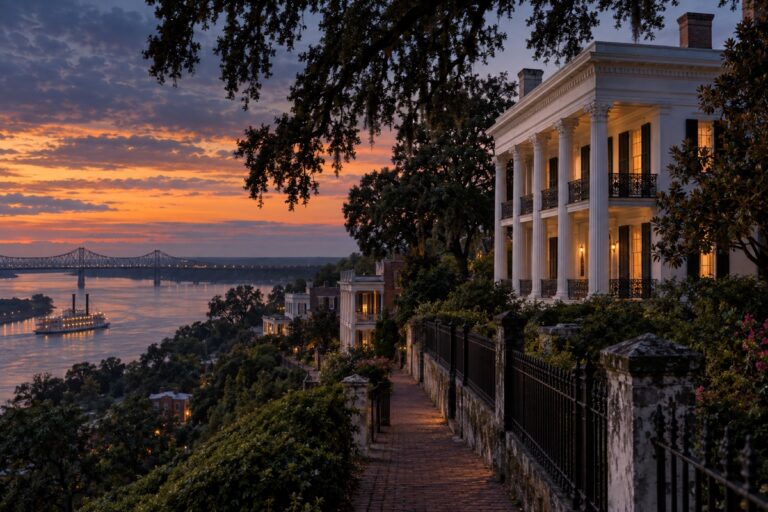
Natchez occupies Indigenous homelands above the Mississippi River and was shaped by colonial empires, the domestic slave trade, cotton wealth, war, emancipation, and preservation tourism.
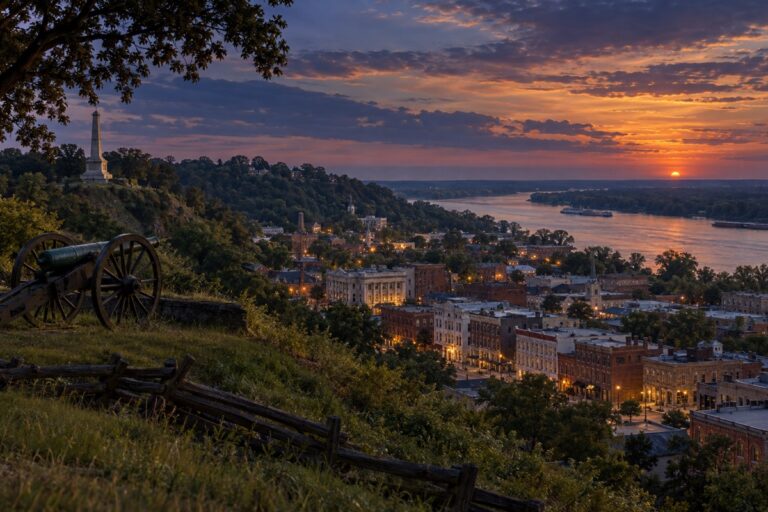
Vicksburg developed within Indigenous river landscapes and colonial networks into a port shaped by slavery, cotton, steamboats, the Civil War siege, emancipation, Reconstruction, flood-control change, commerce, and preservation.