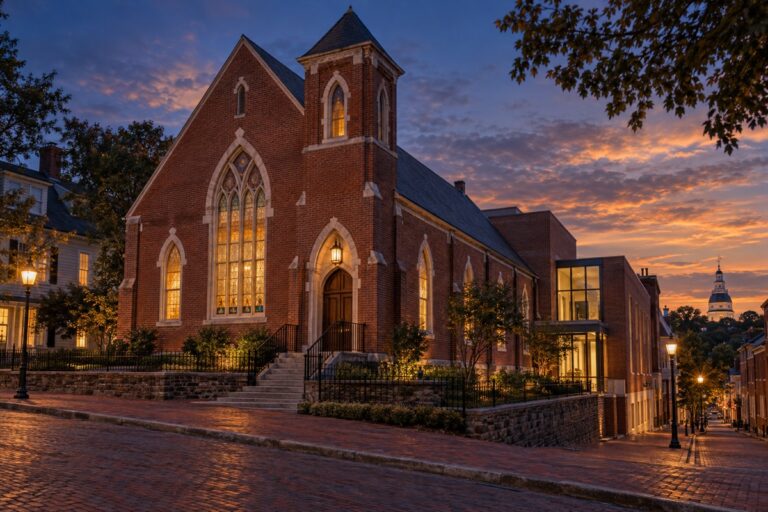
Maryland's official museum of African American heritage occupies the former Mount Moriah African Methodist Episcopal Church, a nineteenth-century landmark adapted to preserve community, civil rights, religious, and cultural history.
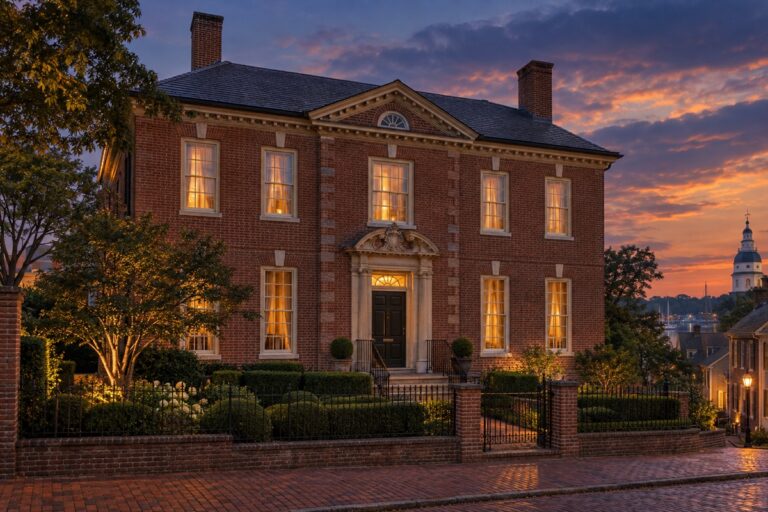
Architect William Buckland designed the house in 1774 for planter Matthias Hammond; later Pinkney, Loockerman, and Harwood households, enslaved domestic workers, collections, and museum preservation shaped its history.
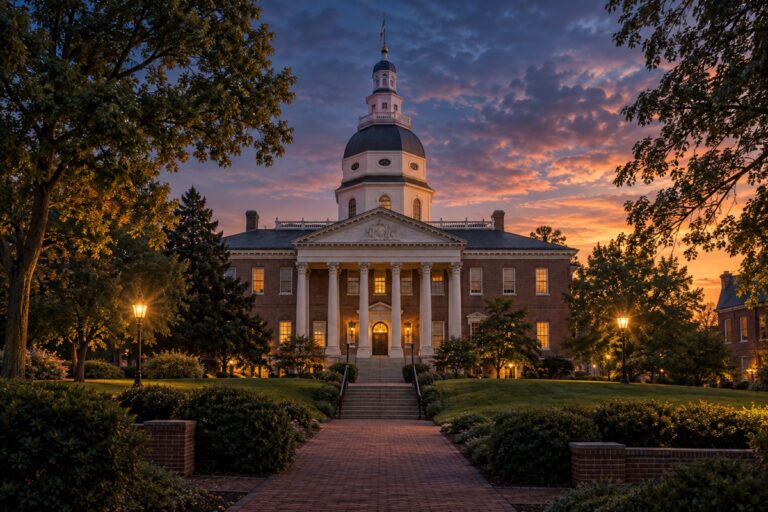
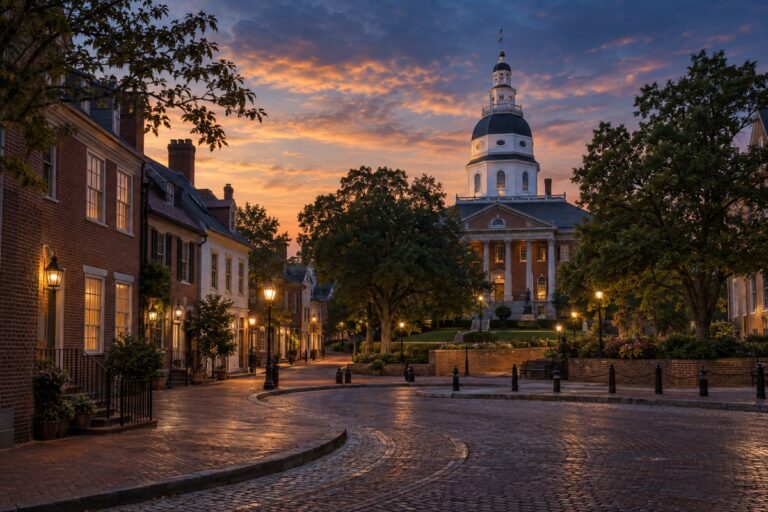
Begun in 1772 and completed during the Revolution, the Maryland State House is the nation's oldest state capitol in continuous legislative use and briefly served as the United States capitol in 1783-1784.
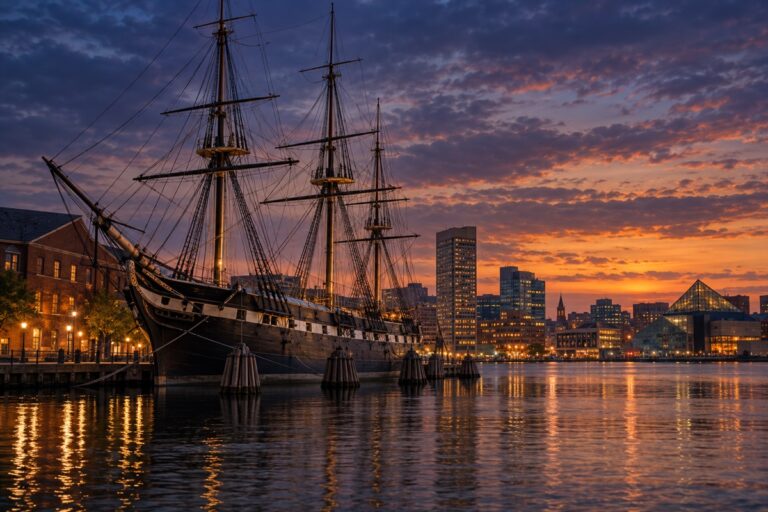
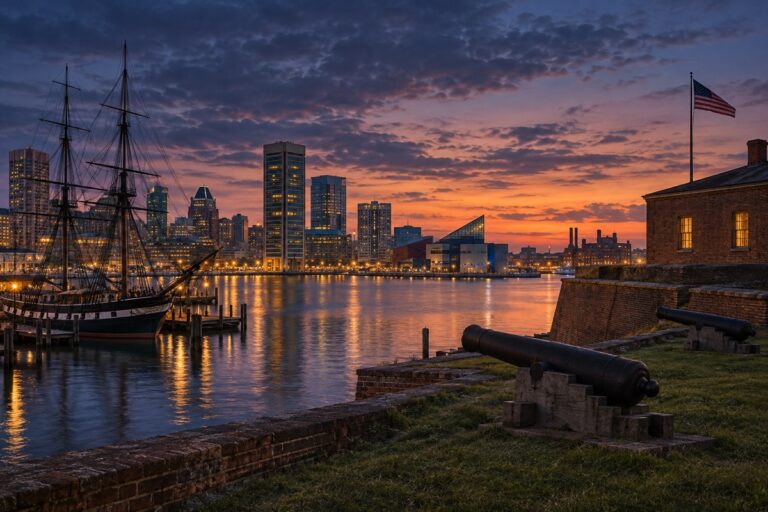
The surviving USS Constellation was launched in 1854 and served in naval operations including the suppression of the transatlantic slave trade and Civil War duty.
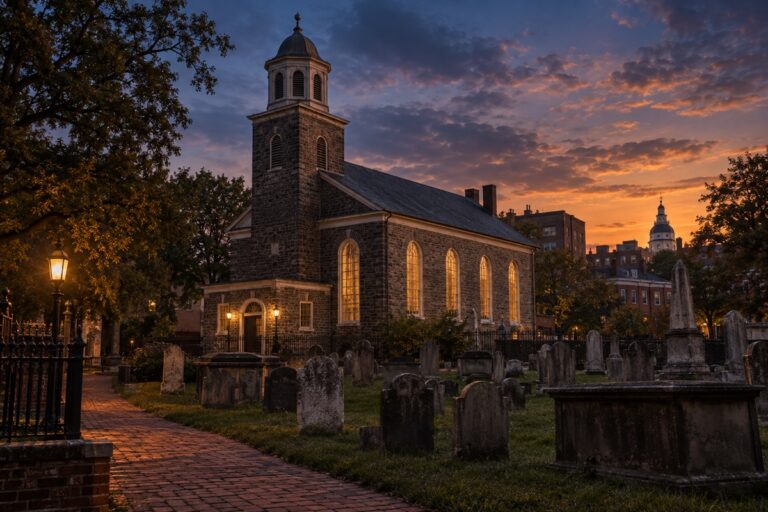
The burial ground dates to 1786, and Westminster Presbyterian Church was later built above portions of it; Edgar Allan Poe and other prominent Baltimoreans are buried there.
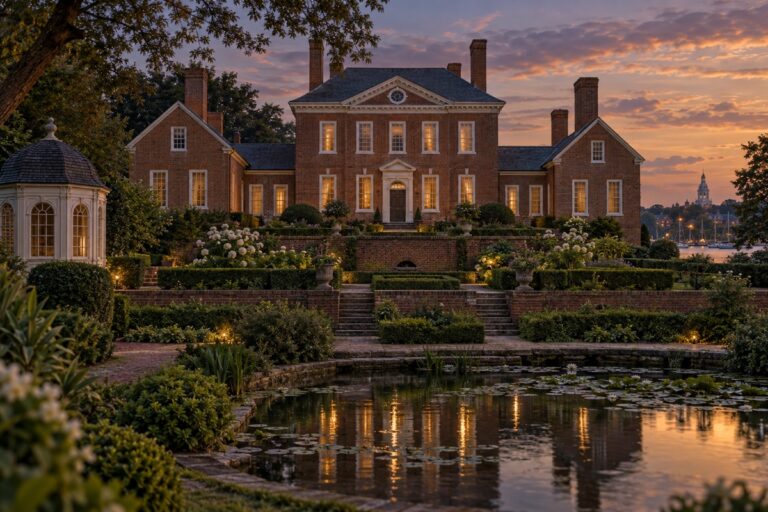
Built in the 1760s for William and Mary Paca, the five-part Georgian mansion and reconstructed garden interpret elite Revolutionary-era life alongside the labor of enslaved people including Affey, Poll, Sarah, Bett, Sall, and Denby.
Annapolis developed on Piscataway and related Native homelands as a Chesapeake port, colonial and state capital, center of slavery and commerce, naval city, and nationally important preservation landscape.
Baltimore grew through Chesapeake trade, industry, immigration, slavery and emancipation, war, transportation, and neighborhood life around its harbor.