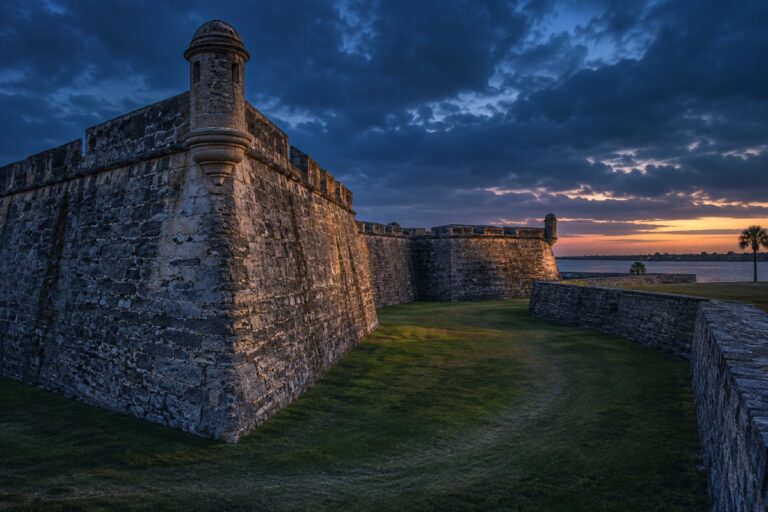
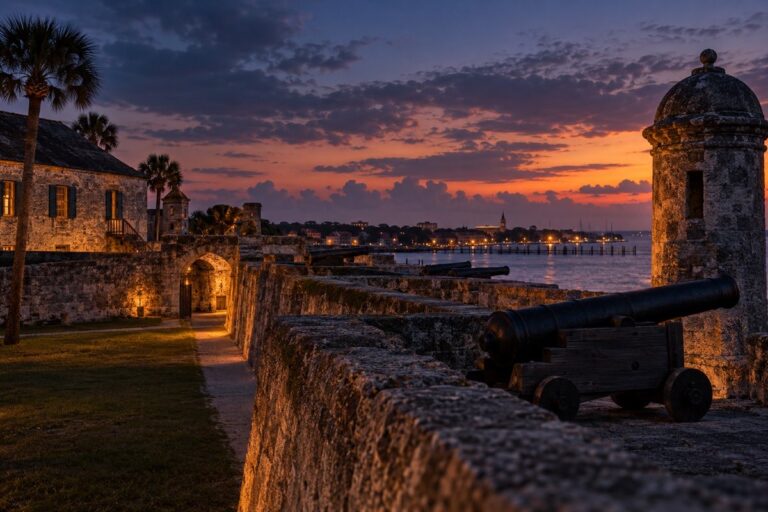
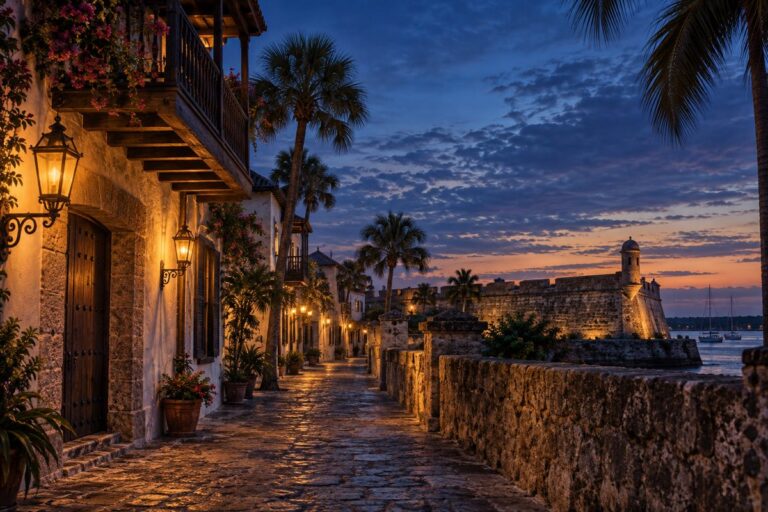
Castillo de San Marcos in St. Augustine is the oldest surviving masonry fortification in the continental United States. Spain began construction in 1672 using coquina stone. More than three centuries of sieges, imperial transfers, military service, and imprisonment shaped the fort’s history. Ghost stories circulate around its rooms and walls, but the National Park Service preserves it as a historic site, not as proof of paranormal activity.
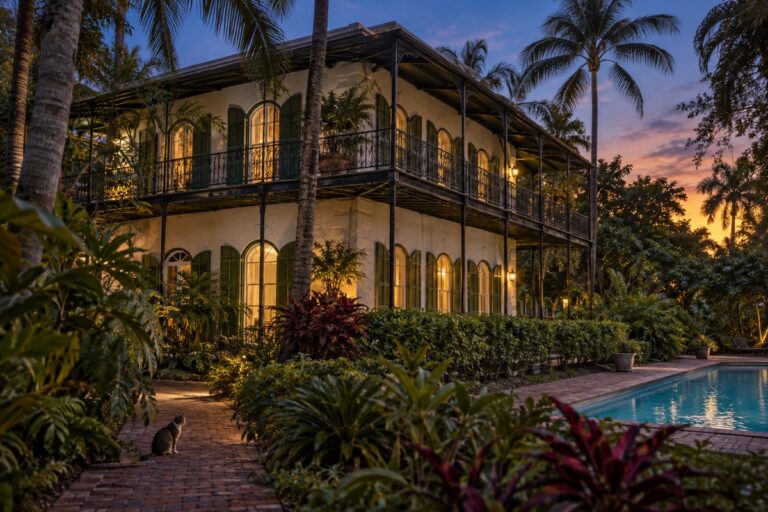
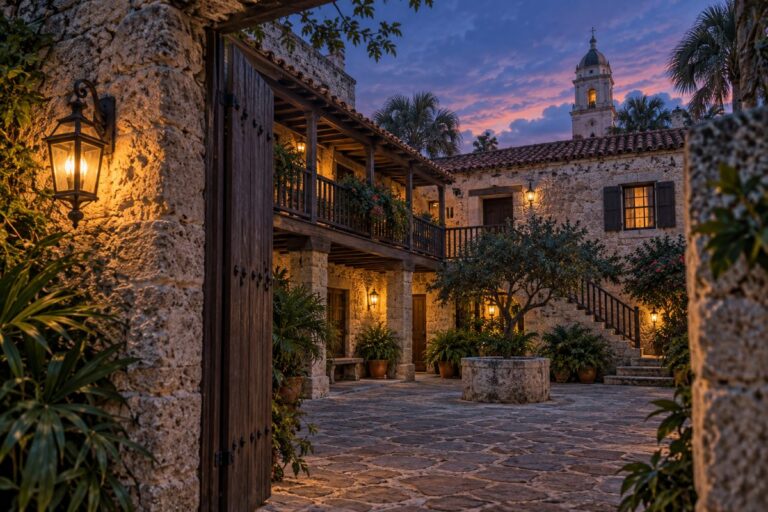
Built in 1851, the Spanish Colonial house became Ernest and Pauline Hemingway's Key West home in 1931; their restoration, writing life, garden, studio, pool, collections, and polydactyl cats shape its modern interpretation.
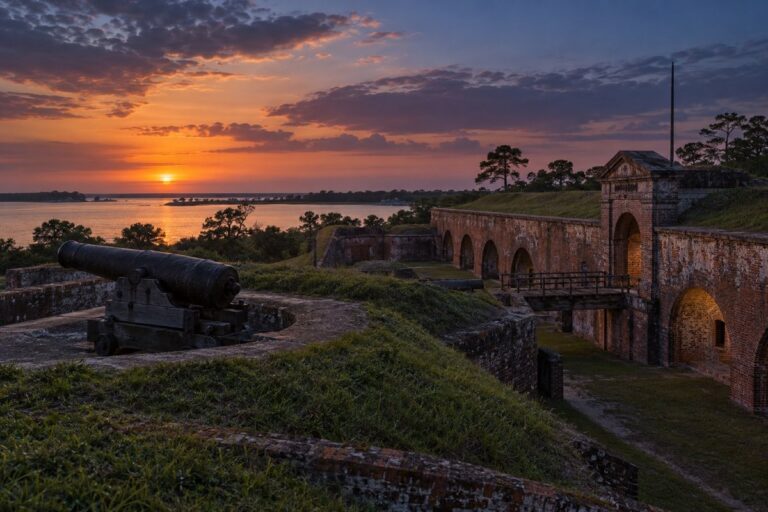
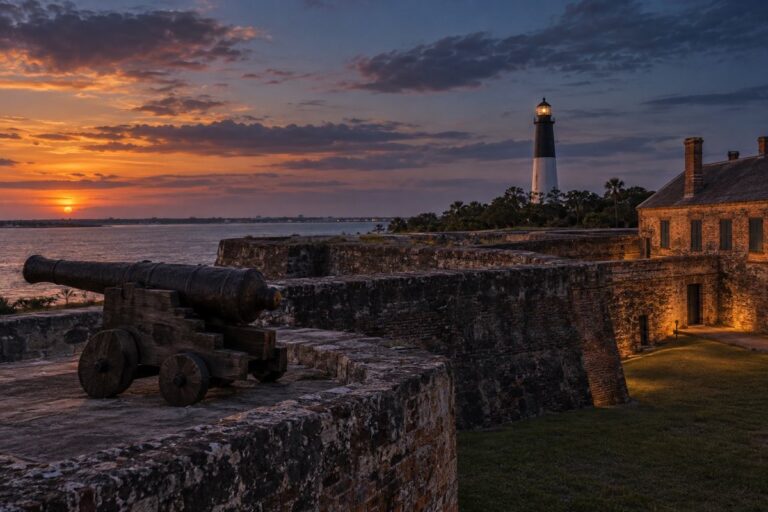
Completed in 1844, Fort Barrancas incorporates a strategic site with earlier Spanish, French, and British military layers overlooking the entrance to Pensacola Bay.
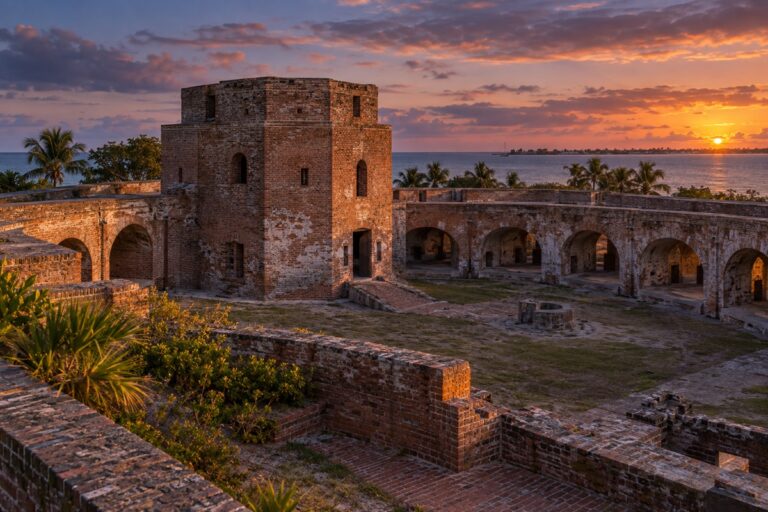
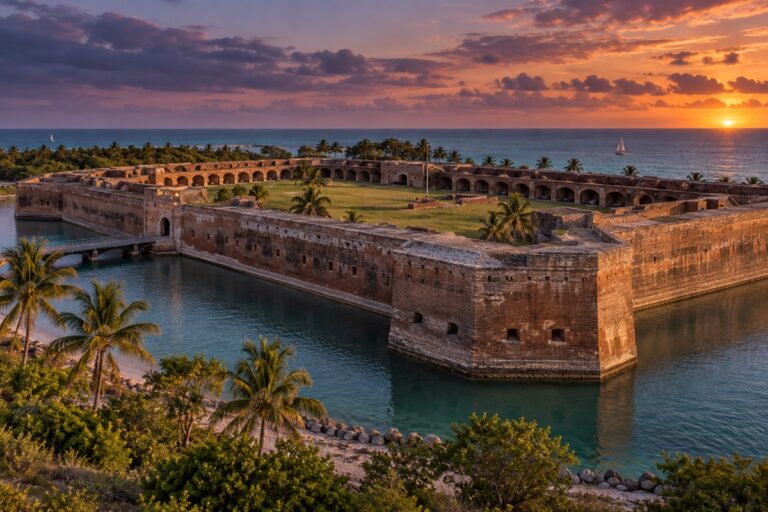
Construction began in 1862 on the brick coastal fort, which remained unfinished, later deteriorated, and was restored by the Key West Art and Historical Society as a museum of Civil War and island history.
Construction began in 1845, and the fort remained in United States hands during the Civil War, supported naval blockade operations, changed through later military modernization, and now preserves a major collection of seacoast artillery.
Historic Pensacola preserves museums, archaeological sites, historic structures, and interpreted landscapes within the footprints of earlier Spanish and British forts in downtown Pensacola.
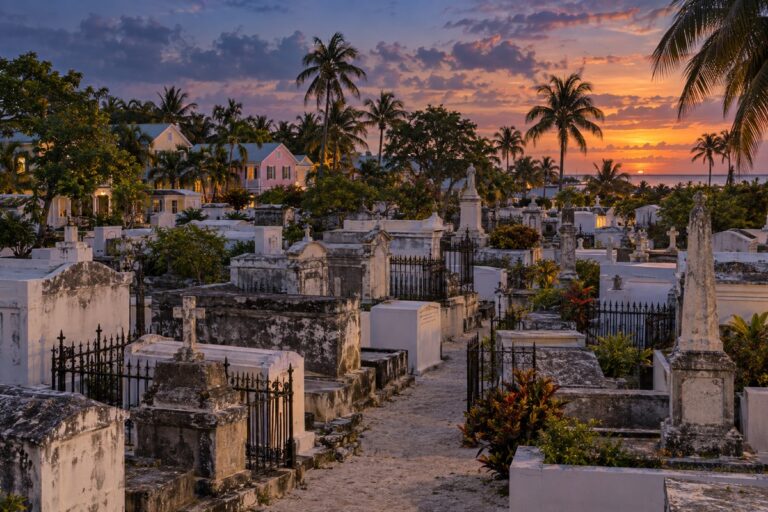
Established in 1847 after an 1846 hurricane damaged earlier burial grounds, the active cemetery holds above-ground vaults, family plots, military burials, and communities reflecting Key West's Bahamian, Cuban, Jewish, Catholic, Black, and maritime history.
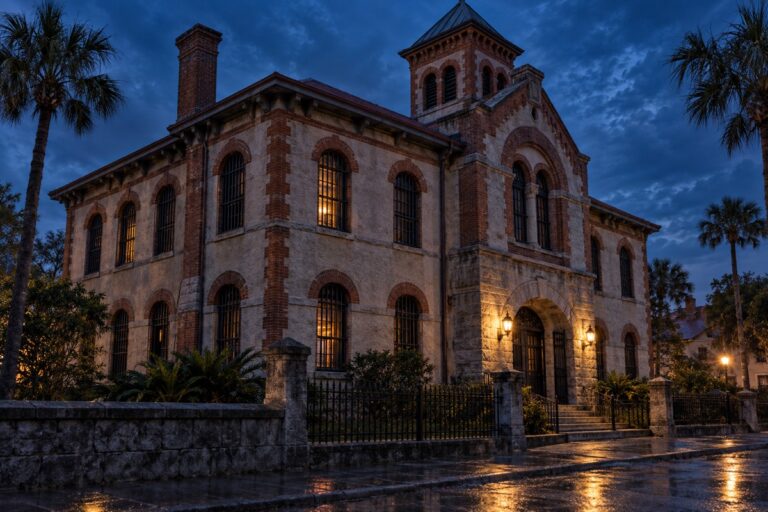
The Old Jail in St. Augustine operated from 1891 until 1953. Built during Henry Flagler’s transformation of the city into a winter resort, it was designed to resemble a dignified Romanesque Revival building rather than a forbidding prison. Today it is a living-history museum with daytime tours and a separate after-dark paranormal program.
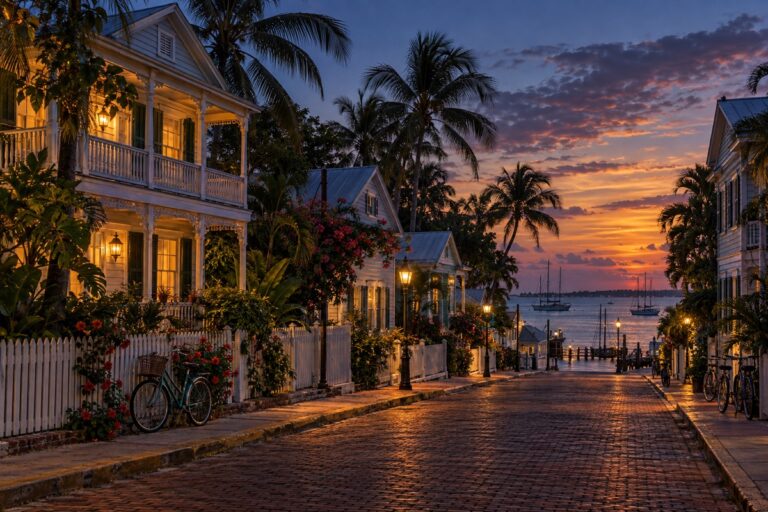
Key West occupies a maritime Indigenous landscape later shaped by Spanish claims, United States naval power, wrecking, Bahamian settlement, Cuban migration and independence movements, cigar making, war, tourism, and preservation.
Pensacola occupies Indigenous homelands around a Gulf Coast bay and was shaped by Spanish, French, British, and American rule, military strategy, slavery, trade, storms, public health, and naval aviation.
St. Augustine is a living Florida First Coast community whose documented history and preservation landscape explain why ghost traditions developed around selected streets, buildings, and burial grounds.