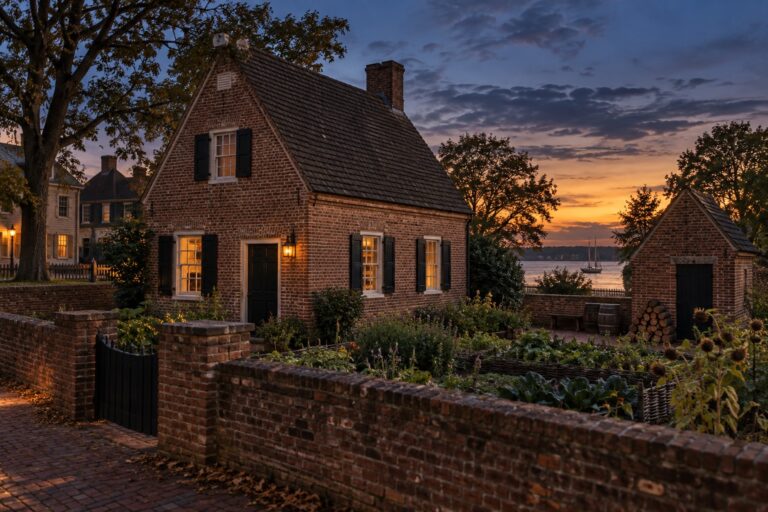
The Amstel House is New Castle's earliest surviving Georgian residence and was built after physician John Finney acquired the property in 1738. Its occupants included political families as well as enslaved, indentured, and hired workers whose labor sustained the household.
The small Dutch House preserves architecture and objects associated with New Castle's early colonial settlement and later preservation movement. Its museum setting and reconstructed garden also reveal how twentieth-century interpreters imagined the town's Dutch past.
Built in 1732 over an earlier courthouse site, the New Castle Court House served Delaware's colonial assembly, courts, early state government, and later public functions. Interpretation connects Native history, colonial rule, independence, slavery, freedom-seeking, prisoners, judges, and changing law.
The large Federal mansion built for George Read II around the turn of the nineteenth century reflects New Castle's river commerce, elite family networks, domestic service, global trade, landscape design, and successive layers of preservation.