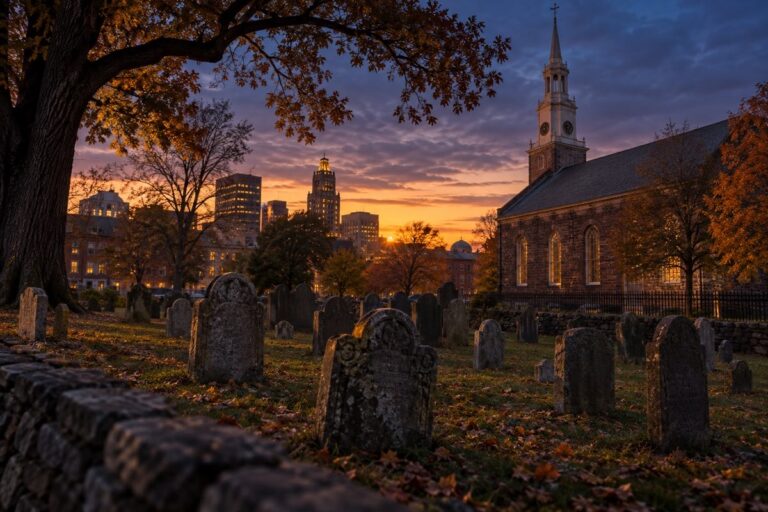
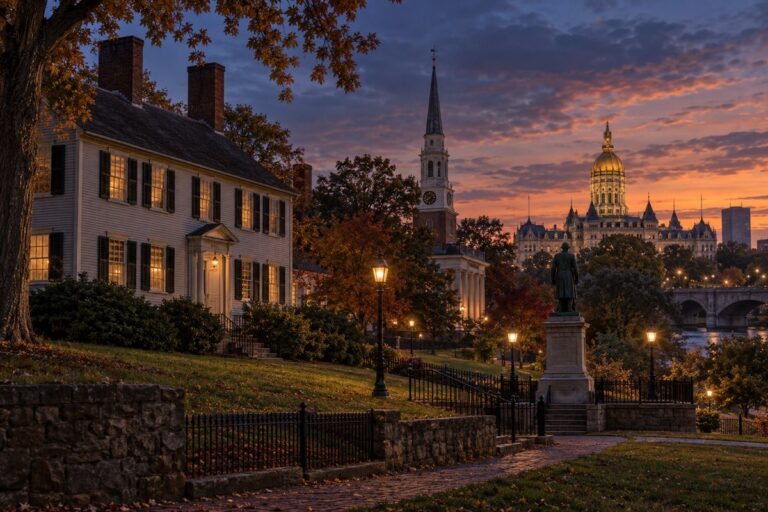
Hartford's Ancient Burying Ground dates to the seventeenth century, with the oldest surviving marker from 1648, and preserves evidence of the city's colonial population and memorial practices.
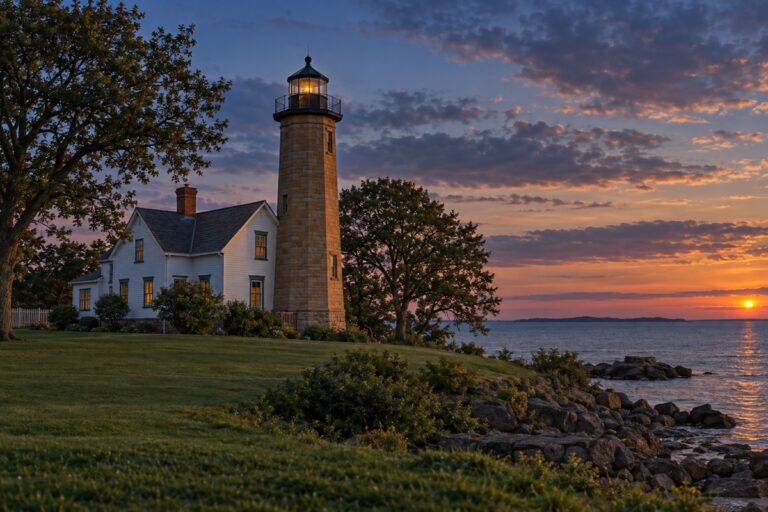
The surviving Five Mile Point Light dates to 1847 and stands at Lighthouse Point Park, where it reflects New Haven Harbor navigation, keeper labor, changing federal lighthouse technology, recreation, and municipal park history.
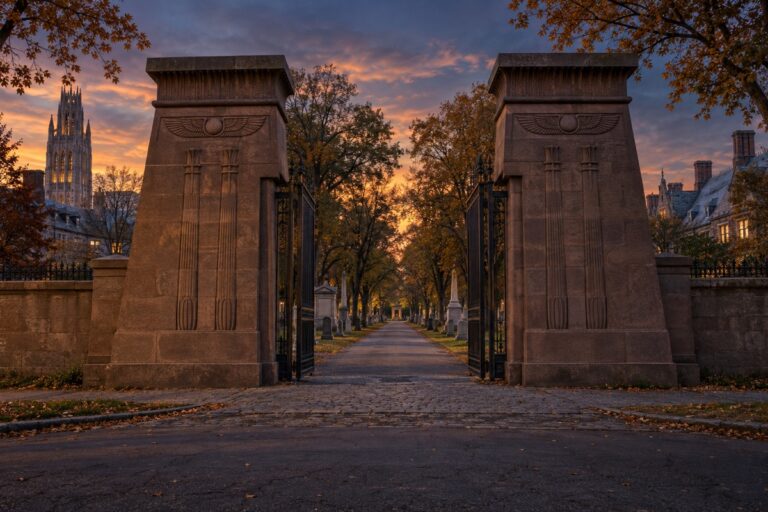
Incorporated in 1797 after New Haven's earlier burial ground became crowded, Grove Street Cemetery introduced family lots, named avenues, and a later Egyptian Revival gateway within a nationally significant burial landscape.
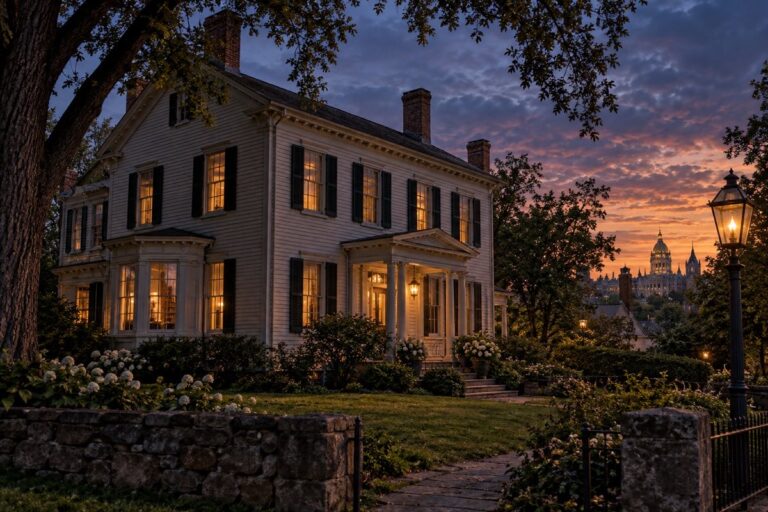
Harriet Beecher Stowe moved into the house in 1873 and lived there for the final twenty-three years of her life; it opened as a museum in 1968 and has undergone major restoration.
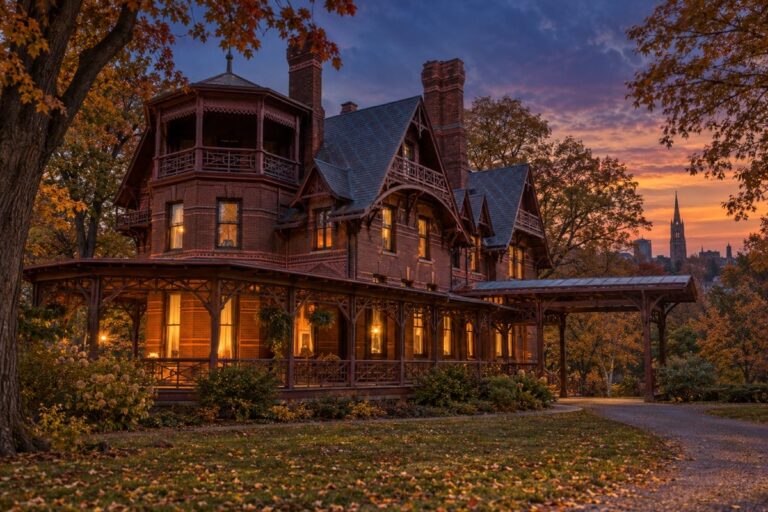
Samuel and Olivia Clemens lived in the Hartford house from 1874 to 1891, years in which the author produced several of his best-known works and raised a family.
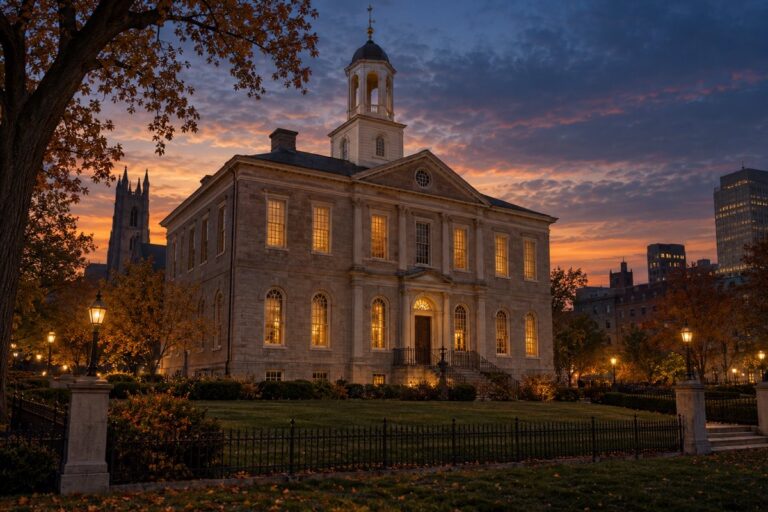
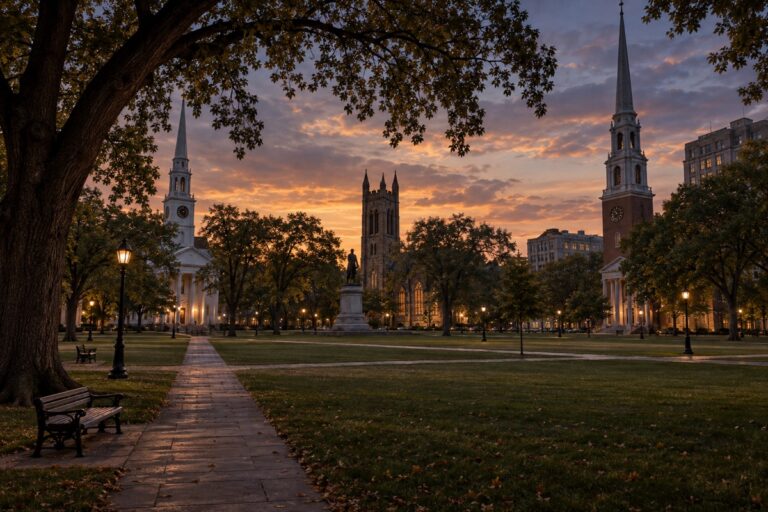
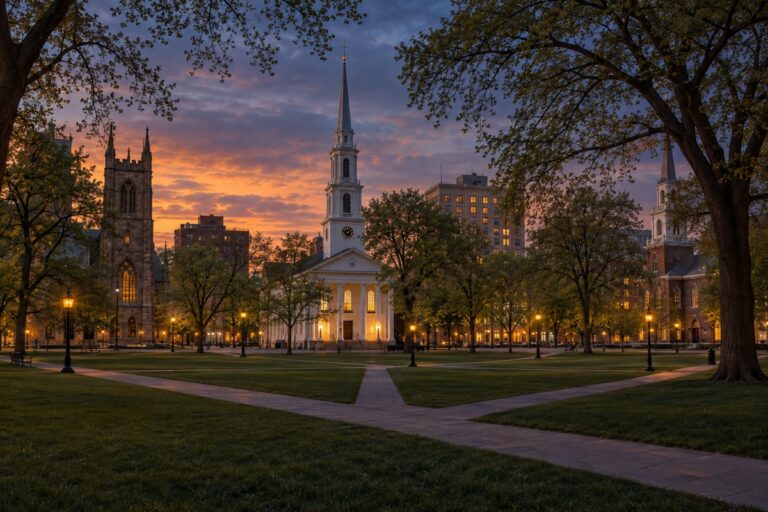
Laid out in 1638 as the central square of a nine-square plan, New Haven Green has served as market, meeting place, burial ground, parade ground, protest space, and the setting for an important ensemble of early nineteenth-century churches.
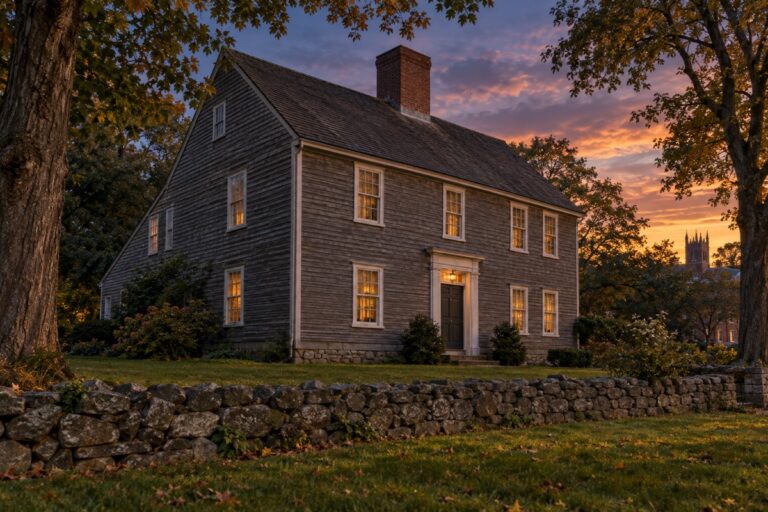
The Pardee-Morris House preserves an eighteenth-century farmhouse associated with the Pardee and Morris families, damage during the British attack of 1779, later rebuilding, agricultural life, and twentieth-century museum stewardship.
Hartford occupies Indigenous homelands along the Connecticut River and developed through colonial settlement, trade, government, insurance, industry, abolition, migration, and neighborhood change.
New Haven developed on Quinnipiac homelands around a planned colonial town, harbor commerce, religious and educational institutions, manufacturing, immigration, Black community life, urban renewal, and preservation.