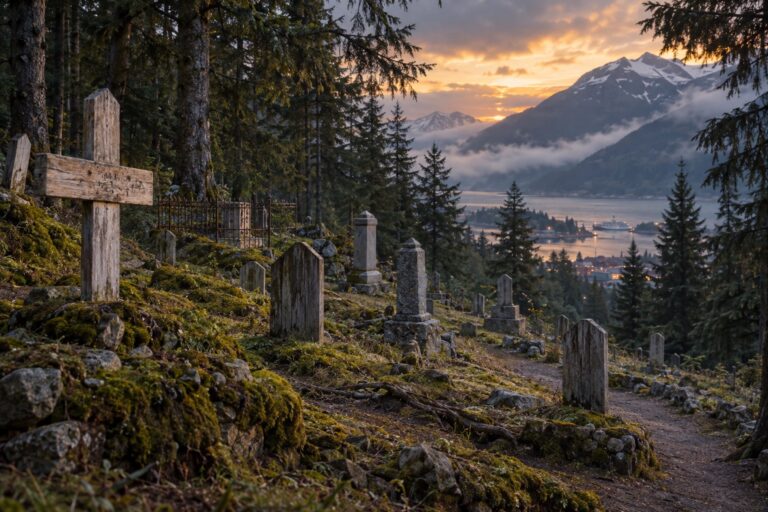
The cemetery contains graves connected to Skagway's gold-rush years, including Jefferson Smith and Frank Reid, alongside many people whose lives are less prominent in tourism. Markers, plot research, landscape change, and preservation document a community shaped by disease, accident, violence, and migration.
The building associated with con man Jefferson 'Soapy' Smith later served a bank, fire-department garage, businesses, and Martin Itjen's deliberately theatrical museum. Its moves, restorations, folk art, and animatronic figures reveal how Skagway marketed its gold-rush past.
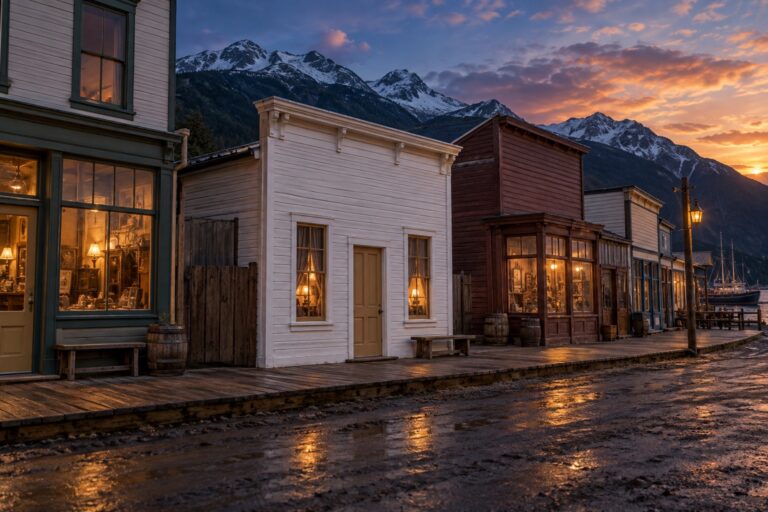
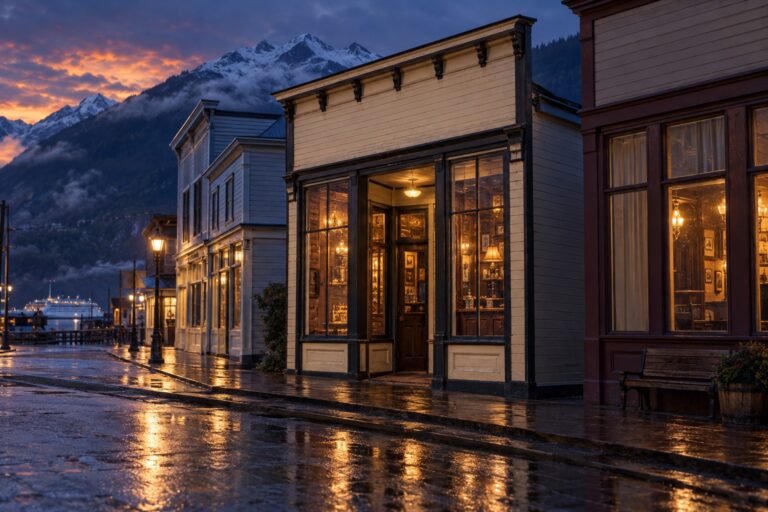
The Mascot became one of Skagway's longest-running gold-rush saloons under the same ownership and location. Its closure after local prohibition and later restoration preserve evidence of alcohol, gender rules, commerce, and community change.
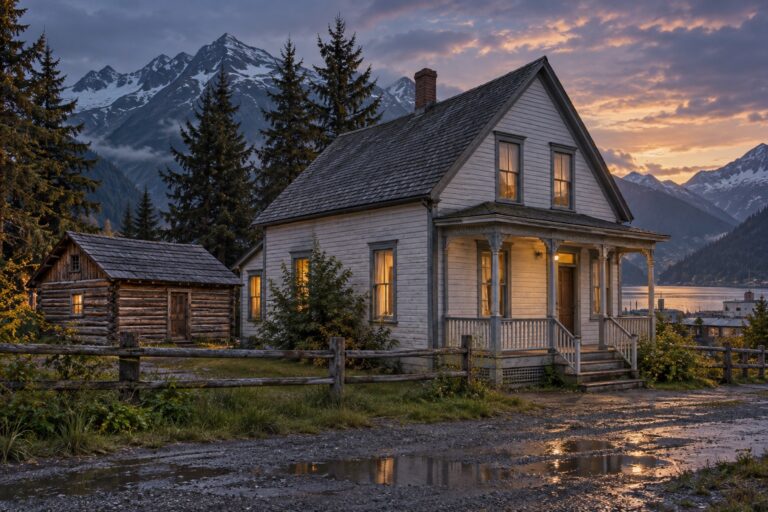
Captain William Moore and his son Ben established a homestead in the Skagway valley before the Klondike stampede. The surviving cabin and later frame house document land claims, rapid urban growth, an interracial family, and the consequences of the gold rush for an existing Tlingit cultural landscape.