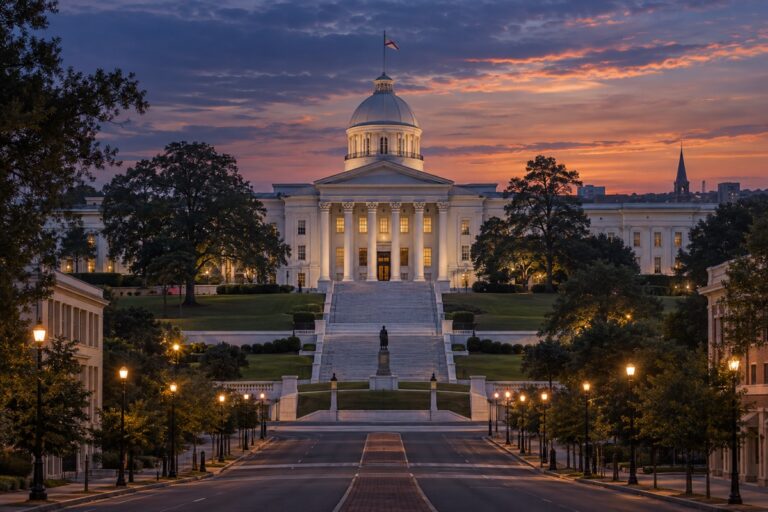
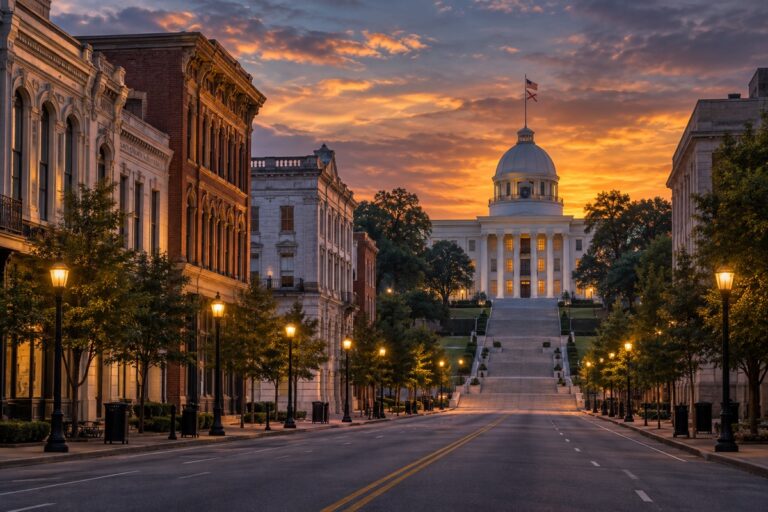
The present Greek Revival Capitol was completed in 1851 after an earlier building burned. It witnessed Confederate organization, state government, craftsmanship by Horace King, and the culmination of the 1965 Selma to Montgomery voting-rights march.
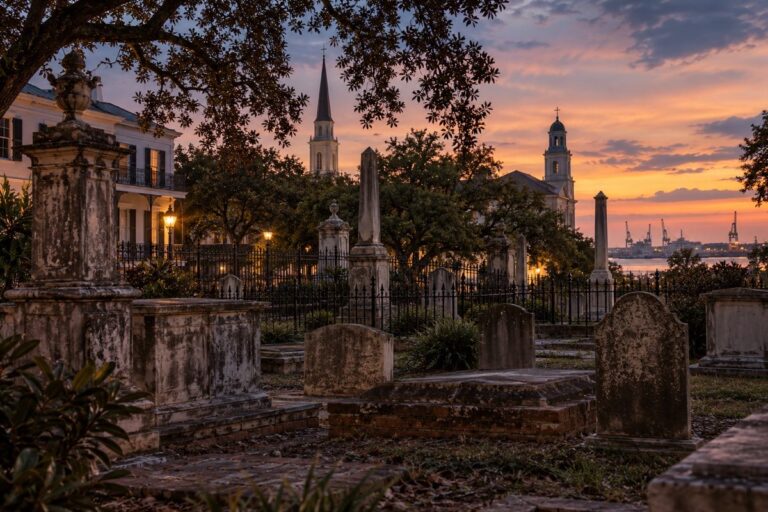
Mobile acquired the graveyard in 1820, with the earliest known burials dating to 1819; it contains people associated with yellow fever epidemics and the city's early civic life.
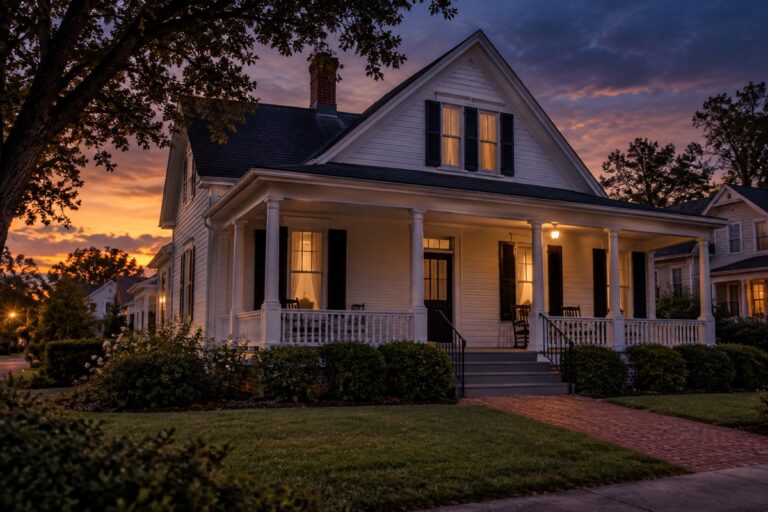
The parsonage housed twelve pastors from 1920 to 1992 and was the home of Martin Luther King Jr., Coretta Scott King, and their children during the Montgomery Bus Boycott; it also survived racist bomb attacks.
Built in the 1830s and later remodeled, the house served briefly in 1861 as the executive residence of Jefferson and Varina Davis before being moved in 1921 and preserved as a museum.
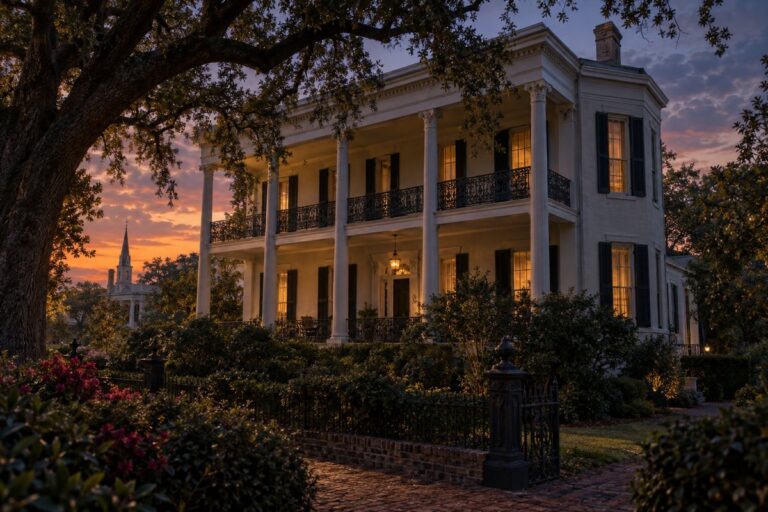
James Roper built Oakleigh in 1833, and the preserved Greek Revival property interprets slavery, epidemics, the Civil War, emancipation, domestic labor, and changing households.
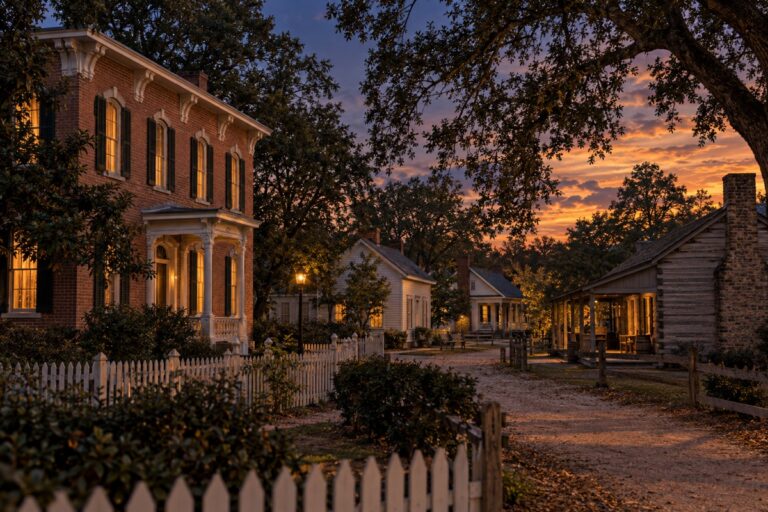
Old Alabama Town preserves more than fifty nineteenth- and early-twentieth-century structures, including the Ordeman-Shaw House and relocated Lucas Tavern, to interpret architecture, labor, enslavement, travel, and everyday life.
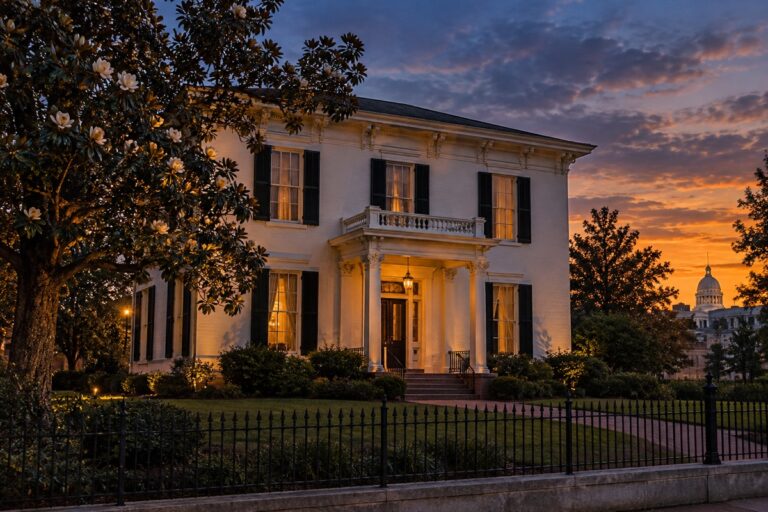
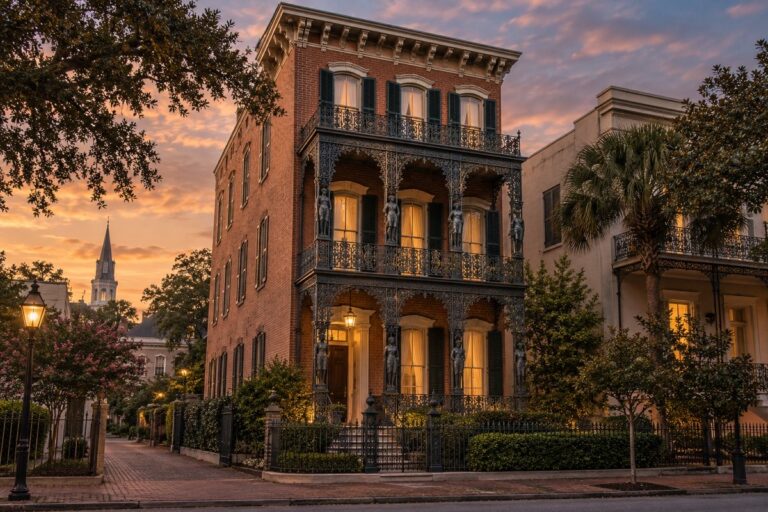
The Italianate house was built in 1860 for sea captain Charles Richards and his wife Caroline and has been restored and operated as a museum by local preservation partners since the 1970s.
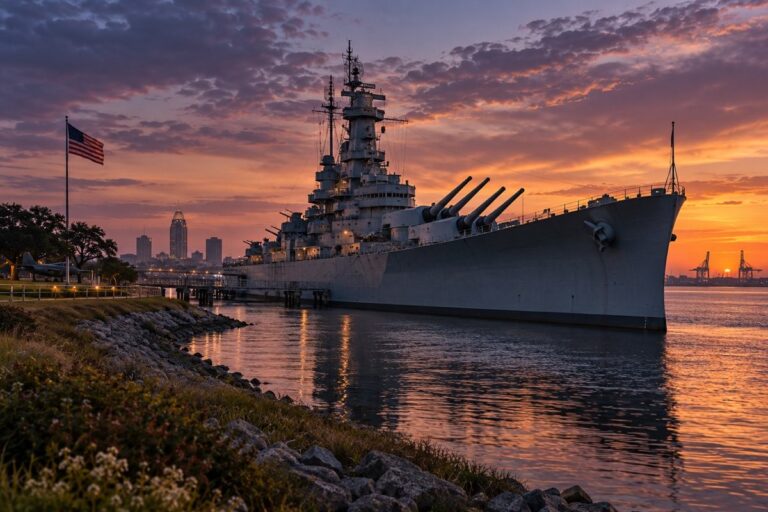
The keel of USS Alabama BB-60 was laid in 1942; the battleship served in the North Atlantic and Pacific during World War II, was decommissioned in 1947, and opened as a memorial in Mobile in 1965.
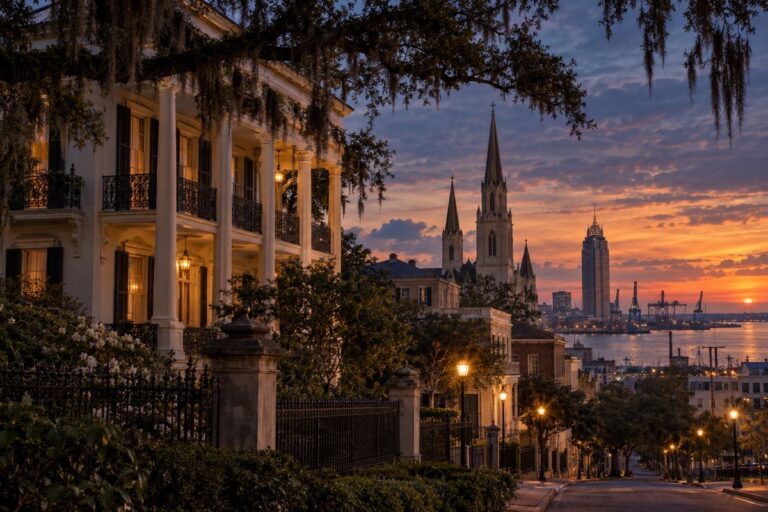
Mobile developed on Indigenous homelands through French, British, Spanish, and American rule, slavery and emancipation, Gulf commerce, shipbuilding, epidemics, war, migration, and distinctive civic traditions.
Montgomery developed at an Indigenous trade crossroads and on Muscogee homelands through forced cession, cotton and slavery, river and rail commerce, Confederate government, Reconstruction, Black institution building, civil rights activism, and preservation.