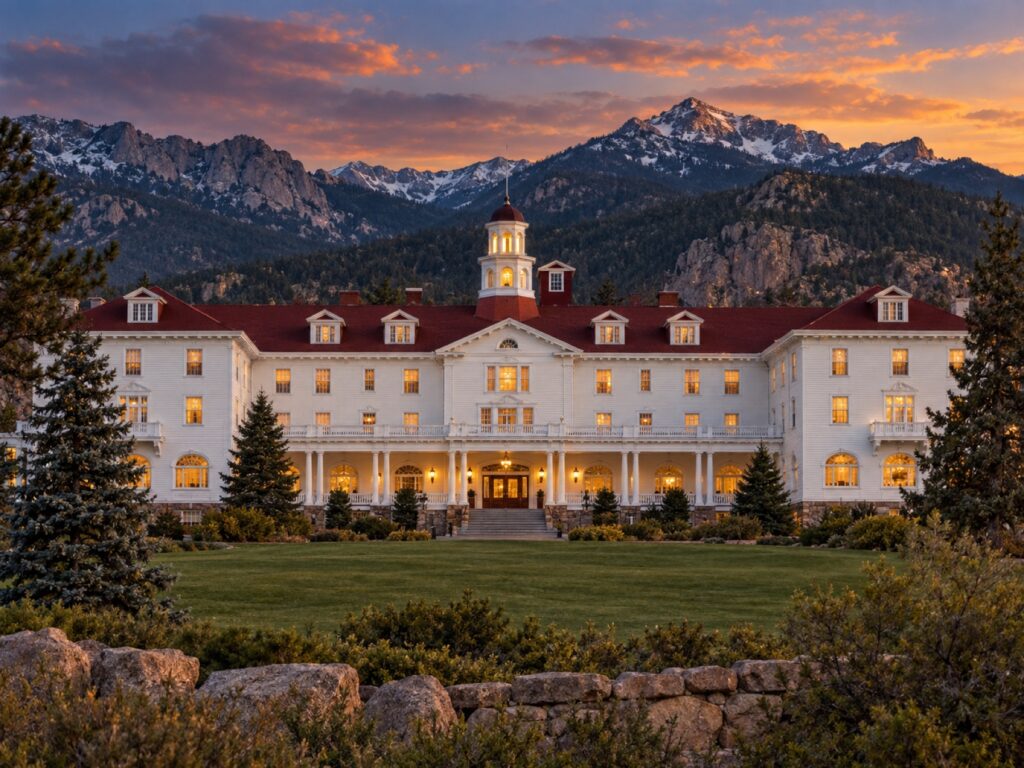
The Stanley Hotel is a historic 1909 resort in Estes Park, Colorado, built by inventor and entrepreneur Freelan Oscar Stanley. Its documented importance comes from architecture, tourism, and local development; its haunted reputation grew through reported experiences, organized ghost tours, and its famous connection to Stephen King’s The Shining.
Why The Stanley Hotel matters
The Stanley Hotel is more than a backdrop for ghost stories. The white-painted resort and its surrounding buildings record a turning point in Estes Park, when mountain tourism shifted from modest accommodations toward a deliberately luxurious destination. The original hotel entered the National Register of Historic Places in 1977, and later boundary expansions recognized a larger historic district associated with the Stanley enterprise.
National Register documentation identifies architecture, commerce, and social history as major areas of significance. The district’s history is inseparable from the growth of Estes Park as a gateway to the Rocky Mountains. Long before horror fans came looking for Room 217, travelers arrived for scenery, health, mountain air, and a level of comfort unusual for an early-20th-century resort town.
F.O. Stanley and a modern mountain resort
Freelan Oscar Stanley and his twin brother, Francis, became known for invention and manufacturing, especially the Stanley Steamer automobile. F.O. Stanley came to Estes Park while seeking relief from tuberculosis and developed a lasting attachment to the area. Seeing an opportunity to draw visitors who expected better accommodations, he planned a first-class resort on land chosen for commanding views of the valley and surrounding peaks.
Construction began in 1907, and the hotel opened in 1909. The National Register nomination describes a resort built on an extraordinary scale for the community. Contemporary observers emphasized its luxury and modern systems, including an electrically equipped kitchen. History Colorado notes that the broader complex included the Stanley Power Plant, built to supply electricity to the hotel, and that specially designed Stanley touring cars carried many guests to the resort until 1926.
The property’s architecture, open mountain setting, and related buildings created a recognizable campus rather than a single isolated hotel. That physical presence helped shape the public image of Estes Park. The building remains an operating hotel, so its history continues alongside lodging, dining, events, tours, and contemporary additions.
The real connection to The Shining
The Stanley’s best-documented supernatural connection is literary. Stephen King says that he and his wife, Tabitha, spent a night at the hotel in late September 1974, just before it closed for the winter. With few or no other guests around, King wandered the corridors and imagined an archetypal setting for a ghost story. He later dreamed that his young son was being chased through the hallways by a fire hose. By the end of the night, King wrote, he had the basic shape of the novel in mind.
The Shining was published in 1977. The fictional Overlook Hotel is not a documentary portrait of The Stanley, and the hotel’s role should be described precisely: King’s stay and the building’s atmosphere helped inspire the novel. That firsthand account is stronger than the many embellished versions of the story circulating online.
Is The Stanley Hotel haunted?
The Stanley openly markets its paranormal reputation. Its official ghost tour describes “spiritually active” locations and combines documented history with folklore. Guests and storytellers have associated unusual sounds, impressions, apparitions, and unexplained activity with rooms and buildings across the property. These accounts form a living body of hotel lore, but they are not scientific verification of paranormal activity.
That distinction matters because the hotel’s real history is already compelling. A grand seasonal resort, long winter corridors, changing ownership, generations of staff and guests, distinctive acoustics, and a globally influential horror novel all affect how people experience the place. A visitor may regard the stories as belief, entertainment, folklore, or an invitation to examine how haunted reputations are created. HauntsUSA labels them as reported experiences and venue-presented stories rather than established fact.
Planning a tour or stay
The Stanley Hotel is at 333 Wonderview Avenue in Estes Park, Colorado, near Rocky Mountain National Park. It remains a working hotel, and public access varies by building, event, reservation, and tour. Official tour schedules are ticketed and change by date, so check the hotel’s calendar before traveling. For current hotel information, call 970-577-4110.
The official Stanley Ghost Tour is described as a roughly 60-minute walking experience led by a storyteller. The published age minimum is eight, and the tour page describes the experience as wheelchair accessible, although routes may change. Lodging check-in, parking, accessibility, tour availability, and building access should be confirmed directly with the hotel. A room reservation and a tour ticket are separate products, and neither should be assumed to include unrestricted access to the historic campus.
Frequently asked questions
Where is The Stanley Hotel?
It is at 333 Wonderview Avenue, Estes Park, CO 80517, in Larimer County near Rocky Mountain National Park.
When did The Stanley Hotel open?
The hotel opened in 1909 after construction began in 1907.
Did The Stanley Hotel inspire The Shining?
Yes. Stephen King has written that his 1974 stay at The Stanley and a dream he had there supplied the basic inspiration for his novel.
Continue exploring haunted history in Colorado or browse the complete HauntsUSA directory of historic haunted places.
Sources and further reading
- National Park Service: Stanley Hotel National Register Record
- National Park Service: Stanley Hotel Nomination
- History Colorado: Stanley Hotel
- Stephen King: The Shining Inspiration
- The Stanley Hotel: Official Website
- The Stanley Hotel: Official Ghost Tour
Last reviewed September 26, 2026. Paranormal claims are attributed to the venue or identified as folklore. AI-generated editorial artwork is an interpretation, not documentary photography.