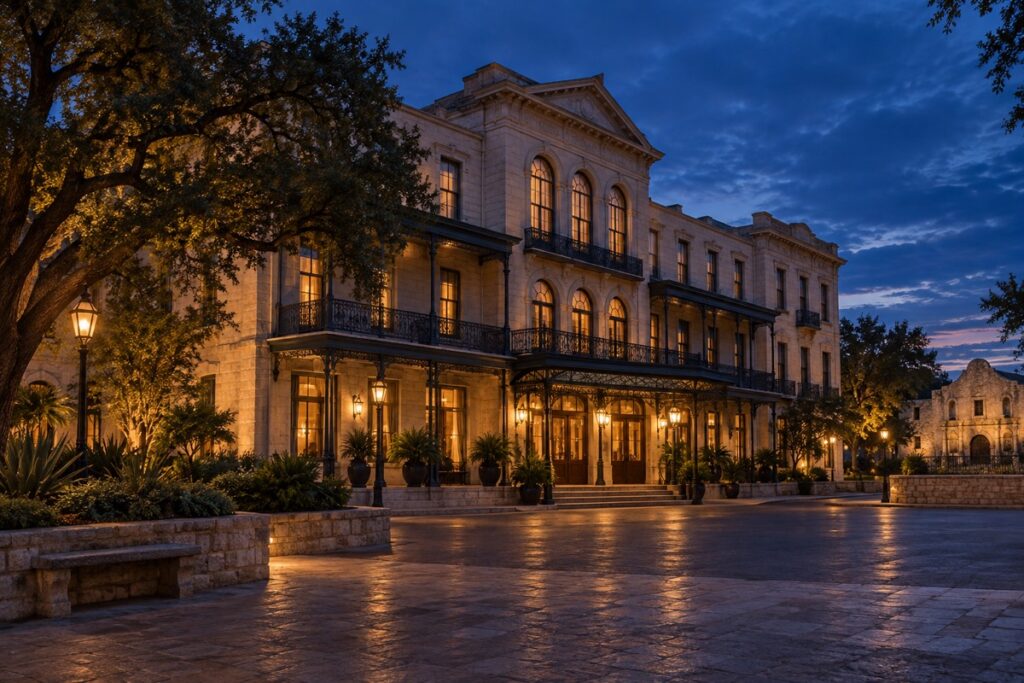
Quick answer: The Menger Hotel is a historic 1859 hotel at 204 Alamo Plaza in San Antonio, Texas. William and Mary Menger opened it beside the family brewery, and it became a major gathering place for travelers, military figures, politicians, and cattlemen. Its many reported ghosts are part of hotel and city folklore.
Why the Menger Hotel matters
The Menger stands where several versions of San Antonio meet. The Alamo represents contested memory and tourism. The former brewery recalls German immigration and urban industry. The hotel reflects the growth of stage, rail, military, and commercial travel. A visitor can read all of those histories within a few blocks.
Its continued operation also matters. A hotel is changed by every generation that expects new plumbing, power, fire protection, elevators, climate control, and comfort. The Menger’s historic identity depends on adaptation as much as preservation.
The documented history
William Menger was associated with a successful brewery near the Alamo, while Mary Menger played an important role in the hotel’s operation. The couple opened the hotel in 1859. Its location and reputation quickly made it one of the city’s important public meeting places.
The hotel expanded and changed as San Antonio grew. Military officers, politicians, performers, businesspeople, and travelers passed through its rooms. Accounts of cattle deals and public gatherings connect the Menger to the economic life of Texas after the Civil War.
The best-known political episode occurred in 1898, when Theodore Roosevelt recruited men for the First United States Volunteer Cavalry, popularly known as the Rough Riders. The hotel’s bar is often associated with that recruiting effort. The episode should be placed within the Spanish-American War rather than treated only as colorful Roosevelt folklore.
History, memory, and the haunted reputation
The Menger has one of the largest collections of named hotel ghosts in Texas storytelling. Reports describe a former chambermaid, a military figure, a man in older clothing, footsteps, scents, cold areas, and doors or elevators behaving unexpectedly.
Named apparitions can make a story feel certain. Yet the historical existence of a person and a modern guest’s experience are two separate claims. Employment records, census files, military sources, and newspapers may verify a life without verifying a haunting.
Hotel staff and tour guides keep the stories alive because they are memorable and tied to recognizable rooms. Readers should understand them as living folklore shaped by repetition, performance, and the expectations of visitors.
What to notice during a visit
Study the lobby, courtyard, bar, and transitions between older and newer sections. Architectural seams reveal how the hotel grew. Furniture and display objects create atmosphere, but fixed elements and floor plans often provide better evidence of change.
Step outside to understand the hotel’s relationship to Alamo Plaza. The intensity of tourism can obscure the ordinary city that surrounded the hotel. Walk a few blocks and compare nineteenth-century landmarks with later commercial development.
Planning a visit
- Location: 204 Alamo Plaza, San Antonio, Texas 78205.
- Access: The property operates as a hotel with public dining and bar areas. Guest floors and rooms require legitimate access.
- Best for: Historic-hotel enthusiasts, Texas history readers, military-history visitors, and travelers interested in carefully labeled ghost lore.
- Before you go: Confirm current hours, tickets, accessibility, and photography rules on the official website.
Frequently asked questions
Is the Menger Hotel haunted?
The Menger is widely reported as haunted, and the hotel embraces those stories. Reports are personal testimony and tradition, not proof of paranormal activity.
Can the public visit?
Yes, by staying at the hotel or using areas clearly open to the public. Respect guest privacy and event restrictions.
How much time should visitors allow?
Allow an hour for public spaces and Alamo Plaza, or stay overnight for the fuller hotel experience.
What is the most important historical context?
The 1859 opening, Menger family enterprise, relationship to the brewery, and Rough Rider recruiting era are central themes. Alamo memory should be handled with equal care.
Sources and editorial note
The official hotel site and contact page provide the verified address, phone number, and current operating identity. San Antonio library and local historical collections should be used to confirm ownership, expansion, and military details.
HauntsUSA separates documented history from reported experiences, local legend, and venue marketing. Paranormal claims are never stated as proven fact. Generated artwork is labeled as an editorial interpretation rather than documentary photography.
Last reviewed September 26, 2026. Visitor details can change. Confirm current information with the site before travel.
San Antonio context
The Menger’s story extends beyond its own lobby. Nearby missions, plazas, military posts, markets, immigrant neighborhoods, and transport routes show how the city grew. A hotel served that movement. Guests arrived with business, political ambitions, family news, military orders, and curiosity. Reading the property as a crossroads produces a fuller history than treating it as a sealed container for famous people and ghosts.
Continue exploring San Antonio
Compare the documented history and clearly labeled traditions at Alamo history guide. Check each guide for sources and current access information.