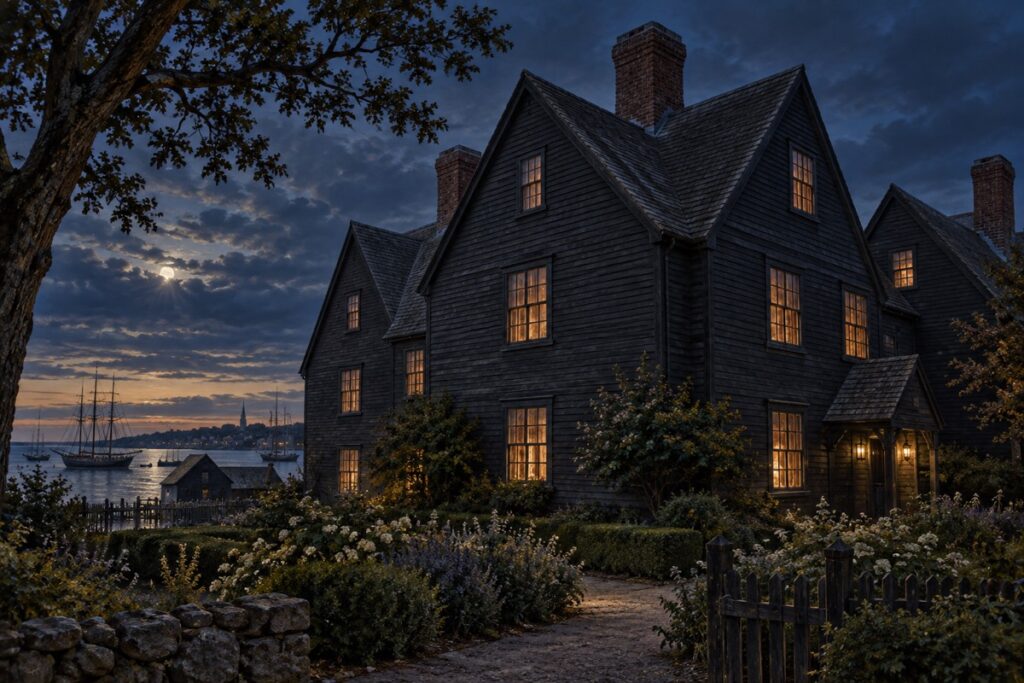
Quick answer: The House of the Seven Gables is a 1668 waterfront mansion and museum campus at 115 Derby Street in Salem, Massachusetts. It inspired the title and setting of Nathaniel Hawthorne’s 1851 novel. Preservationist Caroline Emmerton restored and opened the property in 1910 to fund settlement work with immigrant families.
Why the House of the Seven Gables matters
The Gables is often introduced as a literary landmark, but its history is broader. It is a rare surviving seventeenth-century house, a record of maritime wealth, a product of Colonial Revival restoration, and the center of a nonprofit mission that joined preservation with immigrant services.
Those layers make the site especially useful for understanding how Americans create historic places. The building was not simply frozen in 1668. Families changed it, Hawthorne reimagined it, and Emmerton’s restoration shaped the version visitors know today.
The documented history
Merchant and ship owner John Turner I built the house in 1668. Three generations of the Turner family lived there before Captain Samuel Ingersoll purchased it in 1782. The property later passed to his daughter Susanna Ingersoll, a cousin of Nathaniel Hawthorne.
Hawthorne’s visits helped inspire his novel The House of the Seven Gables, published in 1851. Fiction transformed the building’s public identity, even though the novel is not a literal history of the house or its residents. Literary association eventually helped preserve the property.
Caroline Osgood Emmerton purchased the mansion in 1908. With architect Joseph Everett Chandler, she restored it to an interpretation of its seventeenth-century appearance and opened it as a museum in 1910. Tour income supported settlement programs for immigrant families. The nonprofit continues education and citizenship work today.
History, memory, and the haunted reputation
The mansion’s age, shadowed rooms, hidden spaces, and Gothic literary connection invite ghost stories. Visitors sometimes ask whether the house is haunted, and local tours may include it in broader Salem folklore.
The novel itself can blur the boundary between atmosphere and evidence. Hawthorne wrote about inherited guilt, family decline, and a house burdened by the past. Those themes make the real building feel supernatural even without a documented paranormal event.
A careful guide should not market a fictional curse as the house’s biography. The more compelling story concerns architecture, trade, preservation, literature, and Emmerton’s use of heritage tourism to support new residents.
What to notice during a visit
The mansion tour moves through rooms on several levels. Notice changing ceiling heights, windows, fireplaces, framing, and the famous secret staircase. Ask which features are original, which reflect later family alterations, and which belong to Emmerton’s restoration.
The campus also includes other historic structures, gardens, harbor views, and Nathaniel Hawthorne’s birthplace. Together they show that the organization preserves a collection rather than a single photogenic facade.
Planning a visit
- Location: 115 Derby Street, Salem, Massachusetts 01970.
- Access: Mansion tours use multiple levels in a seventeenth-century building. Some structures are not wheelchair accessible; consult the official access information.
- Best for: Architecture readers, Hawthorne enthusiasts, families, preservation students, and visitors interested in immigrant and settlement-house history.
- Before you go: Confirm current hours, tickets, accessibility, and photography rules on the official website.
Frequently asked questions
Is the House of the Seven Gables haunted?
The site attracts ghost questions, but its verified importance is architectural, literary, and social. Haunted claims remain secondary local folklore.
Can the public visit?
Yes, with a ticket. Tour packages, grounds access, and seasonal programs vary, so advance booking is recommended during busy periods.
How much time should visitors allow?
Allow ninety minutes to two hours for the mansion, campus buildings, gardens, and harbor setting.
What is the most important historical context?
Caroline Emmerton’s settlement mission is as important as the Hawthorne connection. Museum income was intended to support education and immigrant families.
Sources and editorial note
The organization’s official history and visitor pages provide the 1668 construction date, Turner and Ingersoll ownership, Hawthorne connection, Emmerton restoration, museum opening, and present nonprofit mission.
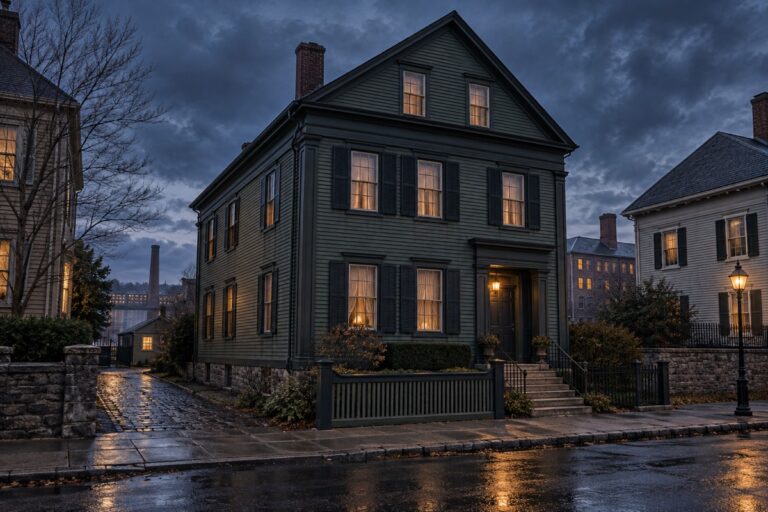
HauntsUSA separates documented history from reported experiences, local legend, and venue marketing. Paranormal claims are never stated as proven fact. Generated artwork is labeled as an editorial interpretation rather than documentary photography.
Last reviewed September 26, 2026. Visitor details can change. Confirm current information with the site before travel.